
Goal weights end. Identities don't.
Most fitness apps are built around a target: lose ten pounds, run a certain pace, hit a lift number. Goals like that are useful for a season, but once you hit them or give up trying, the motivation to keep going often disappears with the goal.
That's the pattern behind a lot of yo-yo fitness habits. The goal was external and temporary, so once it was resolved one way or the other, there was nothing left pulling you toward the gym.
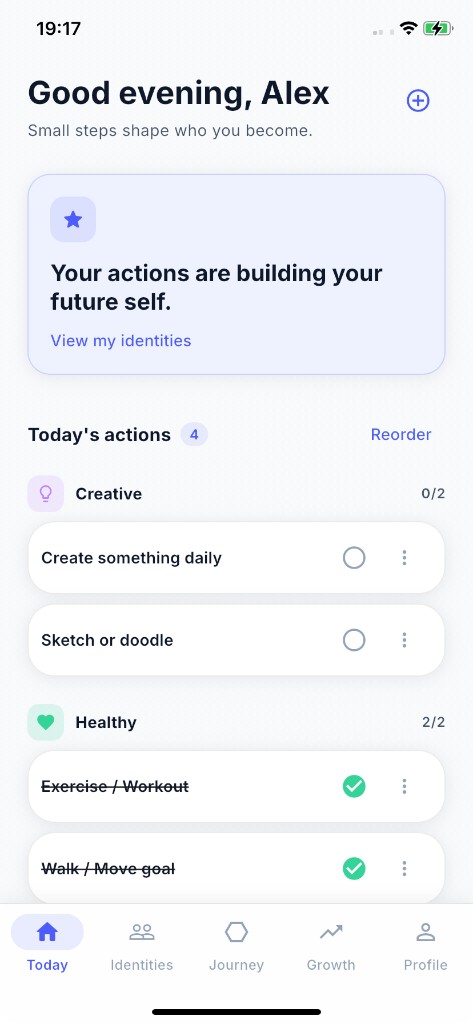
Ascend tracks who you're becoming, not just a number.
As a fitness identity tracker, Ascend has you define an identity like "someone who trains" or "a runner," then attach small daily and weekly actions to it: a workout, a walk, a stretch session. The number on the scale becomes a side effect, not the whole point.
Because the identity doesn't expire when a goal is hit, there's no natural stopping point built into the system. Your weekly review just shows whether you kept showing up as that person.
What makes this different from a goal-weight app
- Identity over target weight: Build "someone who trains" instead of chasing a number that resets motivation once hit.
- Small workouts count: A short session still counts as showing up for the identity: perfection isn't required.
- Weekly review: See your training consistency over the week, not just today's single workout.
- Private by default: Your fitness identity and history are stored locally on your device.
FAQ
How is a fitness identity tracker different from a regular fitness app?
A regular fitness app usually tracks a goal like weight or reps. A fitness identity tracker like Ascend has you build an identity (such as "someone who trains") and attaches actions to it, so your motivation doesn't disappear once a specific number is hit or missed.
Is Ascend free?
Yes. Ascend is free to download, with an optional Ascend Pro subscription for extra identities and insights.
Does my data leave my device?
No. Your fitness identity and workout history are stored locally on your device.