
Cramming works until it doesn't.
A lot of students survive on last-minute study sessions before every exam. It gets the grade this time, but it doesn't build anything: no consistent habit, no real retention, and a fresh wave of stress before the next test.
Generic productivity apps don't help much either. A to-do list full of 'study for exam' doesn't tell you when, how much, or why today matters more than any other day.
Ascend builds the identity of a student who studies.
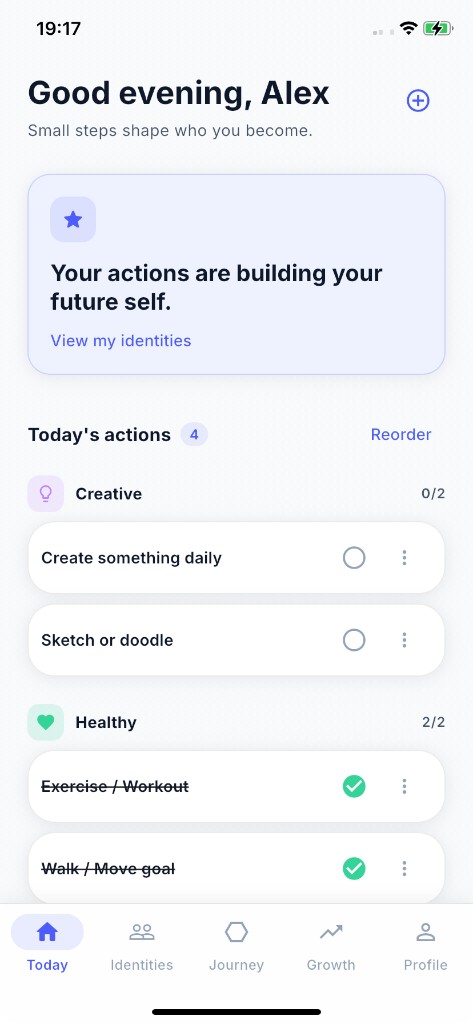
With Ascend, you define an identity like "a student who studies consistently" and attach small daily actions to it: thirty minutes of review, a set of flashcards, a chapter of reading. As a habit tracker for students, that's the whole job: keep the action small enough to fit around classes and other commitments.
Your weekly review shows how many days you actually studied, which tends to matter far more for real learning than any single cram session the night before a test.
Why a habit tracker for students works better than cramming
- Small daily study actions: Thirty minutes a day beats a six-hour cram session the night before.
- Identity, not just deadlines: Build the identity of a consistent student, not just a deadline-driven one.
- Weekly review: See your actual study consistency across the week, not just exam week.
- Private by default: Your study habits and history are stored locally on your device.
FAQ
How does a habit tracker for students like Ascend help with studying?
Ascend has you build an identity around being a consistent student, then attach small daily study actions to it (a set amount of time or material each day) so studying becomes a habit instead of a last-minute scramble before exams.
Is Ascend free?
Yes. Ascend is free to download, with an optional Ascend Pro subscription for extra identities and insights.
Does my data leave my device?
No. Your study habits and history are stored locally on your device.