
You can finish every task and still feel stuck.
Most productivity systems optimize for throughput: how many tasks you closed, how full your calendar was, how fast your inbox emptied. You can win at all of that and still feel like you didn't move anywhere, because none of it was pointed at anything in particular.
That's the blind spot in task-first productivity: it measures output, not direction. Busy and directionless can look identical from the outside.
Ascend starts with direction, not tasks.
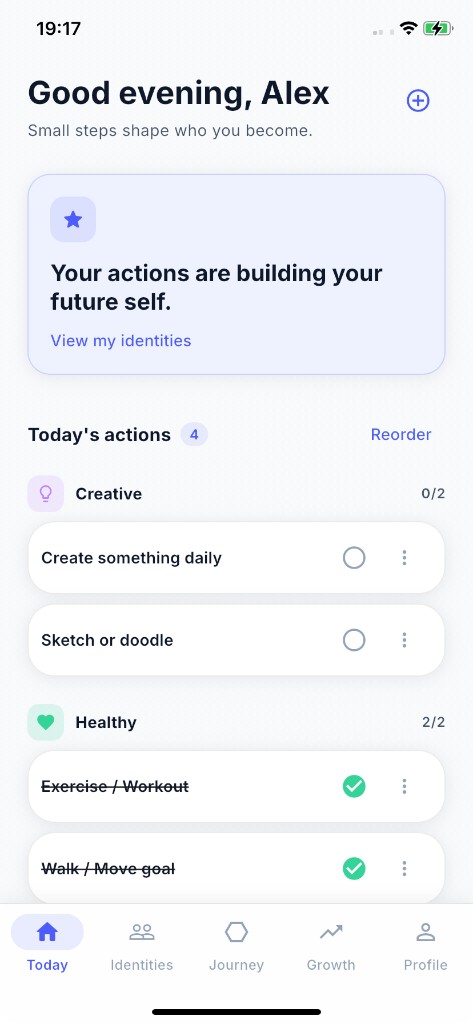
With an identity first productivity approach, Ascend asks a different first question: not "what's on your list today," but "who are you trying to become." You define that identity, then attach a short list of important actions to it instead of an endless task list.
Because the list is short and tied to an identity, finishing it actually means something. Your weekly review shows whether your time went toward the identity you picked, not just toward whatever was loudest that day.
What identity first productivity looks like in Ascend
- Direction before tasks: Set the identity first, then let a handful of actions follow from it.
- Fewer, sharper actions: A short daily list beats a long one you'll never finish.
- Weekly review: Check whether your week actually moved you toward the identity you set.
- Private by default: Your identities and actions live on your device, not a shared workspace.
FAQ
What does identity first productivity mean in Ascend?
It means you define who you're trying to become before you list what to do. Ascend attaches a short set of daily actions to that identity, so being productive is measured against a direction, not just against how many boxes you checked.
Is Ascend free?
Yes. Ascend is free to download, with an optional Ascend Pro subscription for more identities and insights.
Does my data leave my device?
No. Your identities, actions, and reviews are stored locally on your device.