
Personal growth doesn't show up in a single day.
You can't see personal growth in a 24-hour window. It shows up over months, in the accumulation of small decisions that felt unremarkable at the time. Most tracking apps aren't built for that timescale: they're built for daily streaks, which makes long, slow change hard to notice.
Without a way to zoom out, it's easy to feel like nothing is changing, get discouraged, and quit right before the growth would have become visible.
Ascend is built for the long view.
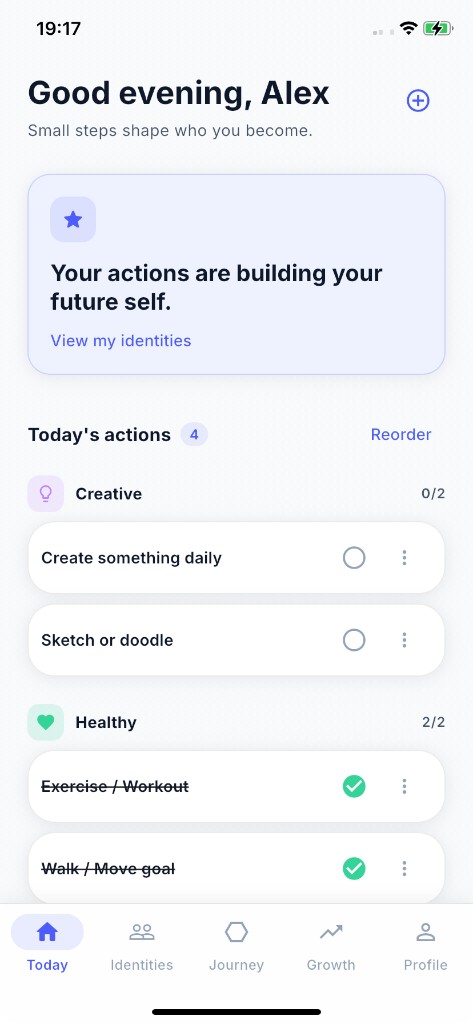
As a personal growth tracker, Ascend keeps daily actions attached to identities, and every weekly review adds another data point to that identity's story. Over time, you can look back and see the actual shape of your growth: not a guess, but a record of actions taken.
That long view is often the most motivating part of the app. It's one thing to feel like you've grown; it's another to open Ascend and see twelve weeks of evidence that you have.
How Ascend tracks personal growth over time
- Identity-based history: Every identity builds a record of actions over weeks and months, not just days.
- Weekly review: A regular check-in that adds up into a longer story of change.
- Multiple identities: Track growth across different areas of your life at once, without them blurring together.
- Private by default: Your growth history is stored locally on your device.
FAQ
How does a personal growth tracker like Ascend show progress over time?
Ascend attaches your daily actions to specific identities and records a weekly review for each one. Over weeks and months, that builds an actual history you can look back on, instead of relying on a feeling that you've grown.
Is Ascend free?
Yes. Ascend is free to download, with an optional Ascend Pro subscription for extra identities and insights.
Does my data leave my device?
No. Your growth history is stored locally on your device.