
Runner is an identity, not a pace
You become a runner by running, even when it is slow.
Becoming a runner is not about speed or races on day one. It is about practicing the identity of someone who shows up for movement most weeks.
Runners are made on ordinary roads
Instagram runners look effortless. Perfect form, golden hour light, medals lined up on a shelf. Your first weeks will not look like that. You will feel slow, awkward, and out of breath on a Tuesday morning before work. Becoming a runner is mostly showing up when you feel like you do not belong in running clothes. Speed comes later. Identity comes from repetition on ordinary roads. Identity follows what you repeat on tired Tuesdays, not what you plan on motivated Sundays.
Becoming X means casting small daily votes, not waiting to feel ready. Ready is a myth beginners use to delay Tuesday. You do not need to feel like a runner before you run. You need to run before you feel like one. Each session is evidence, even when it is ugly and short and nobody is watching. The old story says wait until conditions are perfect. The new story says practice now anyway.
The runner identity grows from what you do on bad days, not hero days. Rainy half-mile counts. Walk-run counts. Twelve-minute jog counts. The old identity waits for a perfect session with perfect weather and perfect energy. The runner identity logs proof anyway and trusts that proof to compound over weeks. One honest week of small votes teaches you more than a month of intention without tracking. Ascend can log the practice. It cannot live the identity for you. That part is still yours.
Lay out the clothes the night before
Runners reduce friction because friction wins on tired mornings. Shoes visible by the door. Clothes laid out on the chair. Alarm named honestly instead of snooze roulette. The fewer decisions between bed and door, the more often you become someone who runs. Decision fatigue is real at 6am. Remove it the night before. When the week feels like a blur, the record shows whether the votes still happened. Shrink the habit before you abandon the identity. That is how people last past week three.
This sounds trivial. Trivial is how identity wins against motivation. Motivation is unreliable. A visible pair of shoes is reliable. You are not trying to become inspired. You are trying to become someone who moves before the negotiating voice fully wakes up. Peers who make this look easy usually have six months of boring repetition you did not see. You are not behind. You are early in the evidence-gathering phase most people skip.
Pair the clothes ritual with one other cue: same playlist, same route for the first month, same post-run glass of water. Cues stack. When the environment predicts running, your brain starts expecting it. That is not rigid. That is how habits form without requiring daily willpower heroics. Perfection is not the standard. Pattern is the standard. Review the pattern, not the outliers. If the habit feels too heavy, the version is too large. Cut it in half and try again tomorrow.
Log every run, even the short ones
A twelve-minute jog counts. A walk-run counts. A rainy half-mile counts. The old identity waits for a perfect session before logging anything. The runner identity logs proof because proof is what changes self-story. You are building a record that says you are someone who runs, not someone who plans to run when life calms down. Becoming this person is negotiated in small moments, not declared in a single dramatic announcement. That is how identity grows on ordinary days when motivation is nowhere to be found.
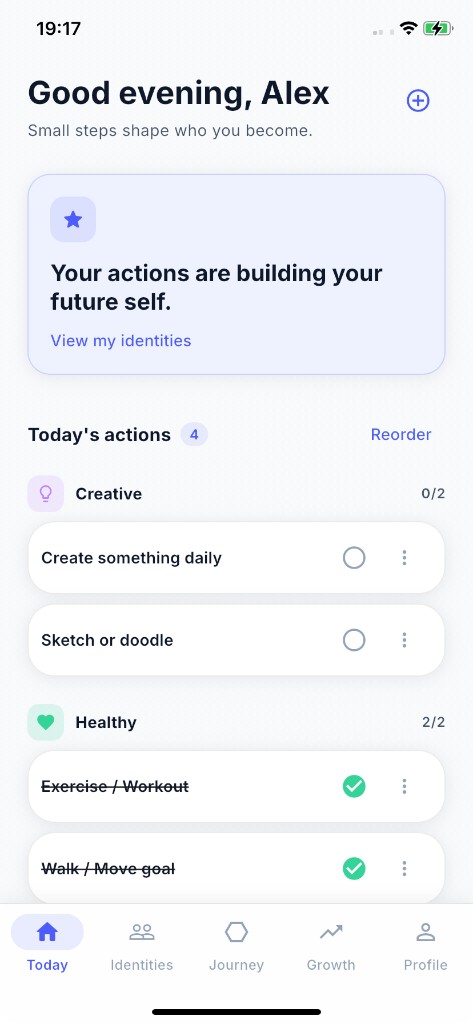
Ascend tracks runs under a Runner identity and can sync with Apple Health or Health Connect so sessions appear without manual entry. It does not coach your form, diagnose shin splints, or replace a physiotherapist if you are injured. It shows whether you practiced runner identity this week. That visibility matters when motivation is flat. Small daily votes reviewed weekly beat heroic intentions that collapse by Thursday. You are building evidence, not waiting for a feeling that may never arrive first.
Logging also helps you see patterns. Maybe you skip Thursdays because work runs late. Maybe you only run when a friend joins. Weekly review turns vague guilt into adjustable behavior. Shrink the session before you abandon the identity. Most people quit running because the plan was sized for someone with more free time. The practice is the point. Results follow repetition more often than they precede it. Return speed after a miss matters more than a perfect streak you cannot maintain.
Ready to practice a different identity starting today?
Three sessions a week beats one hero run
One long run every Sunday does not make you a runner. Three shorter sessions do. Consistency builds joints, lungs, and self-trust in a way that hero runs cannot. Hero runs build burnout and resentment when Tuesday arrives and your legs still hurt. Sustainable running looks boring from the outside. Boring is durable. Minimum versions on hard weeks keep the identity alive when life gets loud. Honest review turns vague guilt into one adjustable change for next week.
If you want structure, import Couch to 5K in Ascend for a nine-week walk-run programme with built-in progression. If you want lighter structure, start with three weekly movement sessions and build. There is no moral superiority to either path. The right path is the one you will still be on in month three. This is maintenance, not a one-time fix you finish and forget about. You do not need to feel ready. You need to cast the next small vote anyway.
Schedule sessions like appointments before the week fills up. Tuesday morning, Thursday evening, Saturday late morning. Vague intentions lose to booked time. When running has a slot, it competes less with everything louder. Protect those slots like meetings with yourself until the identity feels normal. Identity follows what you repeat on tired Tuesdays, not what you plan on motivated Sundays. The old story says wait until conditions are perfect. The new story says practice now anyway.
Stretching and recovery are runner habits too
Beginners often treat recovery as optional. They run hard, sit at a desk all day, and wonder why knees complain by week four. Runners who last treat recovery as part of the identity. Five minutes after a session. Sleep. Hydration. Not glamorous. Durable. You are asking your body to adapt. Adaptation needs rest, not only effort. One honest week of small votes teaches you more than a month of intention without tracking.
An Athlete identity alongside Runner reminds you that becoming a runner includes taking care of the body you are asking to change. Stretching is not punishment for running. It is maintenance for someone who plans to run again Thursday. Recovery days are not failure. They are part of the programme. Ascend can log the practice. It cannot live the identity for you. That part is still yours. When the week feels like a blur, the record shows whether the votes still happened.
Listen to pain honestly. Soreness after a new distance is different from sharp pain that changes your gait. Ascend will not tell you which is which. If pain persists, see a clinician or physio. Becoming a runner should be challenging, not reckless. Long-term runners protect their bodies because they want to still be running next year. Shrink the habit before you abandon the identity. That is how people last past week three.
Weekly running review
Review Friday, not feelings Monday. Monday optimism lies. Friday shows what actually happened. How many sessions occurred? What blocked the others? Is the plan too ambitious for your current life with kids, commute, and unpredictable work? Honest answers beat motivational posters. Peers who make this look easy usually have six months of boring repetition you did not see. You are not behind. You are early in the evidence-gathering phase most people skip.
Adjust distance before you abandon the identity. Most people quit running because the plan was sized for someone with more free time, not because they hate movement. Shrink to two sessions if three is failing. Shrink to fifteen minutes if thirty is failing. Keep the identity alive with minimum versions on hard weeks. Perfection is not the standard. Pattern is the standard. Review the pattern, not the outliers. If the habit feels too heavy, the version is too large. Cut it in half and try again tomorrow.
Weekly review also celebrates what worked. Maybe you ran every scheduled day despite rain. Maybe you returned after missing last week instead of quitting entirely. Runner identity is built from return speed and consistency, not from perfect months. Ten minutes reviewing beats another hour debating whether you are a real runner. Becoming this person is negotiated in small moments, not declared in a single dramatic announcement. That is how identity grows on ordinary days when motivation is nowhere to be found.
What Ascend will not do
Ascend will not run for you, fix shin splints, or guarantee a sub-25-minute 5K. It helps you practice runner identity with habits, optional programme import, and weekly review. It is not a coaching app, not a training plan generator, and not a substitute for medical advice when something hurts beyond normal soreness. Small daily votes reviewed weekly beat heroic intentions that collapse by Thursday. You are building evidence, not waiting for a feeling that may never arrive first.
If pain persists, see a clinician or physio. Becoming a runner should be challenging, not reckless. The app structures daily votes for the identity. It cannot replace professional guidance when your body sends loud signals. Respect those signals early and you run longer overall. The practice is the point. Results follow repetition more often than they precede it. Return speed after a miss matters more than a perfect streak you cannot maintain.
You also will not become a runner by tracking alone. Logging a run you did not do is worse than useless. The app shows whether your actions matched runner this week. That honesty is the point. Small daily votes, reviewed weekly, compound into someone who runs without debating it every morning. Minimum versions on hard weeks keep the identity alive when life gets loud. Honest review turns vague guilt into one adjustable change for next week.
FAQ
How long does it take to become a runner?
Many beginners feel like a runner after six to twelve weeks of consistent weekly sessions, even if pace is still slow. Identity follows showing up more often than it follows race results.
Should I use Couch to 5K to become a runner?
C25K is a solid structured path for beginners. Ascend can import the NHS programme so runs live beside runner identity habits. You can also start with three weekly sessions without a formal plan.
Is Ascend free?
Ascend is free to download. Ascend Pro adds optional extras like unlimited identities and deeper insights via subscription.
Does my data leave my device?
Your identities, habits, and reviews are stored locally on your device by default.