
Exercise as identity, not punishment
Exercisers move on tired days too.
Becoming someone who exercises is about practicing movement most days, not about waiting for motivation or punishing yourself for rest.
Stop waiting to feel like an exerciser
Beginners think exercisers must love sweat, gym mirrors, and protein shakes. Many exercisers just love how they feel afterward and dislike how they feel when they skip too long. Feeling like an athlete is optional. Moving is the vote. You do not need to enjoy the first ten minutes. You need to start them. Identity follows what you repeat on tired Tuesdays, not what you plan on motivated Sundays. The old story says wait until conditions are perfect. The new story says practice now anyway.
Becoming X means casting small daily votes, not waiting to feel ready. Twenty minutes counts. A walk counts. Stairs count. You are building evidence, not auditioning for a magazine cover. The exerciser identity grows from repetition on ordinary days when motivation is nowhere to be found. One honest week of small votes teaches you more than a month of intention without tracking. Ascend can log the practice. It cannot live the identity for you. That part is still yours.
Stop comparing your chapter one to someone else's chapter ten. The person doing burpees in the park started somewhere smaller. Your job is the next session, not the perfect programme. Identity follows the movement you will actually repeat, not the movement you think you should prefer. When the week feels like a blur, the record shows whether the votes still happened. Shrink the habit before you abandon the identity. That is how people last past week three.
Twenty minutes daily beats zero perfect hours
The perfect programme you abandon on week two loses to the mediocre programme you still do in month three. Twenty minutes of movement daily is enough to practice Athlete identity without requiring a life redesign. Consistency defines the identity first. Intensity can come later when showing up is automatic. Peers who make this look easy usually have six months of boring repetition you did not see. You are not behind. You are early in the evidence-gathering phase most people skip.
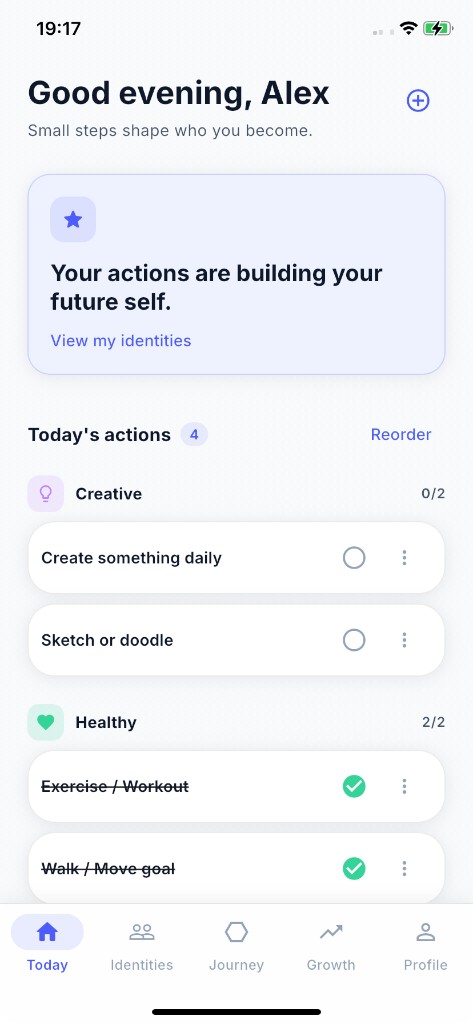
Ascend logs movement under identity habits. Health sync can capture workouts automatically from Apple Health or Health Connect. The app does not choose your sport, programme your sets, or fix injuries. It shows whether you practiced exerciser identity this week. That visibility helps when you are not sure if you are improving or just busy. Perfection is not the standard. Pattern is the standard. Review the pattern, not the outliers. If the habit feels too heavy, the version is too large. Cut it in half and try again tomorrow.
Minimum versions save hard weeks. Ten minutes of stretching counts. A walk around the block counts. Exercisers return quickly with something small rather than disappearing until next New Year. The identity is maintained by the floor, not the ceiling. Becoming this person is negotiated in small moments, not declared in a single dramatic announcement. That is how identity grows on ordinary days when motivation is nowhere to be found.
Schedule workouts like appointments
Exercisers put movement on the calendar before the week fills up. Same slots when possible. Tuesday strength, Thursday walk-run, Saturday longer session. Vague intentions lose to booked time. When movement has a slot, it competes less with everything louder: email, kids, one more episode. Small daily votes reviewed weekly beat heroic intentions that collapse by Thursday. You are building evidence, not waiting for a feeling that may never arrive first.
If it is not scheduled, it competes with everything louder. "I will exercise sometime" loses to every urgent thing that arrives at 6pm. Treat movement like a meeting you would not casually skip. You are meeting the person you are becoming. The practice is the point. Results follow repetition more often than they precede it. Return speed after a miss matters more than a perfect streak you cannot maintain.
Protect the slot with preparation. Bag packed, shoes by the door, playlist ready. Scheduling plus preparation beats motivation on tired evenings. Exercisers remove friction because they have learned friction wins when they are already depleted from the day. Minimum versions on hard weeks keep the identity alive when life gets loud. Honest review turns vague guilt into one adjustable change for next week.
Ready to practice a different identity starting today?
Prepare the night before
Bag packed. Shoes by the door. Playlist ready. Friction kills evening gym plans more than laziness. Preparation is an exerciser habit, not a beginner hack you outgrow. Professionals prepare. Beginners who become exercisers adopt the same boring rituals. This is maintenance, not a one-time fix you finish and forget about. You do not need to feel ready. You need to cast the next small vote anyway.
Pair preparation with a consistent cue: after dinner, pack tomorrow's kit. After brushing teeth, lay out shoes. Cues stack until the environment predicts movement. You are not relying on feeling motivated at 7am. You are relying on a system that works when motivation is absent. Identity follows what you repeat on tired Tuesdays, not what you plan on motivated Sundays. The old story says wait until conditions are perfect. The new story says practice now anyway.
Preparation also includes realistic expectations. If you only have twenty minutes, pack for twenty minutes. Do not prepare for a ninety-minute session you will skip because life intervened. Right-sized preparation makes follow-through more likely. Exercisers match the plan to the week they actually have. One honest week of small votes teaches you more than a month of intention without tracking. Ascend can log the practice. It cannot live the identity for you. That part is still yours.
Never miss twice
Miss one day. Fine. Life happens. Miss two in a row and the old couch identity returns with opinions. Exercisers return quickly with a minimum session: ten minutes, stretch only, walk around the block. Return speed matters more than a perfect streak. When the week feels like a blur, the record shows whether the votes still happened. Shrink the habit before you abandon the identity. That is how people last past week three.
Weekly exercise review shows whether you are an exerciser in practice or only in intention. Did you move three times or think about moving three times? Patterns reveal whether the plan is too ambitious, poorly timed, or simply unprotected on the calendar. Peers who make this look easy usually have six months of boring repetition you did not see. You are not behind. You are early in the evidence-gathering phase most people skip.
Shame after a miss makes the second miss more likely. The exerciser identity says return now, not start Monday. One skipped day is data. A skipped week is a story that you are not really an exerciser. Interrupt that story with the smallest possible session today. Perfection is not the standard. Pattern is the standard. Review the pattern, not the outliers. If the habit feels too heavy, the version is too large. Cut it in half and try again tomorrow.
Rest is part of the identity
Becoming someone who exercises includes knowing when not to push. Illness, injury, and burnout are signals, not moral failures. Rest without guilt, then return. Exercisers who last treat recovery as part of the programme, not as falling off the wagon. Becoming this person is negotiated in small moments, not declared in a single dramatic announcement. That is how identity grows on ordinary days when motivation is nowhere to be found.
Ascend tracks consistency, not punishment. Overtraining is still a failure mode, just a less discussed one. If every day is hard and nothing feels good, the plan may be wrong, not you. Adjust before you quit. Sustainable exercisers protect long-term capacity over short-term streaks. Small daily votes reviewed weekly beat heroic intentions that collapse by Thursday. You are building evidence, not waiting for a feeling that may never arrive first.
Rest days can still be identity votes. Gentle stretching, a slow walk, adequate sleep. You are practicing someone who respects their body. That is different from someone who only moves when guilt spikes. Both look like rest from the outside. The identity underneath is different. The practice is the point. Results follow repetition more often than they precede it. Return speed after a miss matters more than a perfect streak you cannot maintain.
What Ascend will not do
Ascend will not count your reps, programme periodisation, or replace a coach. It helps you practice exerciser identity with small daily structure and weekly review. It is not a fitness app in the traditional sense. It is identity infrastructure for movement you choose yourself. Minimum versions on hard weeks keep the identity alive when life gets loud. Honest review turns vague guilt into one adjustable change for next week.
If you hate every form of movement you have tried, keep experimenting. Identity follows the movement you will actually repeat. Dance, hiking, swimming, bodyweight in the living room. The exerciser label is broad on purpose. Narrow it to what fits your life, not what fits Instagram. This is maintenance, not a one-time fix you finish and forget about. You do not need to feel ready. You need to cast the next small vote anyway.
The app also will not block Netflix or drag you off the couch. You still choose. Tracking makes the choice visible. That is enough for some people and insufficient for others. Know what you need and build support accordingly, including professional help if exercise triggers unhealthy patterns. Identity follows what you repeat on tired Tuesdays, not what you plan on motivated Sundays. The old story says wait until conditions are perfect. The new story says practice now anyway.
FAQ
How much exercise do I need to become someone who exercises?
For identity practice, daily movement of fifteen to twenty minutes is often enough to start. You can add intensity later. Consistency defines the identity first.
What if I only exercise at home?
Home workouts count fully. Exercisers are defined by regular movement, not by gym membership. Bodyweight sessions, walks, and short videos all cast votes.
Is Ascend free?
Ascend is free to download. Ascend Pro adds optional extras like unlimited identities and deeper insights via subscription.
Does my data leave my device?
Your identities, habits, and reviews are stored locally on your device by default.