
When finals ended but you are still empty
University burnout recovery is learning how to stop sprinting.
If graduation or break still feels like drowning, your body has not caught up to the calendar. Recovery means rest blocks, sustainable study rhythm, and proof that you are more than output.
Academic burnout outlasts the semester
You expect relief when exams end and the library finally empties. Instead there is numbness, irritability, and a weird guilt because you "should" be happy or productive now that the deadline passed. University burnout is not just tiredness. It is months of cortisol with no off switch your body recognizes. Your body does not read the academic calendar. It reads whether the pace actually changed after finals ended.
Students are trained to tie worth to grades, hours studied, and whether you are the one who "handles it" without complaint. When the system rewards overextension, stopping feels like falling behind even when you are already hurt and sleeping badly for weeks. Cram cycles feel productive until you notice you retained little and hated most of the hours you spent at the desk.
Recovery is rebuilding evidence that rest is allowed, not flipping a switch to senior-year hustle because the syllabus demands it again in September. Your body does not reset because the calendar says break. It resets when the pattern changes, slowly and repeatedly. Honest tracking will show whether you studied or performed studying for anxiety relief while your phone stayed open.
Why a long break alone does not fix the pattern
A week off helps until assignments return with the same density and the same panic at 11pm. Without new habits, you repeat the cycle: cram, crash, promise to change, cram again when fear wins. The break was real. The pattern was waiting. Guilt-free rest is a skill you practice, not a reward you unlock only after every assignment is finished early.
Balanced identity work starts smaller than a life overhaul. One daily rest block with no study, sleep before midnight on weeknights when you can, twenty minutes of movement that is not punishment. Those are boring on purpose because they interrupt the marathon identity you practiced for years. Comparison thrives when nobody admits how thin everyone feels before finals, so silence makes burnout lonelier than it needs to be.
Your weekly workload review asks what actually fit this week, not what an ideal student would have done in a fantasy term with no part-time job and no family obligations. Honest data beats another promise to try harder next semester. One boundary practiced before the crunch beats five invented in panic at 1am when everything feels urgent and nothing is due yet.
Study blocks beat study marathons
The Learner identity in recovery is not "study more until you feel worthy." It is study in focused blocks with real stops, not performance at a desk with your phone open and your soul leaving your body for six hours. Fifty focused minutes with a break beats a marathon that produces guilt and little retention. Finishing a degree without losing yourself is slower work than any single semester admits or any syllabus acknowledges.
Track blocks honestly, including the days you pretended to work while scrolling. Your review will show if you are studying or performing study for anxiety relief. That is useful data, not a moral score to beat yourself with on Sunday night. Recovery is rebuilding evidence slowly that rest is allowed, not flipping a switch because break started on paper.
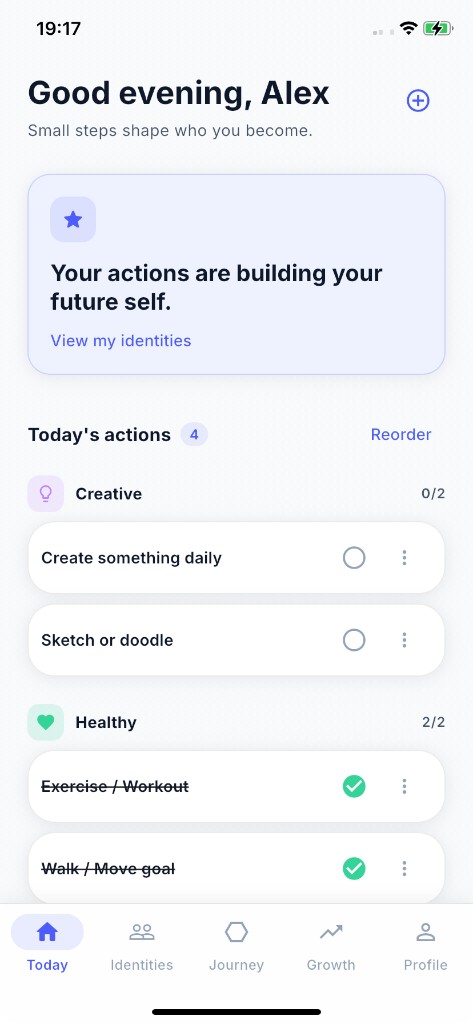
Ascend does not write your essays, block distractions on your laptop, or negotiate extensions with your department. It helps you practice and see a sustainable rhythm when willpower is gone and fear says more hours always equals more safety. Rest blocks feel wrong until your nervous system learns downtime is not stolen time you must repay with guilt.
Ready to practice a different identity starting today?
Rest without homework is a skill
Many students only rest with guilt attached, half-reading notes on the sofa and calling it a break. Rest blocks scheduled like classes feel wrong at first because you were taught downtime is stolen time. They are how you teach your nervous system that recovery is part of learning, not a reward for finishing everything. Movement is maintenance for a brain treated like a machine, not a waste of the hours you think you should grind.
Movement matters too, even when it feels like wasting study time. Twenty minutes of walking is maintenance for a brain that has been treated like a machine since reading week. You are not optimizing fitness. You are discharging stress so Tuesday's block might actually work.
Three weeks of protected rest blocks show up in review as evidence you can be Balanced, not only Stressed. That evidence accumulates slowly. One guilt-free hour does not fix burnout. Twenty of them start to change what your body expects from a student week. Weekly workload review before a busy week beats realizing Friday you are underwater with no room to breathe.
Social comparison makes burnout lonelier
Everyone looks fine on Instagram during finals season. Inside, half your cohort might be on the same edge, sleeping four hours and calling it discipline. Burnout thrives in silence because you assume you are the only one struggling while others seem to thrive. Balanced identity work interrupts the marathon student story you practiced for years without noticing the cost.
One honest conversation with a friend or tutor can change the story from "I am broken" to "this load is unreasonable." Connection habits are not procrastination. They are part of staying human in a system that rewards grinding until something snaps. Three weeks of protected rest blocks are evidence you can be more than stressed, even if grades still matter.
If your institution offers counseling, that is part of recovery too. Apps complement support. They do not replace it when you are not functioning or when thoughts turn dark. Use every resource that fits, not just the one on your phone. Counseling at your institution counts as recovery too, not as failure to handle it like everyone pretends to.
What to change before the next crunch
Before the next deadline wave, decide one non-negotiable: sleep cutoff, rest block, or maximum study hours per day. Enter the crunch with a boundary already practiced, not invented mid-panic at 1am when everything feels urgent and nothing is actually due until Friday. Study blocks with real stops beat desk marathons that look impressive and leave you empty by Sunday night.
Weekly workload review the Sunday before a busy week beats realizing Friday you are already underwater with no room to breathe. Adjust readings, ask for extensions early if that is an option, drop perfection where good enough passes. Recovery is planning evidence that you can study hard without self-destruction. You are not lazy because break did not fix you. Your system may still be running on fumes from last term.
That planning is slow evidence, not a switch. One protected boundary this term is more recovery than a perfect break you cannot sustain when classes resume.
Practice being a student who lasts
Import a university burnout recovery plan with Balanced and Learner identities, rest blocks, movement, and weekly workload review. Tailor habits to your term, then protect them like you would protect a grade that matters, because your capacity is part of what makes the grade possible.
You are not trying to become the student who does the most hours. You are trying to become someone who can finish a degree without losing themselves in it. That shift is slow, unglamorous, and still worth tracking when motivation returns in fragments.
It is still worth tracking. A semester of logged rest blocks and honest reviews is proof you can change the pattern, not just survive until graduation and collapse afterward.
FAQ
Can I recover from university burnout while still studying?
Often yes, if you lower load and add rest habits instead of waiting for a perfect gap. Recovery is adjusting rhythm during study, not only after graduation.
What if my program does not allow balance?
Some programs are genuinely overloaded. Still track what you control: sleep, breaks, movement. Use review data to advocate for yourself or plan exit if the cost is too high.
Is Ascend free?
Ascend is free to download. Ascend Pro adds optional extras like unlimited identities and deeper insights via subscription.
Does my data leave my device?
Your identities, habits, and reviews are stored locally on your device by default.