
When pushing through stopped working
Burnout recovery is slow evidence, not a weekend reset.
If you are exhausted in a way sleep does not fix, you are probably not lazy. You are depleted. Recovery means rebuilding proof that rest and boundaries are allowed.
Burnout feels like a character flaw until you name it
Burnout rarely arrives as a single dramatic collapse you can point to in a calendar. It creeps in as Sunday dread around 4pm when you start rehearsing Monday in your head, a shorter fuse with people you love over dishes in the sink, and the sense that every ordinary task costs twice the energy it used to. You keep showing up because that is what you have always done, what paid the bills, what earned the reliable label at work. Then one ordinary Tuesday at 9:15am you sit with coffee in hand and cannot make yourself open the first email.
The cruel part is how easy it is to misread depletion as a character problem. You tell yourself you need more discipline, a better morning routine, a harder push, maybe a new planner that finally fixes everything. That story makes sense if you have only ever been rewarded for output and never taught what rest looks like in practice. It stops making sense when the tank is empty and refilling it with willpower does not work, when even fun plans feel like chores, when you fantasize about getting sick just to have permission to stop.
Naming burnout is not an excuse to quit everything tomorrow or blow up your life without a plan. It is permission to stop treating exhaustion like a personal failure that more grit will fix. Recovery starts when you admit the old pace was unsustainable, not when you finally have the energy for a full life overhaul. You can name the problem while still showing up to what matters. The difference is you stop pretending the cost is zero and start counting what the old speed actually took from you.
Why the bounce-back fantasy makes things worse
Search results love the fantasy: one digital detox weekend, a spa day, a bold resignation letter, and you are back to your old self by Monday. Real burnout recovery looks quieter and less photogenic. It looks like going to bed at 10pm on a Wednesday because you are tired, not because you earned it through suffering. It looks like leaving one meeting early because your chest feels tight and you finally listen.
Big gestures can help for a day or even a long weekend. They rarely change the underlying pattern of giving from an empty account. If your job, caregiving load, or self-imposed standards still demand the same output, you slide back within weeks and feel worse for having tried. That rebound is not weakness. It is what happens when structure stays the same and only your guilt changes.
Recovery is rebuilding evidence slowly, not flipping a switch. You need repeated proof that rest counts, that saying no does not destroy your reputation, and that a slower week does not mean you have fallen behind forever. One protected evening does not fix burnout. Twenty protected evenings across two months start to change what your body believes about safety.
What actually helps when motivation is gone
When you are burned out, inspiration is not missing because you forgot your purpose. Your nervous system is asking for safety and lower load, and no podcast can override that signal for long. Useful actions are small and repeatable: a twelve-minute walk without your phone, a hard stop time for work at 6:30pm, one block of twenty minutes where nothing is productive and nobody needs you.
Identity framing helps here when willpower feels like a joke. Instead of "I should be productive again," try "I am someone who protects my energy." That sounds soft until you track it. Three evenings in a row where you stopped work at six is data. It is not a full recovery, but it is evidence the old loop can change without waiting to feel ready first.
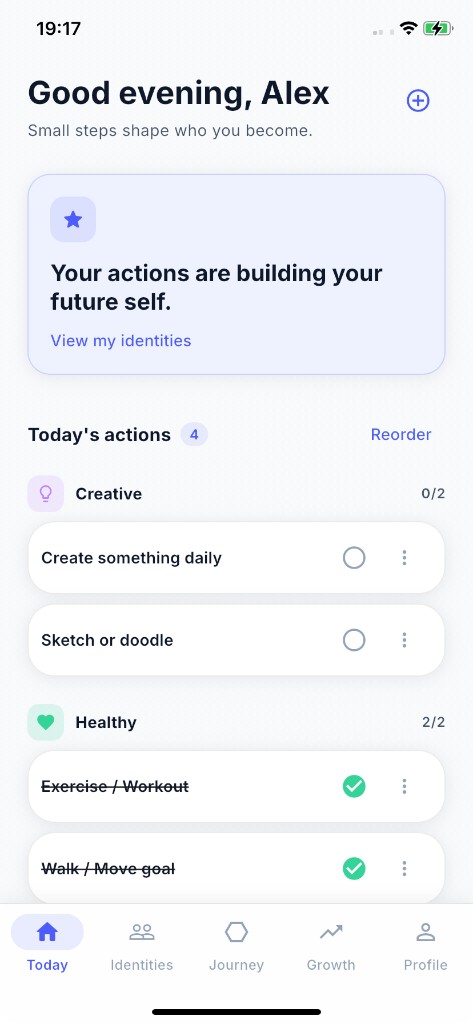
Ascend will not fix your workplace, negotiate your workload, or magically restore eight hours of deep sleep. It gives you a place to log those small votes and review them weekly, so recovery stops feeling invisible on the days when nothing dramatic happened. That visibility matters when your brain insists nothing is changing.
Ready to practice a different identity starting today?
The weekly review matters more than the perfect day
Burnout recovery is uneven in a way daily tracking punishes. You will have a good Thursday where you left work on time and a wrecked Friday where you ate dinner over your keyboard at 9pm. Daily streak thinking makes that feel like failure instead of a normal wobble. A weekly review asks a better question: did I protect my energy more often than last week?
Patterns show up at that scale that you cannot see from a single checklist on one bad night. Maybe you rest well on weekends and burn out again by Wednesday because Monday meetings never moved. Maybe one volunteer commitment drains you every time and you keep saying yes out of habit and guilt. The weekly view turns vague exhaustion into something you can actually adjust.
Ten minutes on Sunday beats another hour of scrolling for "burnout tips" that all say the same thing. Look at what you actually did, not what you wish you had done. Adjust one thing for the coming week, one boundary, one rest block, one commitment to decline. That is enough. Recovery is rebuilt in those small adjustments, not in perfect weeks.
Boundaries are habits, not speeches
People talk about boundaries like they are a conversation you have once and then everyone respects forever. In practice they are small repeated actions: closing the laptop at 7pm, not checking email in bed, leaving the group chat on mute after 8pm, saying you cannot make Thursday without a long apology. Each one is awkward the first few times and gets easier only through repetition.
You do not need a dramatic manifesto to your boss or family to start recovering. You need a default you can repeat when guilt shows up at 8:45pm and your thumb hovers over Slack. "I do not take calls after seven" is a habit, not a one-time announcement. Saying it once and then answering anyway is what erodes trust with yourself faster than never saying it at all.
Track boundaries the same way you would track exercise or sleep anchors. They are evidence you are becoming someone who protects recovery, not someone who negotiates with exhaustion every night until you collapse. Missed boundaries belong in the review too. They show you where the real pressure lives, not where you wish it lived.
What to expect in the first month
The first two weeks often feel worse before they feel better. You finally slow down and notice how tired you are, which can feel like failure if you expected rest to fix everything immediately. That crash is normal. Do not interpret it as proof you should speed up again or that rest is not working for someone like you.
By week three or four, small wins start to accumulate in ways that are easy to miss. You might notice slightly clearer mornings, or that you snapped less at dinner on Tuesday, or that you left work before dark twice in one week. The job might still be hard. The difference is you are not spending your last reserves pretending you are fine.
If symptoms are severe, persistent, or include hopelessness that will not shift, professional support matters and should come first. Ascend is structure for daily actions, not a substitute for medical or mental health care. Use habits alongside treatment when you have it, not instead of care you need.
Start with proof, not pressure
Pick one recovery identity and two or three actions sized for your worst week, not your best. Protector habits might be a daily twenty-minute rest block and one weekly no to a draining commitment. Grounded habits might be a short walk after lunch and a ten-minute energy audit on Sunday where you name what drained you.
Importing a starter plan in Ascend sets that up in one tap. You get identities, habits, and a weekly review rhythm without building a system from scratch while you are already tired. You can remove habits that feel wrong and add others later. The point is to start logging proof before you feel like a person who deserves recovery.
You are not trying to become a new person by Monday. You are trying to become someone who has evidence that recovery is allowed even when output drops. That evidence builds slowly, and slow is the point. A month of small protected evenings is more honest recovery than one heroic week you cannot repeat.
FAQ
How long does burnout recovery usually take?
There is no fixed timeline. Many people feel somewhat steadier after four to eight weeks of consistent rest and boundary habits, but deep burnout can take months. Track small weekly improvements rather than waiting for a single "fixed" moment.
Can a habit app really help with burnout?
An app cannot change your workload or replace therapy. It can help you repeat small recovery actions and see that you are making progress when everything still feels slow. That visibility matters when motivation is low.
Is Ascend free?
Ascend is free to download. Ascend Pro adds optional extras like unlimited identities and deeper insights via subscription.
Does my data leave my device?
Your identities, habits, and reviews are stored locally on your device by default.