
Money habits as daily identity
Financial discipline is a practiced attention, not a budget you open once.
Becoming financially disciplined means small daily money habits and weekly spending review, not waiting until you earn more to start paying attention.
Discipline starts with seeing the truth
Many people avoid balances because shame feels louder than information. Financially disciplined people look anyway. Not because they are morally superior. Because you cannot steer a car with your eyes closed. Avoidance makes the mystery worse and the anxiety louder. When the week feels like a blur, the record shows whether the votes still happened. Shrink the habit before you abandon the identity. That is how people last past week three.
Becoming X means casting small daily votes, not waiting to feel ready. Log today's purchases. Glance at the balance. Small votes of attention. You do not need a perfect budget on day one. You need proof that you are someone who looks. Peers who make this look easy usually have six months of boring repetition you did not see. You are not behind. You are early in the evidence-gathering phase most people skip.
The first week of logging is often uncomfortable. That discomfort is data too. It means you have been operating without full visibility. Visibility is the foundation every other money habit builds on. Start there before you make dramatic rules you will not keep. Perfection is not the standard. Pattern is the standard. Review the pattern, not the outliers. If the habit feels too heavy, the version is too large. Cut it in half and try again tomorrow.
Log every purchase
Not to punish yourself. To end the mystery. Coffee, subscription, impulse Amazon, round of drinks. The disciplined identity collects data before it makes rules. Rules without data are guesses. Guesses feel virtuous for a week and then collapse when life gets messy. Becoming this person is negotiated in small moments, not declared in a single dramatic announcement. That is how identity grows on ordinary days when motivation is nowhere to be found.
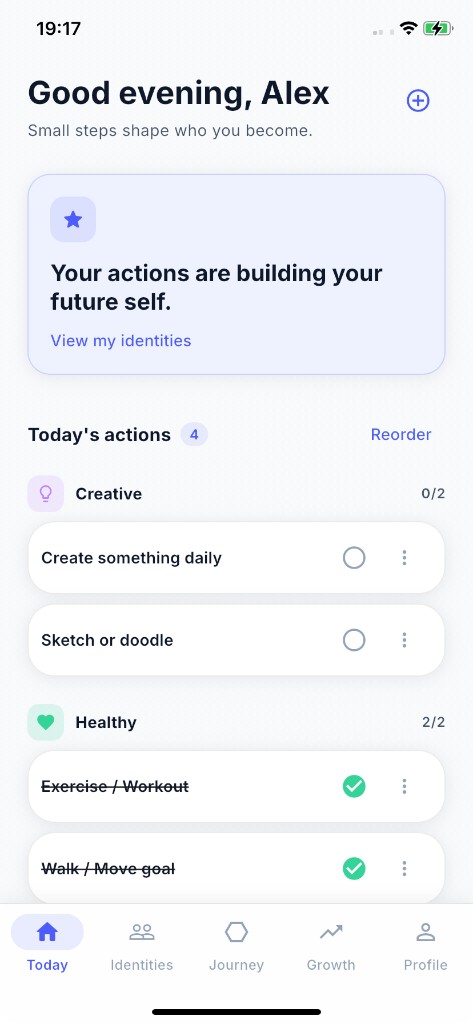
Ascend tracks habits like purchase logging and spending review. It is not a bank, not a budgeting app with categories, and not financial advice. It structures daily attention so money stops being a blur you only notice when the card declines. Small daily votes reviewed weekly beat heroic intentions that collapse by Thursday. You are building evidence, not waiting for a feeling that may never arrive first.
Logging works best when it is fast. One line, one amount, move on. Perfect categorization can come later. The goal is the habit of noticing, not a spreadsheet that eats your evening. Financial discipline is practiced attention, not accounting theater. The practice is the point. Results follow repetition more often than they precede it. Return speed after a miss matters more than a perfect streak you cannot maintain.
Twenty-four-hour rule for non-essentials
Impulse buys love speed. The Intentional identity waits one day on non-essentials. Not forever. Twenty-four hours. Most impulses pass. The ones that remain might be worth it. Waiting separates want from need without requiring monk-like austerity. Minimum versions on hard weeks keep the identity alive when life gets loud. Honest review turns vague guilt into one adjustable change for next week.
This rule fails if you label everything essential. Be honest about wants versus needs. Groceries are essential. The fifth candle in the cart might not be. The rule is a pause, not a ban. Pauses protect future you from present you at 11pm with a credit card. This is maintenance, not a one-time fix you finish and forget about. You do not need to feel ready. You need to cast the next small vote anyway.
Put the item in the cart and close the tab. Set a reminder for tomorrow. If you still want it and can afford it, buy it with less regret. If you forgot, you saved money and learned something about impulse patterns. Identity follows what you repeat on tired Tuesdays, not what you plan on motivated Sundays. The old story says wait until conditions are perfect. The new story says practice now anyway.
Ready to practice a different identity starting today?
Save on payday, not if money is left
Leftover money rarely survives the month. Lifestyle expands to fill available cash. Transfer to savings when income lands, even if the amount is small. Financially disciplined people pay future selves first in whatever size they can manage. Five dollars counts. Zero counts as a vote against the identity. One honest week of small votes teaches you more than a month of intention without tracking. Ascend can log the practice. It cannot live the identity for you. That part is still yours.
If you are in debt crisis, talk to a qualified adviser. Habit tracking supports stability. It does not replace professional financial help when the math is broken or collectors are calling. Know when attention habits are enough and when you need more firepower. When the week feels like a blur, the record shows whether the votes still happened. Shrink the habit before you abandon the identity. That is how people last past week three.
Automate if you can. Automation removes the daily negotiation. Manual transfers work too if automation feels scary. The principle is the same: save first, spend what remains, not the reverse. Identity follows the order of operations you repeat. Peers who make this look easy usually have six months of boring repetition you did not see. You are not behind. You are early in the evidence-gathering phase most people skip.
Weekly spending review
Friday or Sunday, review the week. What surprised you? What category crept up? What purchase you do not remember enjoying? Review turns vague guilt into adjustable behavior. You cannot fix what you never looked at. Perfection is not the standard. Pattern is the standard. Review the pattern, not the outliers. If the habit feels too heavy, the version is too large. Cut it in half and try again tomorrow.
One adjustment per week is enough. Cut a subscription, lower a limit, remove a saved card from the browser. Small adjustments compound without requiring a dramatic lifestyle overhaul that fails by Wednesday. Financial discipline is maintenance, not a one-time purge. Becoming this person is negotiated in small moments, not declared in a single dramatic announcement. That is how identity grows on ordinary days when motivation is nowhere to be found.
Ascend weekly review pairs well with this habit. Did you log most days? Did the twenty-four-hour rule get used or ignored? Patterns matter more than any single expensive Tuesday. Review the pattern, adjust one lever, repeat next week. Small daily votes reviewed weekly beat heroic intentions that collapse by Thursday. You are building evidence, not waiting for a feeling that may never arrive first.
Identity beats restriction theater
Extreme budgets fail like extreme diets. They work until they do not, then shame arrives and spending spikes. Financial discipline is who you practice being: someone who notices money, delays impulses, and protects future you. Identity is sustainable. Restriction theater is not. The practice is the point. Results follow repetition more often than they precede it. Return speed after a miss matters more than a perfect streak you cannot maintain.
Shame spirals make spending worse. Evidence and small adjustments make it better. When you overspend, the disciplined response is curiosity, not self-attack. What triggered it? What one change prevents repeat? Return to logging tomorrow. Return speed matters. Minimum versions on hard weeks keep the identity alive when life gets loud. Honest review turns vague guilt into one adjustable change for next week.
Tell yourself a different story. Not "I am bad with money." Try "I am someone who looks at money weekly." That story invites practice. The shame story invites hiding. Hiding prevents the votes that actually change behavior over months. This is maintenance, not a one-time fix you finish and forget about. You do not need to feel ready. You need to cast the next small vote anyway.
Honest limits
Ascend cannot negotiate your rent, fix income inequality, or provide investment advice. It helps you practice financial attention daily. If you need a full budgeting system, debt snowball plan, or investment strategy, use tools and professionals built for that. Identity follows what you repeat on tired Tuesdays, not what you plan on motivated Sundays. The old story says wait until conditions are perfect. The new story says practice now anyway.
Use Ascend for identity-level consistency around money habits: logging, pausing, reviewing. Layer it alongside whatever financial infrastructure you already have or plan to build. The app is not a bank and not a financial adviser. One honest week of small votes teaches you more than a month of intention without tracking. Ascend can log the practice. It cannot live the identity for you. That part is still yours.
Structural problems need structural solutions. Habits help at the margins and with daily attention. They do not replace higher income, affordable housing, or professional debt counseling when those are the real bottlenecks. Be honest about which problem you are solving. When the week feels like a blur, the record shows whether the votes still happened. Shrink the habit before you abandon the identity. That is how people last past week three.
FAQ
Can habit tracking really help with money?
It helps with daily attention and review, which many people avoid. It does not replace budgeting tools, financial advice, or addressing structural income problems.
What if I am living paycheck to paycheck?
Daily logging and weekly review still help some people find leaks and reduce impulse spending. If you are in crisis, seek qualified financial support. Habits alone may not be enough.
Is Ascend free?
Ascend is free to download. Ascend Pro adds optional extras like unlimited identities and deeper insights via subscription.
Does my data leave my device?
Your identities, habits, and reviews are stored locally on your device by default.