
Escape the spend loop
Overspending is not math illiteracy. It is relief you buy with tomorrow's anxiety.
Carts at midnight, packages you forgot ordering, the rush before the regret. The loop is emotional before it is financial.
When spending feels automatic
You open an app when stressed, bored, or celebrating. Checkout is one click. The dopamine hits before the item arrives. Later, guilt joins the clutter in your hallway and the balance you did not want to look at. The loop often peaks when you feel you have already been good all week.
Overspending is not only a budget problem. It is a regulation problem with a credit card attached. The purchase regulates mood faster than journaling, calling a friend, or sitting with discomfort. That speed is why the habit sticks even when you know the math. Many people notice the urge spike after a hard conversation they never processed.
You might tell yourself the buy was practical while knowing it was emotional. Rationalization is part of the loop. Naming that does not excuse debt. It points toward friction, visibility, and a different identity instead of another lecture about lattes. Shame after spending often triggers more spending, which is why hiding purchases makes the loop worse.
Many smart people overspend. The loop is emotional before it is financial, which is why spreadsheets alone rarely fix it. You are not bad with money in some permanent way. You are practiced at buying relief. Change starts when you treat checkout like a mood event, not only a money event.
The identity loop
You may practice the person who buys to change how they feel. Sales, influencers, and "treat yourself" culture reinforce the story that spending equals care. The cart becomes proof that you deserve comfort after a hard day. The identity wants proof that hard weeks still contain pleasure.
Payday can trigger a splurge even when bills are tight because the identity wants a reward after grinding. Sad Sundays and lonely evenings open the same apps with different excuses. The feeling changes. The reflex stays. Different excuses can hide the same reflex: buy now, feel better for ten minutes.
Friends who seem disciplined often have different triggers, not superior character. Comparison feeds shame, and shame opens wallets. Financially Disciplined and Intentional Spender are built through logs, waiting rules, and weekly spending review. Boring habits beat inspirational budgets because they survive stressful Tuesdays.
You are not broken. You learned fast relief. You can learn slower proof that still feels good. Each logged purchase and each resisted impulse is a vote for someone who chooses spending instead of being chosen by it. Identity shifts when your bank behavior matches your values often enough to notice.
Why budgets fail without behavior change
Spreadsheets do not stop midnight carts. Willpower is weakest when you are tired and lonely, which is exactly when targeted ads find you. A budget on paper does not exist at 11pm when your thumb knows the checkout flow by heart. A color-coded budget does not interrupt the moment your thumb hovers over buy now.
A budget without daily behavior is a wish. You need actions small enough to do when stressed: log the purchase, wait twenty-four hours, check the balance once without spiraling. Tiny actions survive bad days. Grand plans do not. Stressful seasons expose whether your plan was identity or performance.
You might hit budget targets in quiet weeks and blow them during stressful ones. That swing is identity data. The loop tightens when spending is the only regulation tool you trust. Secrecy keeps the loop alive because no one sees the pattern repeat.
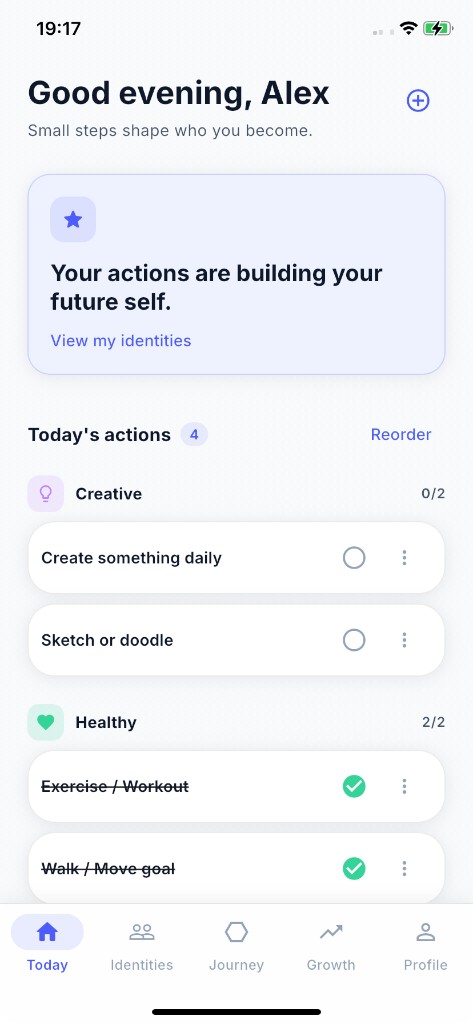
Ascend does not link to your bank or freeze cards. It structures habits: log every purchase same day, check balance once daily, twenty-four-hour rule before non-essential buys. Friction plus visibility beats shame plus secrecy. Willpower is a backup system. Daily proof is the primary system.
Ready to practice a different identity starting today?
Triggers that open the wallet
Payday, payday boredom, social comparison, sad Sundays, alcohol, targeted ads. Map yours for a week before you try to fix all of them. Triggers are design specs, not moral failures. Write triggers down for a week before trying to fix all of them at once.
Unsubscribe from one marketing email weekly. Boring maintenance reduces impulse surface area without requiring a personality transplant. Fewer pings means fewer moments where buying feels like the default next step. Delete shopping apps from your home screen if you open them without thinking.
Notice the feeling ten seconds before checkout. Bored, lonely, anxious, deserving: the label matters more than the item name. Write it in your log if you buy anyway. Patterns appear faster than guilt fades. Stacked triggers are common: alcohol plus sale alerts plus a lonely evening.
Remove saved cards where you can. Extra clicks save real money. Notice whether you shop alone at night. Late-night browsing is rarely about needing something. It is about needing something to do with a feeling. Context is a design problem you can engineer around once you see it clearly.
Daily financial proof
Log purchases the day they happen while memory is honest. Estimates hide patterns. "About fifty dollars" becomes a lie by the end of the month. Same-day logging is a vote for Intentional Spender even when the purchase was impulsive. Honesty is the habit, even when the purchase already happened.
Twenty-four-hour rule: put non-essentials in cart, wait, revisit. Many urges die overnight when the emotional spike passes. The item that felt urgent at midnight often looks optional at lunch. Waiting twenty-four hours turns many urges into data instead of debt.
One daily balance check keeps reality visible without obsessive refreshing. Choose a fixed time, like after morning coffee, so it becomes ritual not panic. You are practicing someone who looks at money on purpose. Ritual beats panic when you check balance at the same time each day.
If you slip and buy without waiting, log it honestly and note the trigger. Perfection is not the habit. Visibility is. Each logged day is a vote for Intentional Spender, even if you bought something. Ascend helps you see whether your week matched Intentional Spender proof.
Weekly spending review
Review categories without calling yourself stupid. What was impulse? What was planned? What emotion preceded slips? The review is detective work for next week, not a verdict on your character. One layer at a time is easier to fix than everything at once.
Look for stacked triggers: drinks with friends plus sale alerts plus a hard week at work. One layer at a time is easier to fix than everything at once. Patterns beat willpower lectures. Direction over months matters more than a perfect frugal week.
Compare this week to last month, not to an imaginary perfect spender. Direction matters. Fewer midnight carts and more planned purchases is progress even if the total is not zero. Regular review prevents surprise statements and midnight regret spirals.
Adjust one rule next week. Smaller fun budget, no-phone shopping, cash envelope for one category. Ascend's weekly review makes money talk regular instead of crisis-only. Identity grows through repeatable review, not through shame spikes.
Honest limits
Ascend is not financial advice or debt counseling. Serious debt needs professional help. The app supports habit identity, not bankruptcy strategy. Use the right tool for the right layer of the problem. Serious debt needs professional help alongside any habit structure.
It will not block Amazon or cancel subscriptions for you. It helps you practice Intentional Spender proof daily so your behavior matches your values more often. Friction in the real world still matters. The app supports identity practice, not bankruptcy strategy.
Partners and shared accounts add complexity the app cannot solve alone. Honest conversations about triggers may matter as much as personal logs. Structure helps you show up with data instead of defensiveness. Shared finances may need shared visibility, not only private logs.
You can spend on purpose without spending on autopilot. That difference is the goal, not zero spending or perfect frugality. Progress is fewer regret purchases and more chosen ones, tracked over months. Progress is fewer regret purchases and more chosen ones over time.
FAQ
Should I cut up my credit cards?
Some people need hard barriers; others use alerts, removed saved cards, and waiting rules. If debt is severe, talk to a nonprofit credit counselor. Choose friction that matches your pattern, not Instagram austerity.
How do I handle FOMO spending?
Name the feeling before buying. Social comparison is a trigger, not a command. Log the purchase urge, wait twenty-four hours, and review how often FOMO led to regret in your weekly check-in.
Is Ascend free?
Ascend is free to download. Ascend Pro adds optional extras like unlimited identities and deeper insights via subscription.
Does my data leave my device?
Your identities, habits, and reviews are stored locally on your device by default.