
Organisation as daily maintenance
Organised people reset small surfaces daily.
Becoming more organised is less about perfect systems and more about a few daily closes that stop chaos from compounding overnight.
Organisation is maintenance, not a one-time project
The fantasy is a weekend overhaul: labels, bins, color-coded bliss. Monday arrives and entropy wins by Wednesday. Organised people maintain. They close loops daily so mess never becomes a project that requires a free Saturday you do not have. Peers who make this look easy usually have six months of boring repetition you did not see. You are not behind. You are early in the evidence-gathering phase most people skip.
Becoming X means casting small daily votes, not waiting to feel ready. Clear the desk. Process the inbox. Plan tomorrow. Boring votes. Effective votes. Organisation is not a personality trait you either have or lack. It is a set of repeated closes. Perfection is not the standard. Pattern is the standard. Review the pattern, not the outliers. If the habit feels too heavy, the version is too large. Cut it in half and try again tomorrow.
Stop waiting for the perfect system before you start maintaining. A messy labeled box beats a pristine plan you never implement. Done and repeatable beats ideal and abandoned. The organised identity grows from function, not from Instagrammable storage solutions. Becoming this person is negotiated in small moments, not declared in a single dramatic announcement. That is how identity grows on ordinary days when motivation is nowhere to be found.
Clear your desk at day end
A clear desk is a morning gift. Five minutes before you stop working: cups away, papers stacked, one line about where you left off. Tomorrow-you starts without archaeology. You are not cleaning for moral superiority. You are reducing friction for the person who wakes up tired. Small daily votes reviewed weekly beat heroic intentions that collapse by Thursday. You are building evidence, not waiting for a feeling that may never arrive first.
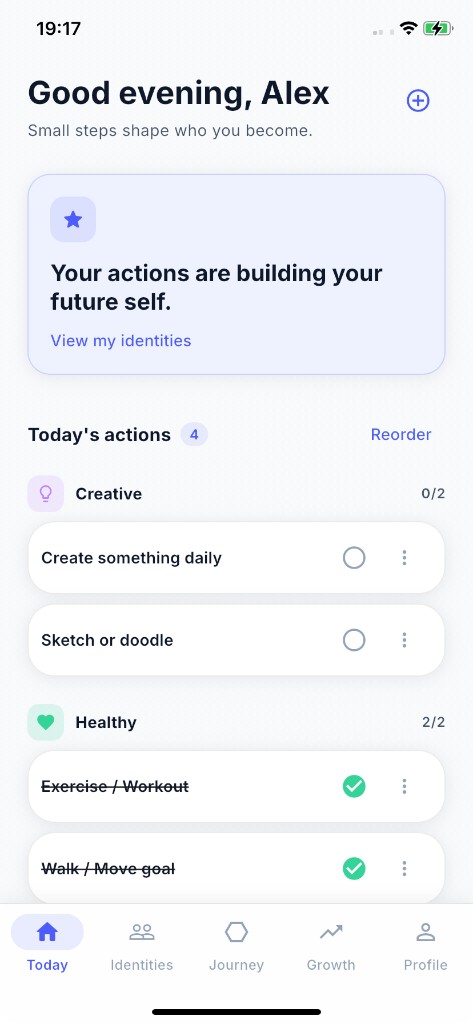
Ascend tracks organisation habits under Organised and Architect identities. The app will not clean your desk. It reminds you that you practice organisation and shows whether you did today. That record helps when the week felt chaotic but you are not sure what slipped. The practice is the point. Results follow repetition more often than they precede it. Return speed after a miss matters more than a perfect streak you cannot maintain.
Minimum version on hard days: stack papers, one line of handoff note, close the laptop. Full reset can wait. The identity is maintained by never letting the desk become a disaster zone that requires a two-hour recovery session. Minimum versions on hard weeks keep the identity alive when life gets loud. Honest review turns vague guilt into one adjustable change for next week.
Inbox to zero once daily
Not respond to everything. Decide everything. Delete, delegate, defer, do. Inbox as a holding pen becomes anxiety with a notification badge. Once-daily processing keeps it a tool. You are not aiming for empty perfection forever. You are aiming for decided. This is maintenance, not a one-time fix you finish and forget about. You do not need to feel ready. You need to cast the next small vote anyway.
If zero feels impossible, try "inbox under twenty" as a minimum version. The number matters less than the habit of processing. Unprocessed email is mental clutter that leaks into evenings. Organised people batch decisions instead of living in reactive mode all day. Identity follows what you repeat on tired Tuesdays, not what you plan on motivated Sundays. The old story says wait until conditions are perfect. The new story says practice now anyway.
Pick a consistent processing time. End of workday pairs well with desk clear. Same time daily trains you and others that email is not instant chat. Boundaries around inbox are organisation habits too. One honest week of small votes teaches you more than a month of intention without tracking. Ascend can log the practice. It cannot live the identity for you. That part is still yours.
Ready to practice a different identity starting today?
Plan tomorrow tonight
Three priorities for tomorrow written before bed or shutdown. Not a hundred tasks. Three. Organised people reduce morning decision fatigue with a short list they already chose. Morning-you is not smarter than evening-you. Morning-you is just more rushed. When the week feels like a blur, the record shows whether the votes still happened. Shrink the habit before you abandon the identity. That is how people last past week three.
Pair planning with the desk clear so physical and mental surfaces match. A clean desk plus three priorities beats a clean desk plus vague dread about what you forgot. The plan should fit on a sticky note. Peers who make this look easy usually have six months of boring repetition you did not see. You are not behind. You are early in the evidence-gathering phase most people skip.
If tomorrow is meeting-heavy, plan minimum versions. One email, one admin task, one creative block if possible. Right-sized planning prevents the list from becoming a guilt document you ignore by 10am. Perfection is not the standard. Pattern is the standard. Review the pattern, not the outliers. If the habit feels too heavy, the version is too large. Cut it in half and try again tomorrow.
One system improvement per week
The Architect identity improves systems slowly. One drawer. One template. One automation. One labeled box. Small improvements compound. Overhauls exhaust and get abandoned when life gets busy. Becoming this person is negotiated in small moments, not declared in a single dramatic announcement. That is how identity grows on ordinary days when motivation is nowhere to be found.
Weekly organisation review asks what clogged your week and what one fix would help most. Lost keys? Hook by the door. Repeat expense confusion? One spreadsheet column. One fix, not twelve. Small daily votes reviewed weekly beat heroic intentions that collapse by Thursday. You are building evidence, not waiting for a feeling that may never arrive first.
Perfectionism is disorganisation in disguise. Waiting for the perfect filing system prevents using a good enough system. Organised is functional, not photogenic. Ship the boring improvement and use it for a month before upgrading. The practice is the point. Results follow repetition more often than they precede it. Return speed after a miss matters more than a perfect streak you cannot maintain.
Perfectionism is disorganisation in disguise
Waiting for the perfect system prevents using a good enough system. Organised is functional, not Instagrammable. A messy labeled box beats a pristine plan you never implement. Done and repeatable beats ideal and abandoned. Minimum versions on hard weeks keep the identity alive when life gets loud. Honest review turns vague guilt into one adjustable change for next week.
If you spend more time researching productivity tools than clearing one surface, perfectionism is winning. Tools serve habits. Habits do not serve tools. Pick one app, one notebook, one method. Use it for thirty days before switching. This is maintenance, not a one-time fix you finish and forget about. You do not need to feel ready. You need to cast the next small vote anyway.
Organised people accept "good enough" in low-stakes areas so energy remains for high-stakes areas. The junk drawer can be messy if the desk is clear and tomorrow is planned. Prioritize maintenance where friction costs the most. Identity follows what you repeat on tired Tuesdays, not what you plan on motivated Sundays. The old story says wait until conditions are perfect. The new story says practice now anyway.
Honest limits
Ascend tracks organisation habits. It does not manage your email, clean your house, or organize shared spaces with family who disagree. You can only control your votes, not everyone else's entropy. One honest week of small votes teaches you more than a month of intention without tracking. Ascend can log the practice. It cannot live the identity for you. That part is still yours.
If ADHD, depression, or chronic overwhelm blocks basic maintenance, professional support may be as important as habit structure. Organisation advice that assumes neurotypical executive function can feel cruel. Adapt systems to your brain or get support that helps you adapt. When the week feels like a blur, the record shows whether the votes still happened. Shrink the habit before you abandon the identity. That is how people last past week three.
The app will not magically create time for a life that is objectively overfull. Sometimes the honest answer is fewer commitments, not better bins. Weekly review includes asking whether the load is realistic, not only whether the desk is clear. Peers who make this look easy usually have six months of boring repetition you did not see. You are not behind. You are early in the evidence-gathering phase most people skip.
FAQ
How long does it take to become an organised person?
Daily maintenance habits often feel different within two to four weeks. Deeper household organisation may take months of small weekly improvements rather than one marathon.
What is the most important organisation habit?
For many people, a nightly shutdown routine that clears the desk and plans tomorrow prevents the most morning chaos. Start there before buying storage products.
Is Ascend free?
Ascend is free to download. Ascend Pro adds optional extras like unlimited identities and deeper insights via subscription.
Does my data leave my device?
Your identities, habits, and reviews are stored locally on your device by default.