
Readers read on busy days too
Ten pages a day beats fifty pages someday.
Becoming someone who reads is about protected reading time and visible books, not about waiting for a quiet vacation to finally open a novel.
You already have time. You spend it elsewhere.
Most non-readers do not lack intelligence or curiosity. They lack protected minutes. The phone fills every gap: waiting for coffee, lying in bed, sitting on the toilet. Becoming a reader is often a subtraction problem before it is an addition problem. You are not finding time. You are reclaiming it from something else. One honest week of small votes teaches you more than a month of intention without tracking. Ascend can log the practice. It cannot live the identity for you. That part is still yours.
Becoming X means casting small daily votes, not waiting to feel ready. Ten pages before sleep is a vote. Scrolling until midnight is a vote too. One of them builds reader identity. The other builds regret and tired mornings. Both count. Only one compounds in the direction you want. When the week feels like a blur, the record shows whether the votes still happened. Shrink the habit before you abandon the identity. That is how people last past week three.
Start with an honest audit. How many minutes did you spend on your phone yesterday? You do not need to quit social media. You need to steal back ten minutes that already exist. Readers are made in the margins of busy lives, not on quiet vacations that never arrive. Peers who make this look easy usually have six months of boring repetition you did not see. You are not behind. You are early in the evidence-gathering phase most people skip.
Keep the book visible
Readers design cues because out of sight loses to TikTok for most people. Book on the pillow, on the coffee table, in the bag. Kindle home screen, not social apps. The path of least resistance should lead to the page, not the feed. Perfection is not the standard. Pattern is the standard. Review the pattern, not the outliers. If the habit feels too heavy, the version is too large. Cut it in half and try again tomorrow.
If the book is hidden on a shelf behind other books, the reader identity loses by default. Visibility is not aesthetic. It is behavioral architecture. You are making the right choice easier than the default choice. Becoming this person is negotiated in small moments, not declared in a single dramatic announcement. That is how identity grows on ordinary days when motivation is nowhere to be found.
Rotate books when one goes stale. A visible book you hate becomes furniture. A visible book you are curious about becomes a trigger. Reader identity grows from positive association. Keep the cue fresh enough that your hand reaches for it instead of the phone. Small daily votes reviewed weekly beat heroic intentions that collapse by Thursday. You are building evidence, not waiting for a feeling that may never arrive first.
Phone away during reading time
Ten focused pages with the phone in another room beat thirty distracted pages with notifications. Reader identity needs a container: same chair, same time, phone elsewhere. Attention is the scarce resource. Pages are cheap. Focused minutes are not. The practice is the point. Results follow repetition more often than they precede it. Return speed after a miss matters more than a perfect streak you cannot maintain.
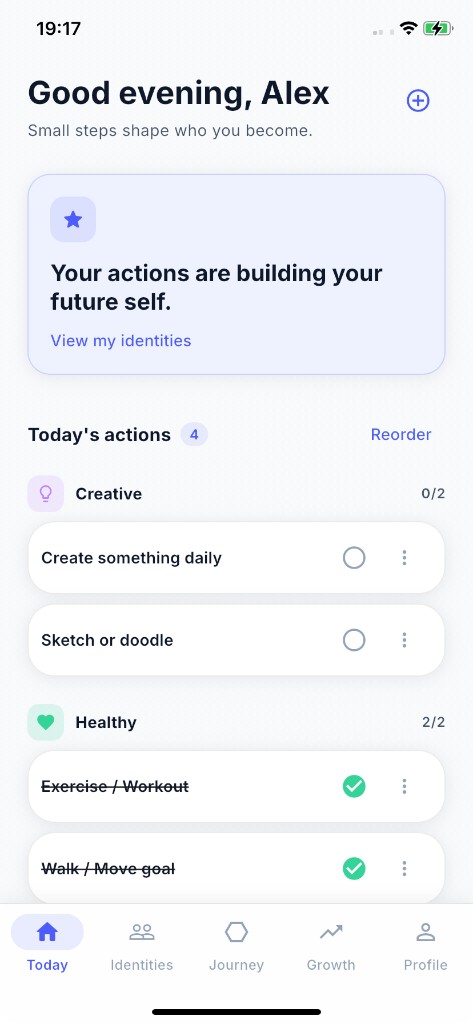
Ascend can track reading minutes or pages under a Reader identity. It will not block your apps or hide your reels. You still choose where attention goes. The app logs whether you practiced reader identity, which helps when the week felt busy but you are not sure if reading happened. Minimum versions on hard weeks keep the identity alive when life gets loud. Honest review turns vague guilt into one adjustable change for next week.
If phone separation feels impossible, start with airplane mode for ten minutes. Full separation can come later. Minimum versions keep the identity alive while you build the muscle of sustained attention in a world designed to fracture it. This is maintenance, not a one-time fix you finish and forget about. You do not need to feel ready. You need to cast the next small vote anyway.
Ready to practice a different identity starting today?
Note one idea
A Learner pairing helps reading stick. One sentence in notes. One idea to try tomorrow. Reading without retention feels pointless fast, especially for nonfiction. One note makes the identity social inside your own head. You are not only consuming. You are integrating. Identity follows what you repeat on tired Tuesdays, not what you plan on motivated Sundays. The old story says wait until conditions are perfect. The new story says practice now anyway.
Notes can be voice memos, paper, or a single line in Ascend. Fancy systems are optional. The bar is low on purpose. One idea remembered beats ten highlighted passages you never revisit. Readers who last connect reading to life, not only to page count. One honest week of small votes teaches you more than a month of intention without tracking. Ascend can log the practice. It cannot live the identity for you. That part is still yours.
Review notes weekly if you want compound returns. A single idea applied beats a book finished and forgotten. The reader identity deepens when books change behavior, even slightly. That is how reading stops feeling like homework and starts feeling like leverage. When the week feels like a blur, the record shows whether the votes still happened. Shrink the habit before you abandon the identity. That is how people last past week three.
Abandon books without guilt
Readers quit bad books. Forcing yourself through a boring title teaches you that reading feels like homework. Life is too short. Drop it. Pick something you actually want tonight. Guilt over an abandoned book is the old student identity, not the reader identity. Peers who make this look easy usually have six months of boring repetition you did not see. You are not behind. You are early in the evidence-gathering phase most people skip.
Identity grows from positive association. Punishment reading kills the identity. If you dread tonight's pages, the habit will not survive month two. Curiosity is fuel. Obligation is sand in the engine. Perfection is not the standard. Pattern is the standard. Review the pattern, not the outliers. If the habit feels too heavy, the version is too large. Cut it in half and try again tomorrow.
Abandoning does not mean you failed. It means you protected the habit. You can return to a hard book later when you have more bandwidth. Reader identity is maintained by contact with text you care about, not by finishing every cover you start. Becoming this person is negotiated in small moments, not declared in a single dramatic announcement. That is how identity grows on ordinary days when motivation is nowhere to be found.
Weekly reading review
How many days did you read? Was it always too late at night when you were half asleep? Did you only read when traveling? Adjust time slot or book choice based on evidence, not guilt. Ten minutes on Sunday beats another week of vague intention. Small daily votes reviewed weekly beat heroic intentions that collapse by Thursday. You are building evidence, not waiting for a feeling that may never arrive first.
Readers are made in ordinary weeks, not on holidays. Vacation reading feels easy because context changes. Home reading is the real test. Weekly review asks whether you practiced reader identity in the life you actually have. The practice is the point. Results follow repetition more often than they precede it. Return speed after a miss matters more than a perfect streak you cannot maintain.
Celebrate small consistency. Five days of ten pages beats one day of eighty. The identity is built from frequency, not heroic sessions. If frequency is low, shrink the daily target before you abandon the habit entirely. Minimum versions on hard weeks keep the identity alive when life gets loud. Honest review turns vague guilt into one adjustable change for next week.
Honest limits
Ascend tracks reading habits. It does not buy you time, block reels, or replace audiobooks if that format fits your life better. Audiobooks count if you want them to count. The goal is regular engagement with long-form ideas, not a specific medium you think you should prefer. This is maintenance, not a one-time fix you finish and forget about. You do not need to feel ready. You need to cast the next small vote anyway.
Become a reader in the format you will repeat, not the format you think you should prefer. Commute listeners are readers. Bedtime page-turners are readers. Snobbishness about format is another way the old identity prevents practice. Identity follows what you repeat on tired Tuesdays, not what you plan on motivated Sundays. The old story says wait until conditions are perfect. The new story says practice now anyway.
The app also cannot make books interesting or life less busy. If you are in a season where reading is genuinely impossible, a minimum version might be one page or one poem. Reader identity can shrink without disappearing. Return when the season shifts. One honest week of small votes teaches you more than a month of intention without tracking. Ascend can log the practice. It cannot live the identity for you. That part is still yours.
FAQ
How many pages should I read a day to become a reader?
Ten pages daily is enough for many busy adults to build identity. You can increase later. Daily contact with text matters more than volume early on.
Do audiobooks count as reading?
For identity practice, consistent audiobook listening can count if that is the format you will maintain. The goal is regular engagement with long-form ideas, not a specific medium.
Is Ascend free?
Ascend is free to download. Ascend Pro adds optional extras like unlimited identities and deeper insights via subscription.
Does my data leave my device?
Your identities, habits, and reviews are stored locally on your device by default.