
Calm as practiced response
Calm people still feel anger. They pause more often.
Becoming calmer is about daily nervous-system habits and practiced pauses, not about never feeling stressed again.
Calm is not numbness
A calm identity does not mean you never feel anger, grief, or urgency. It means you have practiced responses that do not make every feeling worse. React less. Recover faster. Calm people still feel the spike. They have more practice returning to baseline. Becoming this person is negotiated in small moments, not declared in a single dramatic announcement. That is how identity grows on ordinary days when motivation is nowhere to be found.
Becoming X means casting small daily votes, not waiting to feel ready. Five minutes of breathing today is a vote for calm even if traffic still annoys you this afternoon. You are not waiting for life to get easier. You are building capacity inside the life you have. Small daily votes reviewed weekly beat heroic intentions that collapse by Thursday. You are building evidence, not waiting for a feeling that may never arrive first.
Calm is a ratio, not perfection. You will still snap sometimes. The goal is slightly faster recovery and slightly fewer escalations over months. Weekly review tracks the ratio, not individual failures that your brain wants to turn into identity. The practice is the point. Results follow repetition more often than they precede it. Return speed after a miss matters more than a perfect streak you cannot maintain.
Five minutes of breathing or meditation
Daily practice trains the pause muscle. Not because five minutes solves your problems. Because it teaches your body that stillness is allowed in a life that rewards constant motion. The practice is permission, not performance. Minimum versions on hard weeks keep the identity alive when life gets loud. Honest review turns vague guilt into one adjustable change for next week.
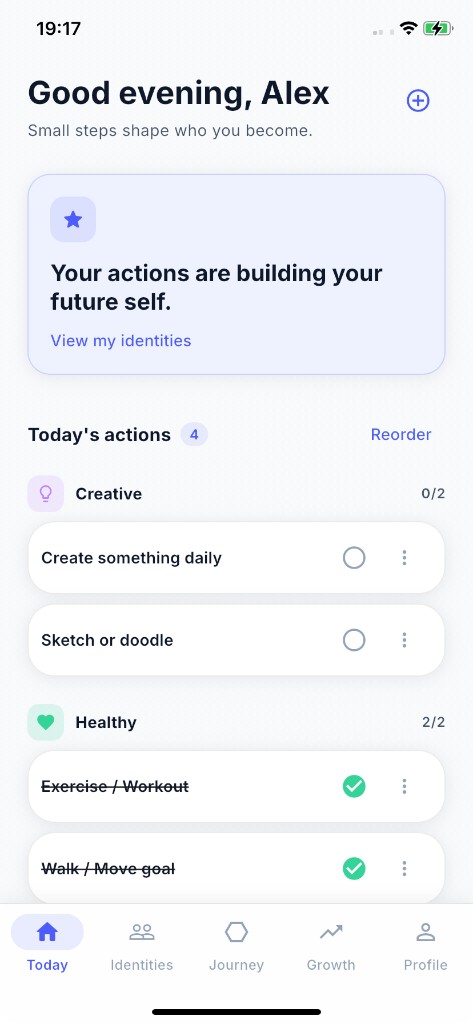
Ascend tracks calm habits under Calm and Present. It does not guide meditation unless you bring your own practice or audio. It logs that you showed up. That record helps on weeks when you feel reactive but are not sure if practice slipped. This is maintenance, not a one-time fix you finish and forget about. You do not need to feel ready. You need to cast the next small vote anyway.
Same time daily helps. Morning before input, or evening before bed. Link it to something you already do: after coffee, before brushing teeth. Cues beat willpower for practices that feel optional until you need them. Identity follows what you repeat on tired Tuesdays, not what you plan on motivated Sundays. The old story says wait until conditions are perfect. The new story says practice now anyway.
Pause before replying when triggered
The email that makes your chest hot. The text that deserves a sarcastic reply. Calm identity practices a gap: breathe, stand up, wait sixty seconds. Reply from choice, not spike. Most regretted messages are sent in the first ninety seconds of activation. One honest week of small votes teaches you more than a month of intention without tracking. Ascend can log the practice. It cannot live the identity for you. That part is still yours.
You will still mess up. Calm is a ratio, not perfection. When you fire back too fast, note it without drama. What triggered you? What would sixty seconds have changed? Adjust tomorrow. Return speed matters more than a perfect record. When the week feels like a blur, the record shows whether the votes still happened. Shrink the habit before you abandon the identity. That is how people last past week three.
Physical movement breaks activation. Stand up, walk to the kitchen, splash water. The body leads the mind more often than we admit. Pauses can be behavioral, not only mental. Use whatever creates distance between trigger and response. Peers who make this look easy usually have six months of boring repetition you did not see. You are not behind. You are early in the evidence-gathering phase most people skip.
Ready to practice a different identity starting today?
Walk without your phone
Movement without input lowers noise. Ten minutes around the block with no podcast sometimes beats another optimization hack. Your nervous system needs boring walks. Constant stimulation keeps baseline arousal high. Calm needs pockets of nothing. Perfection is not the standard. Pattern is the standard. Review the pattern, not the outliers. If the habit feels too heavy, the version is too large. Cut it in half and try again tomorrow.
Daily phone-free walks are votes for a calmer default when stress arrives. You are teaching your body that not every minute requires content. That lesson transfers when someone cuts you off in traffic or a meeting runs long. Becoming this person is negotiated in small moments, not declared in a single dramatic announcement. That is how identity grows on ordinary days when motivation is nowhere to be found.
If ten minutes feels impossible, start with five. Loop the block. No headphones. Notice sky, feet, breath. It is not exercise for fitness. It is exercise for regulation. Different purpose, same daily vote. Small daily votes reviewed weekly beat heroic intentions that collapse by Thursday. You are building evidence, not waiting for a feeling that may never arrive first.
One mindful moment before meals
A single breath before eating sounds small. It interrupts autopilot and reminds you that you are allowed to be here, not only rushing to the next task. Meals become anchors when they are not swallowed while scrolling. The practice is the point. Results follow repetition more often than they precede it. Return speed after a miss matters more than a perfect streak you cannot maintain.
Present identity pairs with calm: meals without scrolling, conversations without half-attention. One breath is the minimum version. Full mindful eating can come later. Start with a pause you will actually keep. Minimum versions on hard weeks keep the identity alive when life gets loud. Honest review turns vague guilt into one adjustable change for next week.
Family meals with kids are chaotic. One breath while sitting down still counts. Calm identity adapts to context. Perfect silence is not required. Intention is required. This is maintenance, not a one-time fix you finish and forget about. You do not need to feel ready. You need to cast the next small vote anyway.
Weekly calm review
Which days felt reactive? What triggered spikes? Did practices slip on busy weeks? Adjust time slots before you conclude calm is not for you. Often the practice did not fail. The schedule did. Identity follows what you repeat on tired Tuesdays, not what you plan on motivated Sundays. The old story says wait until conditions are perfect. The new story says practice now anyway.
Calm grows in ordinary weeks, not only on retreat. Vacation calm is context. Home calm is identity. Weekly review asks whether you practiced regulation in the life you actually live. One honest week of small votes teaches you more than a month of intention without tracking. Ascend can log the practice. It cannot live the identity for you. That part is still yours.
Celebrate small shifts. Maybe you paused once before replying and that alone prevented an argument. Maybe recovery after stress took twenty minutes instead of two hours. Ratio improvements are real even when they feel invisible. When the week feels like a blur, the record shows whether the votes still happened. Shrink the habit before you abandon the identity. That is how people last past week three.
Honest limits
Ascend is a habit tracker, not therapy, not medication, not crisis support. If you are in crisis or struggling with severe anxiety or depression, contact a qualified professional or local helpline. Habit structure supports calm. It does not replace treatment when you need it. Peers who make this look easy usually have six months of boring repetition you did not see. You are not behind. You are early in the evidence-gathering phase most people skip.
The app will not remove stressors from your life: difficult job, grief, financial pressure. It helps you practice responses. Sometimes the stressor needs addressing directly, not only better breathing. Perfection is not the standard. Pattern is the standard. Review the pattern, not the outliers. If the habit feels too heavy, the version is too large. Cut it in half and try again tomorrow.
If practices feel pointless because your nervous system is in survival mode, that is information. Start with professional support if needed. Add daily votes when you have capacity. Calm is not a moral achievement. It is a practiced skill with real limits. Becoming this person is negotiated in small moments, not declared in a single dramatic announcement. That is how identity grows on ordinary days when motivation is nowhere to be found.
FAQ
How long does it take to become a calmer person?
Many people notice slightly faster recovery from stress within a few weeks of daily practice. Deeper calm under high pressure often takes months and may benefit from professional support.
Do I need to meditate to become calmer?
Meditation helps many people, but breathing, walks, and pause practices also count. The key is daily repetition of nervous-system regulation, not a specific brand of mindfulness.
Is Ascend free?
Ascend is free to download. Ascend Pro adds optional extras like unlimited identities and deeper insights via subscription.
Does my data leave my device?
Your identities, habits, and reviews are stored locally on your device by default.