
Early rising as practice, not punishment
Early risers are made the night before.
Becoming someone who wakes up early is less about heroic alarms and more about sleep, cues, and a morning identity you practice before you feel awake.
You cannot cheat sleep forever
Every early-riser fantasy skips the math. If you wake at 5am but scroll until midnight, you are not becoming an early riser. You are becoming a tired person with an aggressive alarm who hates mornings and everyone in them. Sleep debt compounds. No amount of cold showers fixes chronic undersleeping. This is maintenance, not a one-time fix you finish and forget about. You do not need to feel ready. You need to cast the next small vote anyway.
Becoming X means casting small daily votes, not waiting to feel ready. The first vote is often a bedtime alarm, not a morning one. Protecting sleep is how you earn an earlier wake time without white-knuckling through brain fog. Early rising built on sleep deprivation collapses by Thursday. Identity follows what you repeat on tired Tuesdays, not what you plan on motivated Sundays. The old story says wait until conditions are perfect. The new story says practice now anyway.
Start by tracking what you actually do for one week. When do you fall asleep? When do you wake? How do you feel at 3pm? Data beats aspiration. You might discover you need thirty minutes more sleep before you need a louder alarm. Fix the foundation before you chase the fantasy. One honest week of small votes teaches you more than a month of intention without tracking. Ascend can log the practice. It cannot live the identity for you. That part is still yours.
Same wake time daily, including weekends
Consistency trains your body clock in ways that willpower cannot. Wild weekend lie-ins reset the progress you made Monday through Friday. Your body does not know Saturday is special. It learns from repetition. Early risers protect wake time like an appointment with themselves, even when nobody is watching. When the week feels like a blur, the record shows whether the votes still happened. Shrink the habit before you abandon the identity. That is how people last past week three.
If social life makes identical wake times impossible, pick a narrow range instead of a two-hour swing. Wake between 6:30 and 7:00 every day beats 5:30 on weekdays and 9:30 on weekends. The goal is rhythm, not punishment. A narrow range still teaches your body what to expect. Peers who make this look easy usually have six months of boring repetition you did not see. You are not behind. You are early in the evidence-gathering phase most people skip.
The first two weeks feel rigid. That is normal. By week three, many people notice waking before the alarm sometimes. That is evidence the clock is shifting. Do not abandon consistency because week one was hard. Adjust the target time if needed, but keep the pattern steady. Perfection is not the standard. Pattern is the standard. Review the pattern, not the outliers. If the habit feels too heavy, the version is too large. Cut it in half and try again tomorrow.
Morning routine within ten minutes
The old identity negotiates in bed for forty minutes. Snooze, scroll, negotiate, repeat. The early riser identity moves within ten minutes: water, light, clothes, one small action that proves the day started. You do not need a two-hour wellness routine. You need proof that you got up on purpose. Becoming this person is negotiated in small moments, not declared in a single dramatic announcement. That is how identity grows on ordinary days when motivation is nowhere to be found.
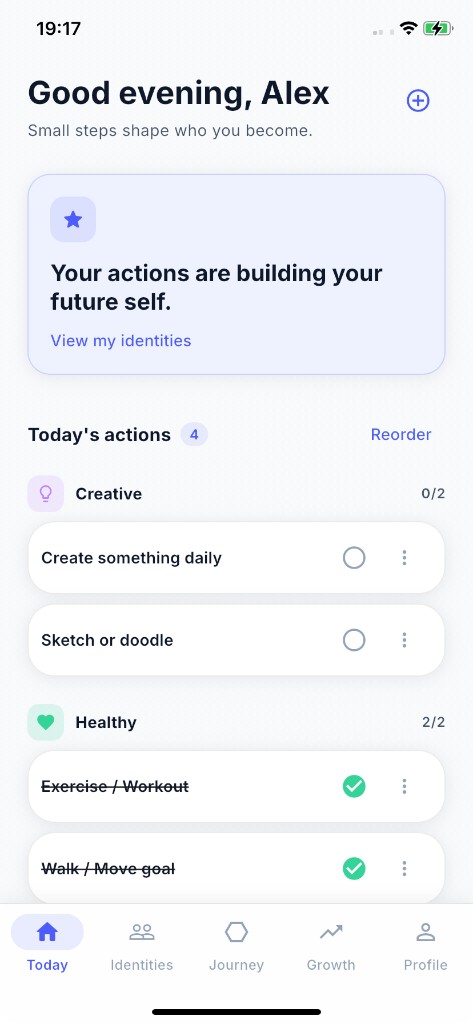
Ascend tracks morning routine habits under Early Riser. The app will not pull you out of bed or block your alarm app. It logs whether you practiced the identity once you chose to stand up. That record helps on weeks when you are not sure if mornings are improving or just feeling different. Small daily votes reviewed weekly beat heroic intentions that collapse by Thursday. You are building evidence, not waiting for a feeling that may never arrive first.
Design a minimum version for hard days. Bad sleep, sick kid, late night. Two minutes: feet on floor, water, open curtains. Minimum versions keep the identity alive when the full routine is unrealistic. Early risers are not perfect. They are consistent with a floor they will not go below. The practice is the point. Results follow repetition more often than they precede it. Return speed after a miss matters more than a perfect streak you cannot maintain.
Ready to practice a different identity starting today?
Sunlight within thirty minutes
Light is a cue your brain still responds to even in a world of screens. Open curtains, step outside, sit by a window with coffee. Especially in winter when darkness lingers. This is not wellness fluff. It is how you tell your brain the day has begun and melatonin can step aside. Minimum versions on hard weeks keep the identity alive when life gets loud. Honest review turns vague guilt into one adjustable change for next week.
An Energised identity pairs well with early rising: sleep, light, movement, not just alarm discipline. Sunlight plus a short walk beats sunlight alone for many people. You are stacking cues that say awake is allowed. Stack slowly if mornings are already overwhelming. This is maintenance, not a one-time fix you finish and forget about. You do not need to feel ready. You need to cast the next small vote anyway.
If you live somewhere with brutal winters or shift work, adapt the principle rather than abandoning it. A bright lamp at breakfast, a five-minute outside walk at lunch, something that breaks the cave of pre-dawn darkness. The exact method matters less than giving your body a reliable morning signal. Identity follows what you repeat on tired Tuesdays, not what you plan on motivated Sundays. The old story says wait until conditions are perfect. The new story says practice now anyway.
Design evenings for mornings
Phone docked outside the bedroom. Caffeine cut-off you actually respect, not one you announce and ignore. Tomorrow's clothes ready. Early mornings are won at 9pm more often than at 5am. The person who scrolls until 1am is making tomorrow's wake time impossible, no matter how good the alarm sounds. One honest week of small votes teaches you more than a month of intention without tracking. Ascend can log the practice. It cannot live the identity for you. That part is still yours.
If your evenings are the only free time you have, shrinking morning ambitions may be smarter than fighting your life structure. Maybe 5am is wrong for you right now. Maybe 6:30 with protected sleep beats 5:30 on five hours. Early rising should serve your life, not punish it. When the week feels like a blur, the record shows whether the votes still happened. Shrink the habit before you abandon the identity. That is how people last past week three.
Build one evening habit at a time. Week one: phone charges in the kitchen. Week two: caffeine cut-off. Week three: lay out clothes. Small votes compound. Trying to overhaul every evening habit on Sunday night fails by Wednesday. Match the pace of change to the pace you will actually keep. Peers who make this look easy usually have six months of boring repetition you did not see. You are not behind. You are early in the evidence-gathering phase most people skip.
Weekly sleep schedule review
Track wake time, bedtime, and energy for seven days. Patterns reveal whether you need earlier sleep, smaller morning goals, or a different wake target entirely. Review beats guessing. Maybe you feel great at 6:30 but wrecked at 5:30. Data lets you adjust without shame. Perfection is not the standard. Pattern is the standard. Review the pattern, not the outliers. If the habit feels too heavy, the version is too large. Cut it in half and try again tomorrow.
Not everyone is biologically suited to 5am. Becoming someone who wakes up early might mean 6:30am consistently, not imitating a CEO podcast. Chronotypes are real. The goal is reliable mornings with adequate sleep, not performing a lifestyle you saw online. Becoming this person is negotiated in small moments, not declared in a single dramatic announcement. That is how identity grows on ordinary days when motivation is nowhere to be found.
Weekly review also catches drift. Travel, deadlines, and social seasons knock schedules around. Ten minutes on Sunday to reset wake time, bedtime alarm, and morning minimum version prevents a month of slow erosion. Early riser identity is maintained, not achieved once and forgotten. Small daily votes reviewed weekly beat heroic intentions that collapse by Thursday. You are building evidence, not waiting for a feeling that may never arrive first.
Honest limits
Ascend cannot fix insomnia, sleep apnea, or a newborn in the house. It will not block apps at night or force your body to sleep. If you are exhausted despite habits, talk to a clinician. Habit structure supports good sleep. It does not replace medical care when something deeper is wrong. The practice is the point. Results follow repetition more often than they precede it. Return speed after a miss matters more than a perfect streak you cannot maintain.
Become early rising gradually. Thirty minutes earlier for two weeks beats two hours earlier overnight. The app tracks whether you practiced early riser habits, not whether biology cooperated with your ambition. Be patient with the body you have, not the body a productivity influencer claims to have. Minimum versions on hard weeks keep the identity alive when life gets loud. Honest review turns vague guilt into one adjustable change for next week.
Some seasons of life are not for 5am. New parent, health crisis, grief. You can pause the ambition without abandoning the identity entirely. A minimum version might be consistent wake time, not early wake time. Honest limits prevent burnout disguised as discipline. This is maintenance, not a one-time fix you finish and forget about. You do not need to feel ready. You need to cast the next small vote anyway.
FAQ
How long does it take to become a morning person?
Many people feel a rhythm in two to four weeks of consistent wake times and protected bedtimes. Feeling cheerful about mornings may take longer, and some people never love mornings despite reliable habits.
Should I use multiple alarms or one?
One alarm plus a non-negotiable stand-up rule works better than snooze chains for most people. Snooze trains negotiation. Early riser identity trains one decision.
Is Ascend free?
Ascend is free to download. Ascend Pro adds optional extras like unlimited identities and deeper insights via subscription.
Does my data leave my device?
Your identities, habits, and reviews are stored locally on your device by default.