
Escape the caffeine loop
Quitting caffeine is not just about headaches. It is about who you are before your first cup.
Coffee is a ritual, a social signal, and a chemical crutch. Stepping off it gently means rebuilding mornings without pretending energy appears on command.
Why caffeine is harder to quit than it looks
Caffeine is woven into morning identity. The walk to the cafe, the mug at your desk, the excuse to pause. Removing it feels like removing a personality trait, not just a drug. Withdrawal headaches and afternoon crashes make day three feel impossible. Many people quit on willpower Monday and are back on espresso Friday.
The loop is chemical and cultural. Both layers need a plan. You might not feel like yourself until the second cup hits. That is not weakness. It is a dependency your body and your morning ritual built together over years.
Office culture runs on coffee. Opting out can feel like opting out of belonging. Plan a drink you can hold in meetings that still signals participation. Afternoon espresso might be a boredom habit, not a energy need. Map context before you map milligrams.
The cafe is social infrastructure for many people. You do not have to abandon it to reduce caffeine. Order decaf or herbal and keep the walk, the barista, the pause. Morning meetings with coffee in hand are performance as much as chemistry. You can perform with herbal tea in the same mug while your body adjusts.
The identity of the caffeinated person
You may practice the person who cannot function before coffee. That story is reinforced every morning you reach for caffeine before water, food, or light. Naturally energised is not a vibe. It is evidence you collect when you replace one coffee with herbal tea, when you walk during an afternoon dip, when you protect sleep.
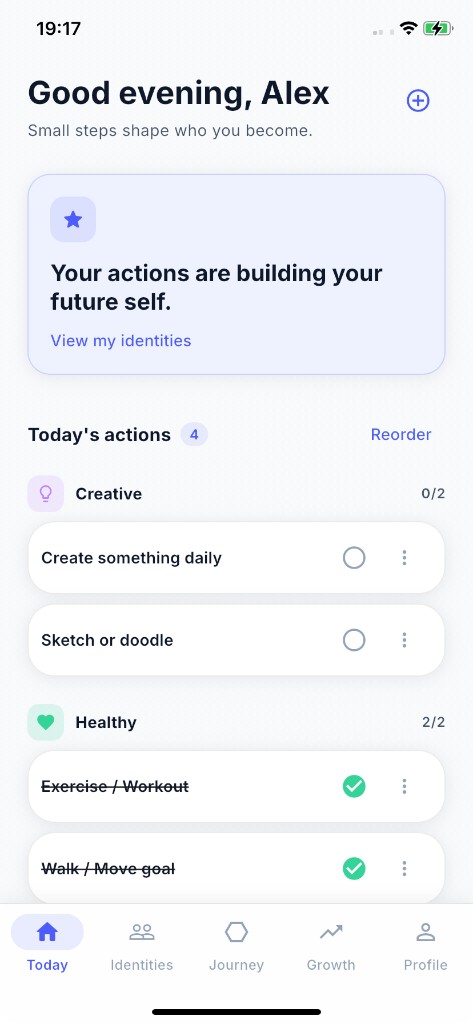
Ascend ties habits to identities like Naturally Energised and Well Rested so progress is visible when motivation is not. You are not broken for needing a stimulant to start the day. You are stuck in a loop where caffeine is the only proof that the day has officially begun. Headaches on day two feel like proof you cannot function.
They are often withdrawal, not truth about your capacity. Half-caf for two weeks is a valid strategy. Identity proof accumulates during tapers too. Afternoon crashes are often self-inflicted.
A 4pm espresso guarantees a 1am mind still spinning. The cutoff is boring because your sleep is worth more than the hit. The identity "I am useless before coffee" is reinforced every morning you believe it. One week of water-first mornings is enough to gather counter-evidence.
Why going cold turkey backfires
Abrupt cessation works for some people. For many, it produces brutal headaches and zero productivity, which becomes proof that "I need caffeine to work." Gradual reduction plus sleep structure often sticks longer. Ascend does not measure your caffeine mg. It tracks daily actions: one swap, no caffeine after 2pm, a walk when energy dips.
Pair caffeine reduction with bedtime habits. Quitting coffee while staying up until 1am is two fights at once. Day four of cold turkey is when many people break. The headache is real and the afternoon crash feels unbearable. A slower taper with logged swaps often survives that window.
Quitting caffeine while sleeping five hours guarantees failure. Pick one fight first. Sleep usually wins. Ascend does not track mg. It tracks whether you did the swap, cutoff, and walk you said you would.
Tapering beats heroics for most people. Half-caf for ten days, then quarter-caf, then herbal. Each step is identity proof if you log it. Energy dips at 3pm are predictable. Schedule a walk before the dip, not after you have already ordered a double shot.
Ready to practice a different identity starting today?
Afternoon crashes and hidden sources
Track all caffeine: coffee, tea, energy drinks, pre-workout, chocolate, some medications. Afternoon slumps often lead to a second hit that ruins sleep. The 2pm cutoff is boring because it works. Protect tonight's sleep to protect tomorrow's energy. When a dip hits, move first.
Ten minutes outside beats another cup for many people. That "decaf" at 4pm might still have enough caffeine to keep you up. Hidden sources are why people swear they quit but still feel wired at midnight. Pre-workout and energy drinks hide caffeine. Check labels on anything you consume after lunch.
The 3pm slump is predictable. Schedule a walk before the slump, not after you have already ordered coffee. Hidden caffeine in pre-workout, soda, and chocolate adds up. A week of reading labels might explain why your 2pm cutoff never worked. Sleep debt makes caffeine feel mandatory.
Fixing bedtime might do more than quitting coffee on its own. Review both in the same weekly check.
Rebuild mornings slowly
Replace the first coffee with water and light exposure within thirty minutes of waking. Your circadian system needs cues, not just stimulants. Keep the ritual, change the liquid. Same mug, same pause, different drink. Identity hates losing rituals entirely.
Log swaps honestly in Ascend. A half-caf week still counts as practice. If your first coffee is at the kitchen counter at 6:10am, start by moving it to 6:30am with water first. Small shifts beat dramatic resets that fail by Wednesday. Light exposure within thirty minutes of waking helps more than people expect.
Try it for one week before deciding caffeine is mandatory. Keep the cafe walk if you love it. Change what you order, not whether you go. Morning light and water before any drink sound soft. Try them for seven days and compare energy at 10am.
Many people discover they were under-hydrated, not under-caffeinated. Taper logs in Ascend turn a vague "I should quit" into daily proof you are practicing Naturally Energised even when the process is messy.
Weekly review and sleep honesty
Review sleep quality weekly alongside caffeine intake. Poor sleep drives caffeine use which drives poor sleep. Break one side of the loop first. If you slipped, note whether you slept late, drank alcohol, or skipped meals. Stacked triggers need stacked fixes.
Ascend's review helps you see whether you are practicing Well Rested or just white-knuckling days. If you drank three coffees on Tuesday and slept badly Wednesday, the connection is obvious in review. Adjust one variable next week, not your entire personality. Alcohol disrupts sleep which drives morning caffeine. Review both together if nights are messy.
Fatigue during taper is temporary for most people. Note which week it peaked so the next taper feels less scary. Review sleep and caffeine together. A late night scrolling plus early coffee plus afternoon energy drink is three layers. Fix sleep first if that is the stack.
Headaches on day three feel permanent. They are not. Note when they peaked so the next attempt feels less frightening.
Limits of a habit app
Ascend will not detox you or treat withdrawal symptoms. Severe headaches, nausea, or mood swings may need a slower taper or medical advice. The app offers structure for identity and daily proof. It does not replace sleep hygiene, nutrition, or professional support when needed. You can become someone who wakes up without needing a stimulant first.
It usually takes longer than a weekend. The app cannot measure caffeine in your bloodstream or block your access to coffee shops. It tracks the habits you choose and the identity you are practicing. Doctors can help with severe withdrawal. An app is not medical advice.
Natural energy is a practice, not a personality you either have or lack. Proof accumulates slowly. Severe withdrawal needs a doctor, not an app. Ascend holds structure for gradual change when tapering is safe and chosen. An app cannot measure withdrawal severity.
If symptoms scare you, slow the taper or talk to a doctor. Structure supports safe change, not reckless heroics. A slower week is still forward motion if you log it honestly.
FAQ
How long does caffeine withdrawal last?
For many people, the worst physical symptoms peak within a few days to a week, depending on intake and taper speed. Fatigue and craving can linger longer. Tracking sleep and gradual swaps usually makes the process more manageable than quitting abruptly.
Should I quit caffeine or just cut back?
That depends on your sleep, anxiety, and goals. Some people target zero caffeine; others cap intake before noon. Identity-based habits work for both if you define clear daily proof and review weekly.
Is Ascend free?
Ascend is free to download. Ascend Pro adds optional extras like unlimited identities and deeper insights via subscription.
Does my data leave my device?
Your identities, habits, and reviews are stored locally on your device by default.