
Escape the binge loop
Binge eating is not greed. It is a relief loop your nervous system learned when food felt like the fastest exit.
If you eat past fullness until you feel numb or ashamed, you are not failing at discipline. You are stuck in a pattern that made sense before it started hurting you.
What binge eating actually feels like
Binge eating is often fast, private, and disconnected. You may not taste food after the first few minutes. The goal is not enjoyment. It is escape from a feeling you do not want to sit with. Shame arrives afterward. Promises to restart Monday.
Hiding wrappers. Skipping meals the next day, which sets up another evening crash. The cycle is brutal and familiar. If this is your pattern, you are not alone and you are not morally broken. You are using a tool your brain learned. It might happen at 9pm after a restrictive day, or at 2pm when work stress peaks and the vending machine is closer than a conversation.
The speed and privacy are part of the loop. Speed is part of the pattern. Eating fast reduces the chance you will notice you are full until after the shame arrives. Hiding wrappers is a sign the identity includes secrecy. Secrecy makes honest review harder. The binge often accelerates after the first few bites.
Speed is how the nervous system gets past choice. Slowing one meal, even slightly, is structural change, not a diet. The pantry at 10pm after a skipped dinner is not a character test. It is a predictable stack. Eat lunch tomorrow before you promise willpower tomorrow night.
The identity loop
You are practicing the person who eats to regulate emotions. Stress, loneliness, boredom, anger, even exhaustion can trigger the same script: kitchen, pantry, fridge, repeat. Restriction makes the loop worse. Skipping lunch does not prove discipline. It often proves the person who will binge tonight because your body and brain are depleted. Mindful eater is built through small proof: one meal without screens, a pause before seconds, regular meal times.
Not perfection. Pattern interruption. You are not broken. You are stuck in an identity loop that gave you short relief when feelings felt unbearable. Food was faster than processing. Restriction in the morning often sets up the evening loop.
Your body is not punishing you. It is responding to perceived scarcity. Compassion is not permission to binge. It is the condition under which change becomes possible. Shame after a binge can trigger restriction the next day. Restriction triggers the next binge.
The swing is the loop. Regular meals interrupt the swing even when they feel wrong. Mindful eating is built in ordinary meals, not retreat weekends. One screen-free breakfast counts even if dinner was hard.
Why diets and shame fail
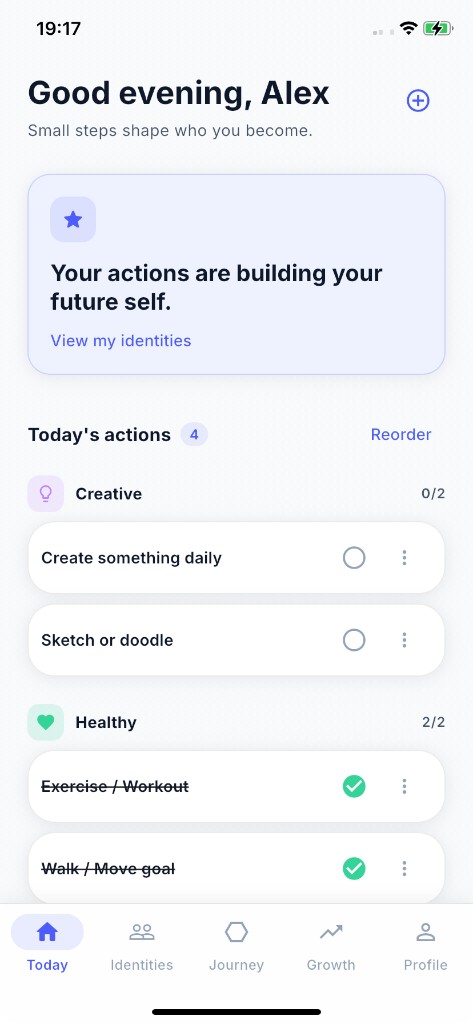
Willpower collapses when you are emotionally flooded. Telling yourself "just stop" adds judgment on top of pain. The binge becomes relief from the judgment too. Ascend is not a calorie tracker or a meal plan. It will not weigh you or label foods good or bad.
It offers identities, daily actions, and weekly review with kindness instead of punishment. Professional support matters for many people with binge eating. Use structure alongside therapy or medical care when you need it, not instead of it. A strict diet on Monday often sets up a binge on Thursday. The swing between control and collapse is the loop, not a personal failing.
Diets that label foods good or bad increase the emotional charge of eating. Neutral language in your head helps even when the app stays neutral too. Therapists who specialize in eating behavior exist because this loop is common and treatable. You are not greedy. You are flooded.
Food was a regulator when other tools were missing or unavailable. That history deserves compassion, not a lecture. Shame whispers that one binge erases all progress. Weekly review shows direction over months. Fewer binges, shorter binges, longer gaps between them.
Ready to practice a different identity starting today?
Triggers worth naming without judgment
Track context, not just food. What happened before the binge? A fight, a lonely evening, a restrictive day, alcohol, poor sleep, scrolling in bed? Evening hours are common danger zones. Alone, tired, unstructured time. Plan one non-food ritual for your hardest window: shower, call, walk, journal one sentence.
Eating one meal without screens sounds small. It is often the first moment you notice fullness before autopilot takes over. Write one word for the feeling before you open the pantry. Anxious. Empty. Angry.
That label is more useful than counting calories afterward. Alone at night after a restrictive day is a classic stack. Plan lunch before you plan willpower. Screens during meals reduce interoception. One screen-free meal is a measurable start. Evening alone is a high-risk window.
Plan one non-food anchor before 8pm on hard days: shower, call, walk, anything that breaks the path to the kitchen. Restriction language in your head makes food louder. Neutral language helps. Not good or bad food. Hunger, fullness, emotion, choice.
Daily habits that reduce the spiral
Regular meal times signal safety to a nervous system that fears scarcity. You do not have to eat perfectly. You have to eat predictably enough that evening panic softens. Pause before second helpings. Ten breaths. A glass of water.
Not as a diet trick, as a gap for choice. Journal one trigger without judgment in Ascend under a Compassionate identity. Naming the feeling reduces its grip. On days you binge anyway, log what happened before it started. That data helps next week more than a promise to be perfect tomorrow. Ten breaths before seconds is not a diet hack.
It is a gap for your nervous system to catch up. Log triggers in one word. Bored. Angry. Empty. Patterns emerge faster than food journals full of calories.
Screen-free lunch might be easier than screen-free dinner. Start where success is plausible. Proof in one meal beats a perfect plan you never attempt. Ten breaths before seconds create a gap the nervous system rarely gets during a binge. Use the gap when you can. Skip the guilt when you cannot.
Weekly review with kindness
Review the week looking for patterns, not crimes. Which days had binges? What stacked beforehand? Fix one variable: sleep, lunch, isolation, harsh self-talk. A slip is information. It is not proof you will never change. People who recover still have hard weeks.
Ascend's weekly review is designed to be honest without cruel. Progress is fewer loops, not a spotless record. If binges cluster on Sunday nights, look at what Sundays share. Unstructured time, loneliness, dread about Monday. One planned ritual for that window is enough to test next week. Recovery includes hard weeks years in. Progress is frequency and intensity of binges, not zero forever.
Kind review asks what you needed in the moment food tried to provide. Connection? Rest? Safety? Weekly review asks what you needed, not what you did wrong. Connection? Rest?
Safety? Food cannot provide those forever, but naming the need points toward real fixes. Kind review on Sunday might reveal that lonely Thursdays always hurt. Plan a call for Thursday next week. That is a fix, not a fantasy about perfect eating.
What Ascend will not do
Ascend is a habit and identity tracking app, not eating disorder treatment. If you are in crisis, purging, or need clinical care, contact a qualified healthcare provider or local helpline. The app will not block food delivery or police your kitchen. It gives structure for mindful identity practice. That helps some people.
It is not sufficient for everyone. You deserve support that matches the seriousness of your struggle. Structure in an app can be one layer among many. The app provides structure, not willpower when you are emotionally flooded at 10pm. It cannot replace the deeper work many people need with a qualified professional.
Crisis lines exist for a reason. If you are purging or in danger, contact professionals immediately. Ascend cannot feel what you feel at 10pm. It can hold structure for the mornings after. If purging, severe restriction, or medical risk appear, contact professionals immediately.
Ascend is structure, not treatment. Ascend cannot sit with you at 10pm. It can hold the structure that makes 10pm less common over time when you use professional help if you need it.
Note: Ascend is a habit and identity tracking app, not medical or clinical treatment. If you are in crisis or need professional support, please contact a qualified healthcare provider or local helpline.
FAQ
Is binge eating the same as having an eating disorder?
Binge eating can be part of clinical eating disorders, but not everyone who binges meets a diagnosis. If your health, safety, or daily life is significantly affected, please seek professional evaluation. Ascend offers habit structure, not diagnosis or treatment.
Should I avoid trigger foods completely?
For some people, rigid avoidance increases binge risk later. Others need temporary distance from certain foods. Work with a professional if you can. In general, regular meals, trigger awareness, and compassionate review beat all-or-nothing rules.
Is Ascend free?
Ascend is free to download. Ascend Pro adds optional extras like unlimited identities and deeper insights via subscription.
Does my data leave my device?
Your identities, habits, and reviews are stored locally on your device by default.