
Escape the drink loop
Cutting back on alcohol is not about being boring. It is about escaping a loop that promises relief and delivers a hangover.
You do not have to hit rock bottom to want change. Many people want fewer drinks, clearer mornings, and less automatic reaching for a glass when the day ends.
When drinking stops feeling optional
A glass with dinner becomes two. Friday drinks become Thursday too. You pour wine while cooking without deciding to. The pattern is quiet until a morning headache or a regretted text makes you wonder. Reducing alcohol is not always about addiction in a clinical sense. Sometimes it is about autopilot. The drink marks the end of work, the start of relaxation, the social permission to loosen up.
Naming autopilot is harder than naming a crisis. That is why moderate drinkers delay change for years. You might pour at 6:15pm every weekday without thinking about it. The bottle is in the same cabinet. The glass is the same size. The ritual runs itself while you tell yourself you deserve it after a hard day. The second glass often pours before you decide you wanted it.
Autopilot pours. That is the loop, not a mystery about your character. Morning-after anxiety is a trigger for some people. Hair of the dog extends the loop into the next day. The pour while cooking is easy to miss because it feels like part of the recipe. Stand in the kitchen one evening without opening the bottle and notice what you actually feel. Bored.
Tired. Done with the day. Work dinners and client drinks blur the line between social obligation and autopilot. Decide before you arrive how many you will have and what you will hold when others reorder. Leaving early is allowed while you build proof.
The identity underneath the pour
You are not broken. You are practicing the person who unwinds with alcohol. That identity formed for understandable reasons: culture, stress, social bonding, boredom. Sober-curious does not mean never drinking again. It means practicing someone who chooses instead of someone who defaults. Each alcohol-free day and each honest log is evidence.
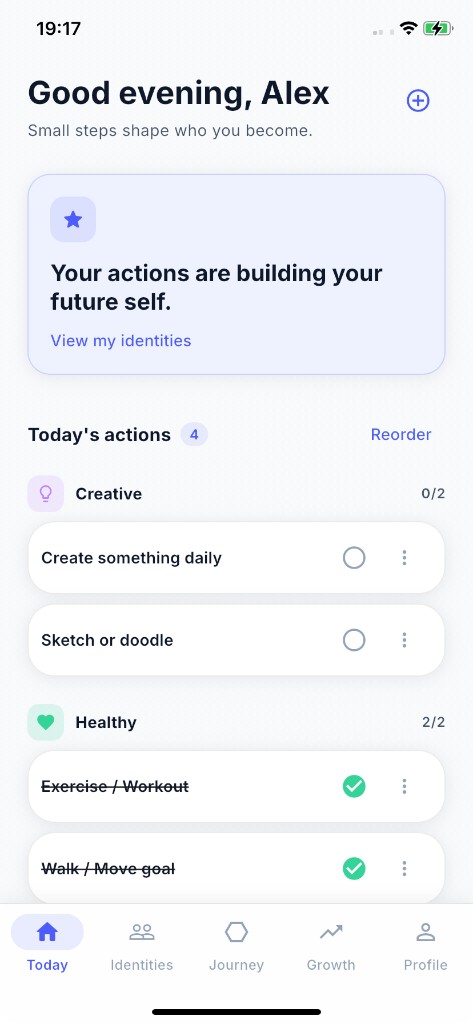
Ascend uses identities like Sober-Curious and Clear-Headed to hold that shift without moralizing. The relief of the first sip is real. Tension drops. The day feels farther away. Then tomorrow arrives with less sleep and more anxiety, and the loop asks for another pour. You can love your friends and still want fewer drinks than they do.
Social identity makes reduction feel like rejection. It is not. Clear-headed mornings are evidence for Sober-Curious. Notice them in review, not just the nights you drank too much. Sober-curious does not require announcing it at every dinner. It requires honest logs and a few alcohol-free days you actually keep.
Private proof counts. The identity loop often sounds like "I deserve this." Deserve is a feeling, not a pour count. You deserve rest and connection too. Alcohol is one delivery method, not the only one.
Why rules like "just have two" fail
Counting drinks in your head fails after the second one. Willpower drops with each pour. Without structure, intentions dissolve exactly when you need them. Ascend does not monitor your blood alcohol level or lock your liquor cabinet. It gives you daily actions: log each drink honestly, keep three alcohol-free days per week, choose a non-alcoholic default at home.
Simple proof beats vague goals. Honest logging sounds uncomfortable. That is why it works. Shame thrives in estimates. A vague goal like "drink less" collapses at 9pm on a Wednesday when work was brutal and the bottle is already open.
Specific daily proof survives that moment better. Rules like "only weekends" collapse when Tuesday was brutal. Flexible alcohol-free days chosen weekly beat rigid rules you break by Wednesday. Ascend will not pour your drinks or hide bottles. Visibility in the app is the tool.
Happy hour culture makes reduction feel like opting out of friendship. It is not. You can show up, leave earlier, hold something NA, and still belong. Willpower at 9pm after a hard day is a fair fight you will often lose. Structure decided at 2pm on Sunday beats negotiation at 9pm on Wednesday.
Ready to practice a different identity starting today?
Triggers that pour the first glass
Map the moments: finishing work, cooking, social anxiety, watching sports, loneliness on a Sunday night. Alcohol is often a transition ritual between roles. Replace the ritual, not just the substance. Sparkling water in a wine glass. A walk around the block before opening the fridge.
Tea in the same mug you use for evening wind-down. Tell one friend you are experimenting with fewer drinks. Secrecy keeps the old loop intact. Payday and restaurant dinners are common spike points. Decide your limit before you sit down, not after the second round arrives.
Cooking and drinking pair for many people. Try seltzer in a wine glass during prep for one week and log how evenings feel. Sports and alcohol pair too. Decide your limit before kickoff, not at halftime. Sunday scaries and a open bottle are a common pair.
If that is your stack, plan a walk or a call before 5pm Sunday, not after the second glass. Takeout and wine pair for many households. Change the pairing before you change your character. Sparkling water with pizza still feels like Friday.
Daily habits that add up
Three alcohol-free days per week is a concrete target for many people reducing intake. Pick fixed days or flexible ones, but decide before the week starts. Morning check-in on how last night felt connects actions to consequences without a lecture. Tired, anxious, proud, fine: all useful data. Keep appealing non-alcoholic options visible.
Out of sight is not out of mind if you have to drive to buy them when a craving hits. Log drinks the same night, not the next morning when memory is fuzzy. One line in Ascend beats a mental tally that always rounds down. Non-alcoholic beer and spirits have improved. Keep options you actually like visible, not buried behind the wine.
Morning check-in takes thirty seconds. " connects last night to tonight before autopilot pours. Logging drinks the same night feels petty until you see patterns. Three pours on Tuesday after bad meetings is data. "I do not drink much" is a story the loop tells.
Morning-after logs connect behavior to consequence without moralizing. Fine, tired, anxious, proud: all are useful. Skip the lecture, keep the data.
Weekly review for intentional drinkers
Once a week, look at patterns. Which nights did you drink more than planned? Stress? Social pressure? Habit pairing with takeout? Adjust one variable next week.
Smaller pour. Earlier stop time. One new alcohol-free ritual on your hardest night. Ascend's weekly review is a five-minute honesty check, not a confession booth. If Thursday and Friday were heavy, look at what they shared. End-of-week fatigue, no plans, delivery food, TV on the couch.
One change to that stack is enough for next week. Regret purchases of wine you did not finish are data. Buy less next week. Smaller bottles exist for a reason. Social events need a plan B: leave early, drive, hold a NA drink. Proof beats performance of keeping up.
Review mornings, not just nights. Clear-headed Tuesday after an alcohol-free Monday is evidence worth naming in weekly review. Weekly review might show that stress weeks always exceed your plan. Plan smaller for stress weeks instead of pretending every week is calm.
What Ascend cannot do
Ascend is not addiction treatment. If you cannot stop without physical withdrawal, shaking, or medical risk, seek professional help immediately. This page is for people building intentional drinking habits, not replacing clinical care. The app will not block delivery apps or hide bottles. It structures identity and habits.
For many people, that visibility is the missing piece between intention and behavior. You can drink less without becoming a different person overnight. Small proof compounds. The app provides structure, not willpower at a party. It cannot make the second glass feel less appealing when everyone around you is ordering another round.
Clinical dependence needs clinical help. This page and this app are for people building intentional habits, not managing withdrawal alone. Reduction is valid success. You do not need sobriety medals to count progress. If shaking, panic, or inability to stop appear, this page is not enough.
Get medical help. Ascend supports intentional reduction, not withdrawal management. Ascend will not lock the liquor cabinet. It will help you see whether your week matched Sober-Curious or whether autopilot ran the show again.
FAQ
Do I have to quit alcohol completely?
Not necessarily. Many people use identity-based habits to drink less often, drink slower, or keep fixed alcohol-free days. Your target should match your health goals and honest assessment of control, not someone else's definition of success.
How do I handle social pressure to drink?
Decide your line before you go out. Practice a short refusal you can say without over-explaining. Holding a non-alcoholic drink in your hand reduces questions. Leaving early is also a valid strategy while you build proof.
Is Ascend free?
Ascend is free to download. Ascend Pro adds optional extras like unlimited identities and deeper insights via subscription.
Does my data leave my device?
Your identities, habits, and reviews are stored locally on your device by default.