
Escape the delay loop
Procrastination is not laziness. It is relief you buy on credit.
You put things off because starting feels worse than waiting. That trade makes sense in the moment and costs you later. The loop can change without pretending you love hard tasks.
What procrastination looks like in real life
Procrastination is rarely doing nothing. It is doing something else: cleaning, researching, reorganizing tabs, answering low-stakes email. The important task sits open while you stay busy enough to feel productive. The deadline eventually forces action.
You rush, swear you will not do this again, then repeat the cycle on the next project. The task gets done, but the identity underneath stays the same: someone who waits until pressure is unbearable. If that sounds familiar, you are not alone. The pattern is common because it works, briefly.
Understanding that is the first step toward changing it. You might notice it at 2pm on a Tuesday when the report is due Friday. You open Slack, tidy your desk, read one more article about the topic. By 5pm you have moved nothing forward and feel worse than if you had done nothing at all.
The task you avoid is often the one that matters most to your future self. That is why avoidance feels protective even when it hurts you later. You might delay until 11pm and then work in a panic. The output gets done but your body learns that panic is the only reliable starter.
The identity you practice when you delay
Every time you avoid a task and feel instant relief, you reinforce the person who waits. Your brain learns that avoidance is a valid strategy. Over years, starting feels dangerous even when the task is small. You are not broken. You are stuck in an identity loop that gave you short relief when stakes felt high, perfectionism felt loud, or failure felt personal.
Procrastination protected you once. It may not be protecting you now. Identity change sounds abstract until you make it concrete. Starter is not a personality type. It is a role you practice by beginning before you feel ready, even for two minutes.
The relief of closing the laptop without starting is immediate. The cost arrives later as a compressed weekend, a rushed deliverable, or the quiet knowledge that you could have done better with more time. Perfectionism hides inside procrastination. If you never start, you never submit mediocre work. The identity protects you from judgment at the cost of chronic stress.
Starting badly is still starting. A messy outline beats a blank page that haunts you all week.
Why "just do it" fails
Shame makes procrastination worse. Calling yourself lazy adds anxiety on top of the task you already fear. More anxiety means more avoidance. The loop tightens. Willpower also fails because you spend it all day on other demands.
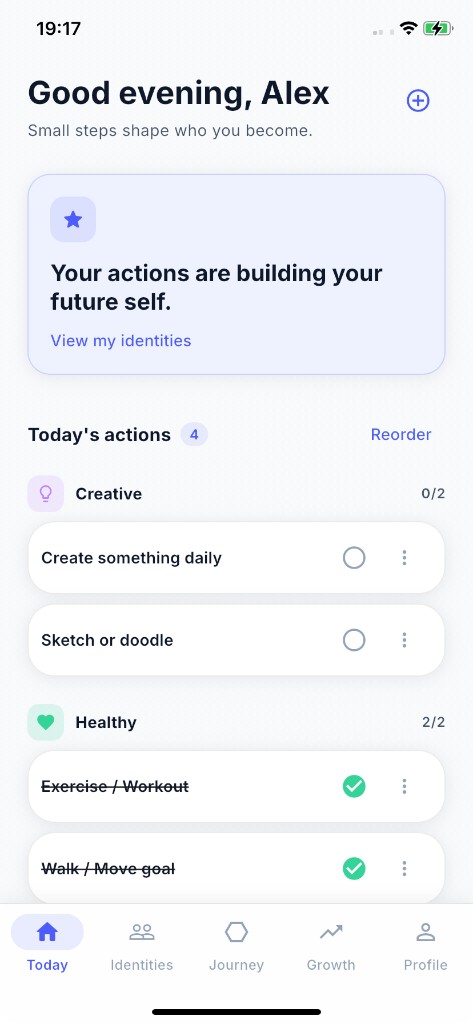
By 3pm, the hard report still feels impossible. Ascend does not motivate you with quotes. It gives you a short list of actions tied to who you want to be: someone who starts, someone who closes loops. Structure beats inspiration. A two-minute start on the hardest task is boring advice because it interrupts the relief trade before it wins.
Motivational posters assume you wake up empty. Most procrastinators wake up already depleted from yesterday's unfinished work and tonight's dread. You need a system that works on empty tanks. Productivity culture makes this worse by implying you should want to do hard things. Most people do not.
They do them anyway in small increments. Ascend will not gamify your focus or send push notifications to shame you. It tracks whether you did the small actions you chose. That is the whole pitch.
Ready to practice a different identity starting today?
Triggers that make starting feel impossible
Name the tasks you delay. Often they are ambiguous, high visibility, or tied to judgment. A blank document. A difficult conversation. Taxes. Creative work that might be mediocre.
Notice the physical moment before you switch away. Tight chest. Tab switching. Sudden hunger. Opening Slack. That moment is the habit, not the task itself.
Design for that moment. Close one open loop before noon. Plan tomorrow's first action tonight so morning-you does not have to decide. Decision fatigue is a real trigger. Monday mornings and post-lunch slumps are common failure windows. If you know 1:30pm is when you drift, put a two-minute start on your calendar before the slump, not after it.
Sunday night dread is a trigger for many people. If you know Monday brings the task you fear, plan a two-minute start Sunday at 6pm, not Monday at 8am. Ambiguous tasks need a physical first step. Not "work on taxes" but "open last year's folder." Not "write report" but "write the title and three bullets."
Small starts that count as proof
Two minutes on the hardest task is enough to cast a different vote. Open the file. Write one ugly sentence. Name the first step on a sticky note. The bar is intentionally low because the identity shift matters more than the output. One distraction-free work block per day, even twenty-five minutes, builds evidence that you can focus when you choose to.
Log it in Ascend under identities like Focused or Starter. Perfection is the enemy of proof. A rough start still counts. Waiting for the right mood is the old identity talking. On days you procrastinate anyway, note what you did instead. That data is useful.
Maybe email is your escape hatch. Maybe cleaning is. Next week you can interrupt that specific detour. Close one open loop before noon on hard days. A replied email, a filed receipt. Momentum from small wins makes the big task less radioactive.
Log starts even when you stop after two minutes. The identity is Starter, not Finisher. Finishing comes later.
Weekly review for chronic pushers
Once a week, list what kept getting pushed. Not to punish yourself, but to see patterns. Do you delay creative work but not admin? Mondays but not Fridays? Solo tasks but not meetings? Adjust one variable.
Smaller first step. Earlier time slot. Clearer definition of done. Procrastination hates specificity. Ascend's weekly review turns vague guilt into a short honest conversation with yourself. What got pushed?
What one habit would help next week? That is enough. If the same task appears on your list for three weeks, the problem is not laziness. The task may be too big, too vague, or tied to fear you have not named. Shrink it or define the first physical action. If the same task appears three weeks running, shrink it or delegate it or delete it.
Chronic pushers sometimes procrastinate because the task should not exist. Compare weeks, not days. One bad Thursday does not erase three good starts on Monday through Wednesday.
Honest limits
Ascend will not write the report for you or block distracting websites. It tracks whether your daily actions matched the identity you chose. For many people, that visibility is the missing piece. If procrastination is tied to ADHD, anxiety, or burnout, structure helps but may not be sufficient alone.
Use the app as support alongside accommodations or professional help when you need it. You can become someone who starts without becoming someone who loves every task. That distinction is how the loop loosens. The app provides structure, not accountability to a boss or a coach.
It will not chase you when you skip a day. That is a feature for some people and a limitation for others. Body doubling helps some people. Work alongside someone in person or on a video call.
Ascend cannot provide that. It can track that you showed up. You are allowed to dislike hard tasks and still become someone who starts them. Those two truths coexist. Progress is measured in starts, not in whether you enjoyed the work.
FAQ
What if I only work well under pressure?
Deadline pressure can produce output, but it also produces stress, sleep loss, and a identity tied to crisis mode. Many people keep deadlines for delivery while practicing smaller starts earlier so not every project feels like an emergency.
How small should my first step be?
Small enough that you cannot talk yourself out of it in ten seconds. Open the document, write one bullet, or set a timer for two minutes. The point is to break the avoidance reflex, not to finish the whole task in one sitting.
Is Ascend free?
Ascend is free to download. Ascend Pro adds optional extras like unlimited identities and deeper insights via subscription.
Does my data leave my device?
Your identities, habits, and reviews are stored locally on your device by default.