
When the job follows you home
Work stress recovery is a boundary habit, not a vacation.
If you check email in bed and replay meetings on Sunday night, your body is still at work. Recovery means building proof that off-hours actually exist.
Work stress is often a time problem disguised as a talent problem
You might be good at your job and still drowning by Thursday afternoon. Work stress shows up as tight shoulders during dinner, snapping at a partner over something small like where to order takeout, and the inability to enjoy a Saturday because part of your brain is still in Monday's inbox. You replay a meeting comment at 11pm and draft replies in your head instead of sleeping.
High performers are especially bad at admitting this because competence became your identity. You were praised for reliability, so you keep answering at 9pm even when nobody expects it anymore. The praise stopped but the reflex did not. Stress is not proof you are failing at your career. It is proof the boundary between work and life has eroded until off-hours barely exist. The first time you stop at 7pm without a crisis, your brain will argue that you are being irresponsible until practice proves otherwise.
Recovery does not require hating your career or fantasizing about quitting tomorrow. It requires treating off-hours as real time, not borrowed work time you have not used yet. That shift sounds small until you try it for three weeks and notice your body on Friday night. Slow evidence beats another promise to rest properly after the next deadline. The first time you stop at 7pm without a crisis, your brain will argue that you are being irresponsible until practice proves otherwise.
Why one good weekend does not fix chronic stress
A long weekend helps until Tuesday at 2pm when the same Slack channels light up. Without daily habits that separate work from home, the stress creeps back through the same gaps: email on the phone by the couch, "quick" tasks after dinner that take ninety minutes, saying yes to one more project because you do not want to look difficult. The relief was real. The pattern was untouched. The first time you stop at 7pm without a crisis, your brain will argue that you are being irresponsible until practice proves otherwise.
The fantasy is that you will rest properly once the busy season ends, once the launch ships, once hiring fills the gap. Busy seasons have a way of becoming the default rhythm. Recovery is rebuilding evidence slowly, not flipping a switch when the calendar finally clears and you take a holiday you are too wired to enjoy.
What changes the pattern is repeated proof that you can stop, decompress, and still be competent tomorrow. That proof is built in ordinary evenings at 7pm, not on a beach once a year. Your nervous system learns from frequency, not from one dramatic escape that ends Sunday night.
Decompression is a skill most offices never teach
Commuting used to force a transition whether you wanted one or not. Now many people go from laptop to couch in ten steps with no buffer at all. Your body stays in work mode because nothing told it the shift happened, so dinner feels like a meeting you are late for. The stress has nowhere to discharge.
A five-minute decompression ritual sounds trivial until you miss it for a week and feel the difference. It works because it marks a boundary your brain can recognize: a short walk around the block, changing clothes, writing tomorrow's top three and closing the notebook. The specific action matters less than doing the same one most days at the same rough time.
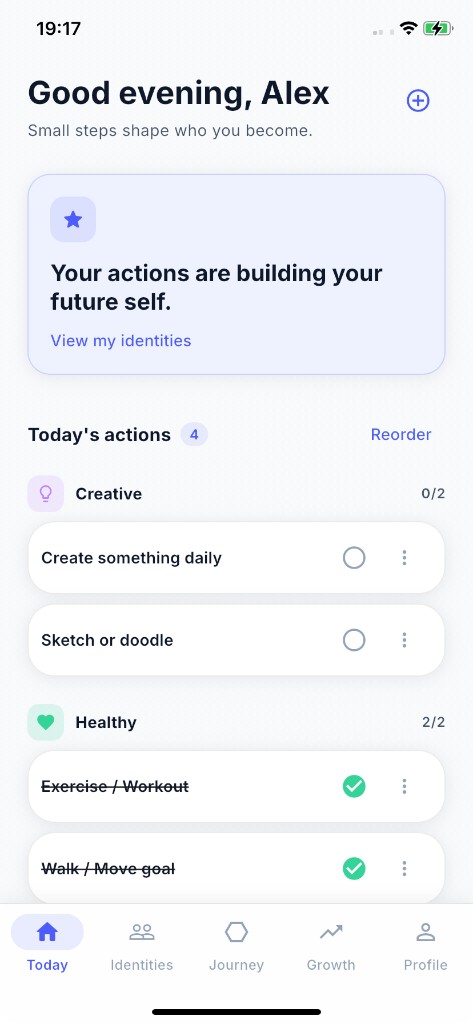
Pair decompression with a hard stop time, even if you sometimes break it and log that honestly. Tracking those stops builds the Boundaried identity: someone who ends work on purpose, not someone who collapses when they cannot continue. Ascend will not end your workday for you. It helps you see whether the ritual is actually happening.
Ready to practice a different identity starting today?
After-hours email is a habit loop
Checking email after hours feels responsible, like you are staying ahead and protecting your team. It also trains everyone, including you, that you are always available. One reply at 10pm teaches your nervous system that rest is conditional on emptying the inbox, which is a game designed to never end.
A no-email-after-hours rule does not fix toxic workplaces overnight or change a boss who texts at midnight. It still changes your side of the loop. You get data on how often you reach for the phone and whether the world actually ends when you wait until 8am. Most fires are smaller in the morning light.
Ascend does not block your inbox or send auto-replies for you. It helps you practice and review boundary habits so they stop living only in your intentions and guilt. When you slip, the weekly review shows the pattern instead of letting one bad week disappear into shame.
Recovery activities should be boring on purpose
When work drains you, the temptation is to "recover" with more stimulation: scrolling until 1am, drinking to turn the noise down, binge-watching until your eyes burn. That is escape, not recovery. Real recovery is often quiet and almost disappointingly ordinary: cooking one meal, stretching for ten minutes, talking to one friend, getting into bed before midnight.
Schedule one small recovery activity after work the way you would schedule a meeting, not because you earned it through suffering but because it is part of becoming someone who lasts in this job without burning out. Tuesday might be a walk. Thursday might be reading fiction. The content matters less than the repeated signal that work is over.
If the only thing you do after work is collapse on the sofa, your weekly review will show that pattern clearly. That is useful information, not judgment. It tells you where to start: one boring recovery block before you try to fix your whole life at once.
Weekly stress patterns beat daily self-criticism
One bad evening does not define your recovery or prove you will never change. A weekly stress review asks which days consistently wreck you, which meetings leave you wired at 10pm, and whether your boundaries held more often than last week. That scale is kinder and more accurate than judging yourself after a single rough Tuesday.
You might discover Thursdays are brutal because of a standing late call that could move. You might see that you protect boundaries on Monday and abandon them by Friday when fatigue wins. Those patterns suggest specific fixes, not a vague need to "manage stress better" with another app or podcast.
The goal is not zero stress, which is unrealistic in most jobs. The goal is a life where work stress does not own every hour you are not paid for. Recovery is rebuilding evidence slowly that off-hours are yours, one evening at a time, reviewed honestly each Sunday.
Start small before you negotiate big changes
You may eventually need a hard conversation with your manager or even a job change if the culture never respects recovery. Start tonight with habits you control without permission: a stop time, one recovery block, a weekly review of what drained you and what helped. Those are votes you can cast immediately.
Importing a work-stress recovery plan in Ascend gives you Boundaried and Calm identities with habits already sized for real life. You adjust from there instead of designing a perfect system while you are already fried from another day of answering after hours. Remove what feels unrealistic and keep what you can repeat on a bad week.
Recovery is evidence that off-hours are yours, not a feeling you wait for after the next promotion. Build that evidence slowly, one evening at a time. A month of logged stop times is more trustworthy than one perfect week you cannot sustain.
FAQ
What if my job genuinely requires after-hours availability?
Some roles have real on-call demands. Recovery still means protecting whatever off-time you do have and being honest about what is required versus what is habit. Track your week to see the difference.
How is this different from generic stress advice?
Generic advice says "practice self-care." This approach ties small boundary actions to identities you review weekly, so progress is visible when you still feel stressed day to day.
Is Ascend free?
Ascend is free to download. Ascend Pro adds optional extras like unlimited identities and deeper insights via subscription.
Does my data leave my device?
Your identities, habits, and reviews are stored locally on your device by default.