
Escape the check loop
Your phone is not the problem. The reflex is.
You reach for your pocket in elevators, in line, in conversations, in bed. The check is not always conscious. It is a habit that promises connection and delivers distraction.
The reflex you did not choose
You unlock before you decide to. Notifications, boredom, anxiety, muscle memory. The phone is a Swiss Army knife for avoidance. Elevator, red light, awkward pause, commercial break: each gap becomes a check window. Short checks still leave a residue of partial attention that invites the next check.
Checking feels productive because it is motion. Replying, liking, scanning. Hours fragment into partial attention that leaves you tired without finishing anything meaningful. Hours fragment into motion that feels productive while nothing meaningful finishes.
You might open one app and cascade through five without a plan. That cascade is the loop, not a series of separate choices. The reflex is trained by design, not a unique personal flaw. Apps, badges, and infinite feeds trained the reflex on purpose.
Naming the reflex as a loop, not a moral failure, is the first step toward Present proof. Change starts when you notice the hand moving before the conscious choice arrives. Notice the hand moving before the conscious choice arrives; that gap is where change starts. Pocket glances still train the loop when full unlocks never happen.
Present versus distracted
You practice the person who checks to avoid the moment in meetings, meals, and pauses. The check promises connection or relief and often delivers distraction and self-criticism. Checks promise relief and often deliver distraction plus self-criticism afterward.
Each unconscious unlock is a vote for distracted-you. Enough votes and focused attention feels unnatural, even uncomfortable. Boredom tolerance atrophies when every gap gets filled. Boredom tolerance atrophies when every gap gets filled with a screen.
Work that requires deep focus becomes harder not because the task changed but because your identity default shifted toward partial attention. Repeated checking taught your brain that full presence is optional. Deep work gets harder when partial attention becomes your default setting.
Present and Focused habits include phone face-down during meals, one phone-free hour daily, and batched messages three times a day. Identity shifts when proof is daily and visible, not when you swear off phones forever on Sunday. Sunday promises fail by Monday unless daily proof fits real life. Practice sitting through thirty seconds of boredom without unlocking.
Why app blockers are not enough
Blockers help some people. Many find workarounds or swap one app for another. The reflex remains because the identity loop was never addressed. Workarounds and app swapping leave the identity loop intact.
Blocking Instagram but keeping email, news, or games on the home screen often moves the habit, not removes it. Device war treats symptoms. Identity practice treats the loop. Blockers treat symptoms; batching and proof treat the reflex itself.
You might win a blocker streak and still feel anxious in pockets without your phone. The feeling you were medicating with checks may still need a replacement ritual, not only removal. Anxiety in phone-free pockets may still need a replacement ritual, not only removal.
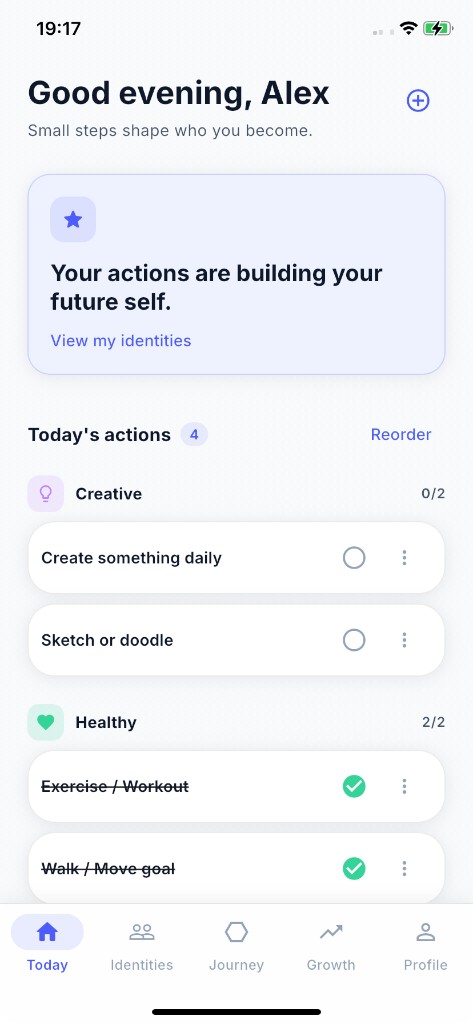
Ascend does not block apps. It tracks whether you did the small actions that prove a different identity. Turn off non-essential notifications weekly. Every ping retrains the check loop. Fewer pings mean fewer automatic entry points into the check loop. Work phones need batch windows designed around real responsibilities.
Ready to practice a different identity starting today?
High-check moments
Map checks for three days: waking, bathroom, meetings ending, awkward social moments, bed. Triggers are design specs. Once you see the pattern, you can engineer one change at a time. Awkward social pauses and meeting endings are common high-check windows.
Batch messaging to morning, lunch, evening instead of continuous partial attention. Batching tells your brain that messages can wait, which reduces the fake urgency of every buzz. Batching tells your brain messages can wait without fake urgency.
Phone-free hour block: choose the hour you leak most. Dinner is a common win because connection and food deserve full attention. Log the hour in Ascend as Present proof. Dinner phone-down hours are common wins because connection deserves full attention.
Keep the phone in another room during focused work if checks are your procrastination move. Replace one high-check moment with a tiny ritual: three breaths after meetings, a notebook in line instead of a scroll. Physical distance during focus blocks works like alarm-across-the-room for snoozers. A tactile cue on the device can interrupt autopilot in awkward pauses.
Daily habits that stick
Face-down phone during meals is a public commitment to Present. Others notice. That social layer reinforces identity faster than private rules you can break silently. Public mealtime choices reinforce Present faster than private rules.
One phone-free hour builds tolerance for boredom, which is where focus returns. Boredom is not empty. It is the space where thoughts finish and attention deepens. Boredom is where thoughts finish and attention deepens again.
Weekly screen time review without shame. Adjust one habit, not your entire digital life at once. Start with one meal or one hour, not a whole day offline. Narrow proof survives real life better than dramatic offline days abandoned by Thursday.
Charge outside the bedroom if checks steal sleep. Morning checks often start because the phone is the first object your hand finds. Log batched check windows even when you exceed them. Honest data beats hidden drift. Honest logs beat hidden drift when batched windows slip. Leave the phone in your bag during coffee breaks to break the pocket script.
Relationships and attention
People notice when your eyes lift mid-sentence. Checking is not private when it fractures connection. Your partner, kid, or friend experiences the drift even if you think you were subtle. Eyes lifting mid-sentence sends a message you may not intend to send.
Partial attention sends a message you may not intend: this screen outranks you. That message compounds in relationships faster than in solo work time. Kids model phone habits faster than lectures about screen time.
Kids model phone habits faster than lectures. If you want a different family culture, your logged Present proof at dinner matters more than rules you break when stressed. Gentle accountability helps: "I am trying phone-down dinners this week."
Tell one person you are experimenting with batching. Ascend's weekly review asks whether your actions matched the identity you chose. That question matters in marriage, parenting, and friendship. Present is a relational identity, not only a productivity identity. Apologizing after mid-sentence checks does not undo the drift people felt.
Honest limits
Ascend will not remove your phone or monitor apps. It offers identity habits and review. You still choose when to unlock. The app helps you see whether those choices match who you want to be. The app shows whether choices matched intent; it does not remove the device.
If checking is tied to anxiety or OCD, seek professional support. Structure complements treatment; it does not replace it. Compulsive checking can be a symptom that deserves clinical care. OCD and anxiety-driven checking deserves clinical support alongside structure.
It will not make your job stop requiring quick replies. Some roles need responsiveness. Batching and phone-free windows can still exist within real constraints if you design them honestly. On-call roles need honest batching design, not borrowed offline rules.
You can check on purpose without checking on autopilot. That gap is freedom. Progress is catching yourself earlier, batching more often, and finishing conversations without a pocket detour. Caregivers and on-call workers may need a different definition of Present, and that is still a win when it is honest, sustainable, and tracked over time.
FAQ
How often should I check my phone?
There is no universal number. Many people start with three batched check windows plus one phone-free hour and adjust after a weekly review. Intention matters more than a metric.
Should I switch to a dumb phone?
Some people do. Others reduce checks while keeping a smartphone for work and family. Identity-based habits let you experiment before extreme changes.
Is Ascend free?
Ascend is free to download. Ascend Pro adds optional extras like unlimited identities and deeper insights via subscription.
Does my data leave my device?
Your identities, habits, and reviews are stored locally on your device by default.