
Reinvention at 40
Forty is a good age to stop performing the old script.
Reinventing yourself at 40 works when you trade dramatic reinvention fantasies for deliberate daily practice.
Why forty hits different
By forty, many people have built something real: career capital, kids, a mortgage, a reputation. That makes reinvention feel riskier than it did at twenty-five. You are not just changing hobbies. You are wondering if you can change without blowing up everything that still matters. The stakes feel higher because they often are. The stakes feel higher because they often are, and pretending otherwise is how people either freeze in place or swing toward reckless changes that look bold online but hurt at home.
The good news is that forty often comes with clearer priorities. You have less patience for performative goals and more respect for what actually costs energy. Reinvention at this age is less about discovery and more about alignment. Who have you been practicing being, and is that still who you want to become? That question is sharper now, and that clarity helps. Reinvention at this age is less about discovery and more about alignment with a calendar that already contains people who depend on you, which makes small edits more powerful than dramatic exits.
You may also carry more responsibility for other people's stability. That can make change feel selfish when it is actually maintenance. Burning out while holding everyone else together is not noble. It is unsustainable. Reinvention at forty often starts with admitting that your current pace has a shelf life. Burning out while holding everyone else together is not noble; it is unsustainable, and admitting that your current pace has a shelf life is often the first honest step toward a durable edit.
You are not starting from zero
Reinvention is editing who you practice being, not erasing your past. The skills you built in your thirties still count. So does the resilience from mistakes you would rather not repeat. Starting over at forty does not mean pretending you are twenty-two with no obligations. It means redirecting some of your existing discipline toward a different identity. Your network, expertise, and hard-won judgment are assets, not evidence that you missed your window, and shame about the last decade slows change more than most external obstacles do.
That reframe matters because shame slows change. If you believe you wasted your best years, you will swing between harsh self-criticism and numb acceptance. If you believe you are mid-edit, you can work with what is already there. Your network, your expertise, and your hard-won judgment are assets, not evidence that you missed your window. The edit is directional, not a full wipe: you are changing which skills get the next chapter of practice, not performing amnesia about the résumé and relationships that brought you here.
People who reinvent successfully at forty often reuse skills in new contexts rather than abandoning them. A manager becomes a consultant. A parent returns to creative work in smaller doses. The edit is directional, not a full wipe. You are not deleting the résumé. You are changing which lines get the next chapter of daily practice. Pick an identity that would relieve pressure on ordinary mornings, not one that would impress strangers online, because forty-year-old reinvention has to fit the life you are already living.
Pick the identity that would change your mornings
Abstract reinvention plans fail because they ignore your actual calendar. At forty, time is rarely the problem. Priorities are. Ask a sharper question: what identity, if practiced daily, would change how your mornings or evenings feel within ninety days? Not how they look on paper. How they feel when you wake up tired on a Thursday. If your calendar is genuinely full, the first edit may be dropping something rather than stacking another habit on top of obligations you cannot keep pretending are temporary.
Examples: Renewed (health and reflection first), Purposeful (one long-term project weekly), Present (less distraction, more connection). Pick one that would relieve pressure, not add another performance. The identity should make ordinary days feel more livable, not more impressive to strangers on the internet. The social reward of announcing change often arrives before behavioral evidence, which makes the Tuesday-after gap harder to face unless you commit to logging small votes instead of performing reinvention.
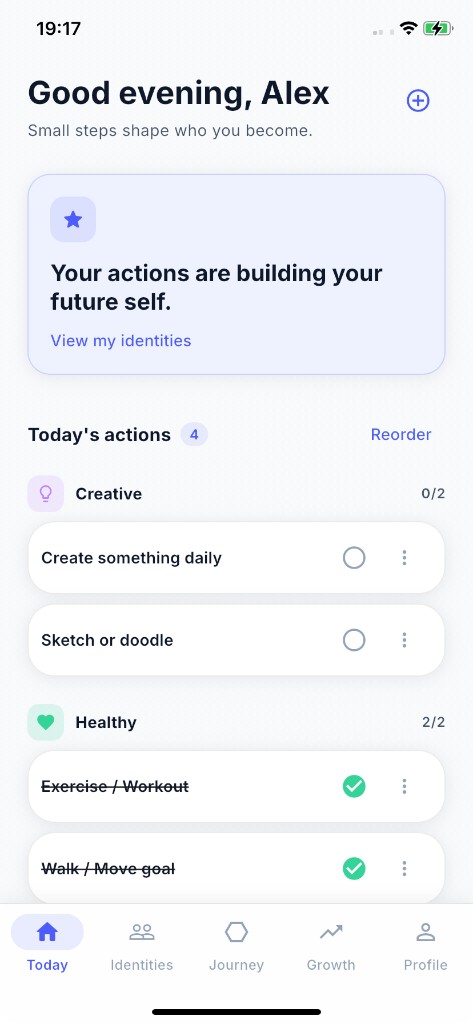
Ascend lets you import a starter plan and rename the habits to fit your life. The app will not magically create free hours in your week. It helps you protect the hours you decide matter. If your calendar is genuinely full, the first edit may be dropping something, not adding another habit on top. Nobody films the boring Tuesdays, yet those Tuesdays are where identity actually changes, one walk, one page, and one scheduled conversation at a time, without requiring a cinematic montage.
Ready to practice a different identity starting today?
Small votes beat grand declarations
Forty-year-old reinvention often dies in the announcement phase. You tell friends you are finally going to write the book, run the marathon, or change careers. The announcement feels like progress. Then Tuesday arrives and nothing is different. The social reward arrives before the behavioral evidence, which makes the gap harder to face. If you already told everyone the big plan, pivot quietly, let results accumulate, and let consistency speak before you update the audience again with another declaration Tuesday cannot cash.
Cast small daily votes instead. Ten minutes of reflection. One walk. One meaningful conversation scheduled. One page written. These actions look insignificant in isolation. Over a year they are how you become someone new without requiring a cinematic montage. Nobody films the boring Tuesdays. Those Tuesdays are where identity actually changes. You do not need permission to evolve, but you do need realistic expectations about friction, especially with people who benefited from your old defaults and may need time to adjust.
If you already told everyone about the big plan, you can still pivot quietly. Stop performing reinvention and start logging it. Let results accumulate before you update the audience. The people who matter will notice consistency long before you need another announcement. Specificity lowers defensiveness in others and keeps you honest about what you are doing daily, which matters more at forty when your changes touch shared routines and family rhythms.
Relationships and reinvention
People around you may have invested in the version of you they already know. That does not make them villains. It means your changes can feel unsettling to someone who liked the old equilibrium. You do not need permission to evolve. You do need realistic expectations about friction, especially with people who benefited from your old defaults. Reinvention at forty sometimes includes grieving who you had to be for others, and that grief can coexist with love; editing your identity is not the same as abandoning every relationship that knew the old script.
Practice new identities before you preach them. Let your consistency speak first. When you do talk about change, be specific. "I am practicing being healthier" lands better than "I am reinventing my entire personality." Specificity lowers defensiveness in others and keeps you honest about what you are actually doing daily. The edit needs fuel, not just intention, because depleted people rarely have spare capacity for identity work when evenings arrive and old coping habits offer fast relief with familiar costs.
Some relationships will adjust. Others may resist. That is data about fit, not proof you should abandon the edit. You can love people and still change. You can also outgrow dynamics that required you to stay small. Reinvention at forty sometimes includes grieving who you had to be for others. Treat energy as infrastructure for change, not a side quest for after everything else is fixed, and get clinical support when chronic issues are part of why you feel stuck in the old pattern.
Health and energy are part of the edit
Many forty-year-old reinvention stories quietly start with sleep, movement, or stress. Not because wellness is a moral achievement, but because depleted people rarely have spare capacity for identity work. If you are exhausted, your old coping habits will win most evenings. The edit needs fuel, not just intention. Better sleep and a short walk can interrupt rumination before it becomes a lost evening, which is unfair but true: small health votes compound when your responsibilities already consume most of your bandwidth.
This is not medical advice. If you have chronic health issues, talk to a clinician. Ascend can track habits like walking, reflection, or earlier bedtimes. It cannot diagnose why you are tired or replace professional care. Treat energy as infrastructure for change, not a side quest you will get to after everything else is fixed. Ascend works best when you know the direction and need a mirror for behavior, not when you expect an app to negotiate with your boss or choose your next career on your behalf.
Small health votes compound at forty in ways that feel almost unfair. Better sleep makes discipline easier. A short walk can interrupt rumination before it becomes a whole evening lost. You do not need a perfect wellness routine. You need enough capacity to practice the identity you care about on a normal week. It helps you practice being someone who follows through on decisions you have already made, while leaving the hard conversations and midlife tradeoffs where they belong: in the real world you inhabit.
What Ascend can and cannot do at forty
Ascend is useful when you want structure without theatrics: identities, daily actions, weekly review. Import a plan, adjust the habits, and build evidence that your next decade can look different from the last. It works best when you already know the direction and need a place to log proof without turning life into a performance. Do not expect it to manufacture commitment you have not chosen yet, or to remove the tradeoffs that come with changing while other people still depend on the version of you they know.
It will not negotiate with your boss, fix your marriage, or choose your next career. Reinvention at forty still requires real-world decisions. The app helps you practice being the kind of person who follows through on the decisions you have already made. It is a mirror for behavior, not a substitute for hard conversations. Use it to maintain an edit you are already committed to, and get appropriate help first if you are in crisis, because steady practice matters most when the baseline is survivable and honest.
If you are in crisis, get appropriate help first. Ascend is for steady practice on ordinary days. Use it to maintain an edit you are already committed to. Do not expect it to manufacture commitment you have not chosen yet, or to remove the tradeoffs that come with changing at midlife. Match support to scale: a habit log cannot hold every kind of pain, but it can make drift visible early while you do the longer work elsewhere with humans and professionals who fit the problem.
FAQ
Can you really reinvent yourself at 40 with a busy life?
Yes, if you define reinvention as daily practice rather than a total life swap. One identity and two small actions, reviewed weekly, can shift your trajectory over a few years without requiring you to abandon every existing responsibility.
Should I make big life changes or small habit changes first?
Small habit changes often reveal whether a bigger change is necessary. Practicing a new identity for ninety days gives you data. Big leaps without practice tend to repeat old patterns in a new location.
Is Ascend free?
Ascend is free to download. Ascend Pro adds optional extras like unlimited identities and deeper insights via subscription.
Does my data leave my device?
Your identities, habits, and reviews are stored locally on your device by default.