
Confidence from evidence, not affirmations
Confidence is a record of kept promises to yourself.
Becoming more confident works when you collect small proofs that you can act outside your comfort zone, not when you wait to feel brave.
Confidence is not the absence of fear
Confident people still feel fear. They have more evidence that fear is not a stop sign. That evidence comes from action, not from repeating affirmations in the mirror while avoiding the thing that scares them. Confidence is reputation with yourself, built slowly. Perfection is not the standard. Pattern is the standard. Review the pattern, not the outliers. If the habit feels too heavy, the version is too large. Cut it in half and try again tomorrow.
Becoming X means casting small daily votes, not waiting to feel ready. One uncomfortable action today beats ten visualizations about someday. You do not need to feel brave before you act. You need to act small enough that you will actually do it, then let bravery catch up. Becoming this person is negotiated in small moments, not declared in a single dramatic announcement. That is how identity grows on ordinary days when motivation is nowhere to be found.
The gap between how you feel and what you do is where confidence grows. Waiting to feel confident is backwards. Confidence follows proof. Proof follows reps. Start with a rep so small it feels almost silly. Silly is sustainable. Small daily votes reviewed weekly beat heroic intentions that collapse by Thursday. You are building evidence, not waiting for a feeling that may never arrive first.
One comfort-zone rep daily
Speak in the meeting once. Send the email. Ask the question. Introduce yourself. Reps should be small enough that you will do them, not so large you avoid them for a week. Daily beats dramatic. Dramatic reps become stories you tell instead of habits you keep. The practice is the point. Results follow repetition more often than they precede it. Return speed after a miss matters more than a perfect streak you cannot maintain.
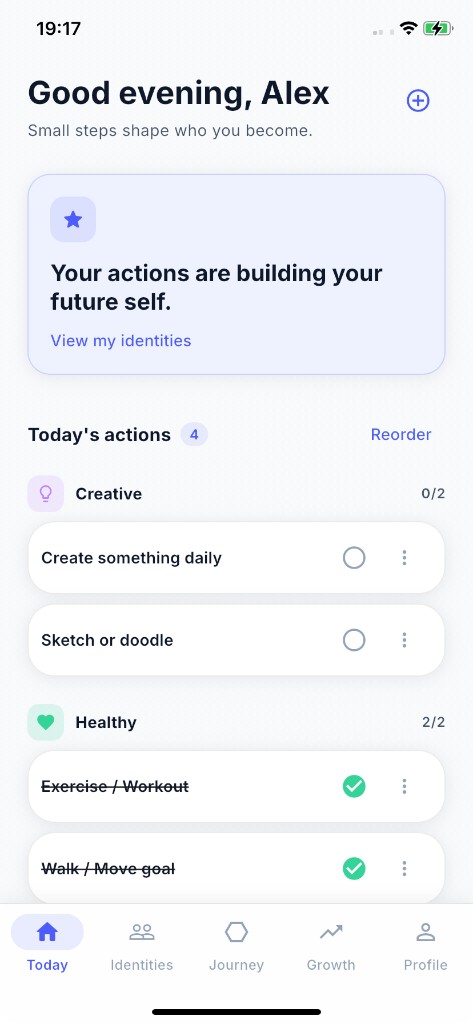
Ascend logs confidence habits under Confident and Capable. The app does not eliminate social anxiety or speak for you in meetings. It shows whether you practiced courage this week. That visibility helps when your brain insists you never do hard things. Minimum versions on hard weeks keep the identity alive when life gets loud. Honest review turns vague guilt into one adjustable change for next week.
Define reps in advance so you do not negotiate in the moment. "Today I will ask one question in the standup" is a rep. "Today I will be confident" is not. Specificity makes the vote countable. Countable votes become evidence. This is maintenance, not a one-time fix you finish and forget about. You do not need to feel ready. You need to cast the next small vote anyway.
Record one win each evening
Brains remember failures by default. One awkward comment sticks longer than ten normal ones. Confidence needs deliberate win collection. One thing you did well. One moment you showed up. One promise kept. Write it down before sleep. Identity follows what you repeat on tired Tuesdays, not what you plan on motivated Sundays. The old story says wait until conditions are perfect. The new story says practice now anyway.
Wins can be tiny. Tiny still counts as evidence. You made the call. You stayed in the conversation five more minutes. You sent the draft even though it was not perfect. The bar is low on purpose. You are training attention toward proof, not toward perfection. One honest week of small votes teaches you more than a month of intention without tracking. Ascend can log the practice. It cannot live the identity for you. That part is still yours.
Weekly review of wins reveals progress your anxious brain edits out. Maybe you spoke up four times this week and only remember the one stumble. Wins log protects the story from negativity bias. Confidence grows when the record is honest and complete. When the week feels like a blur, the record shows whether the votes still happened. Shrink the habit before you abandon the identity. That is how people last past week three.
Ready to practice a different identity starting today?
Practice a skill for fifteen minutes
Capability builds confidence. Fifteen minutes on the skill that scares you: presenting, writing, coding, conversing in another language. Competence makes fear quieter because you have more ground to stand on. Courage without skill sometimes backfires and confirms your worst story. Peers who make this look easy usually have six months of boring repetition you did not see. You are not behind. You are early in the evidence-gathering phase most people skip.
Pair skill practice with comfort-zone reps. Practice the presentation for fifteen minutes, then give one slide in the meeting. Skill plus action beats action alone when the fear is partly about competence. Both are votes for capable identity. Perfection is not the standard. Pattern is the standard. Review the pattern, not the outliers. If the habit feels too heavy, the version is too large. Cut it in half and try again tomorrow.
Fifteen minutes is enough to start. You are not training for Olympics. You are building evidence that you improve when you practice. Improvement is confidence fuel. Stagnation is confidence drain, even if nobody else notices. Becoming this person is negotiated in small moments, not declared in a single dramatic announcement. That is how identity grows on ordinary days when motivation is nowhere to be found.
Power posing is optional. Action is not.
Two minutes of posture might help some people before a hard moment. It is not a substitute for doing the thing. Use body language hacks if you like them. Do not skip the rep because you stood like a superhero in the bathroom. Small daily votes reviewed weekly beat heroic intentions that collapse by Thursday. You are building evidence, not waiting for a feeling that may never arrive first.
Weekly confidence review: how many reps happened? Which fear keeps winning? Shrink the rep until it happens. If asking a question in a big meeting is too big, ask in a one-on-one first. Ladder down until you get a yes from yourself. The practice is the point. Results follow repetition more often than they precede it. Return speed after a miss matters more than a perfect streak you cannot maintain.
Confidence is a ratio, not perfection. You will still avoid some things. The goal is more reps than last month, not zero fear. Track the ratio. Adjust the rep size. Return after misses without the story that you are fundamentally incapable. Minimum versions on hard weeks keep the identity alive when life gets loud. Honest review turns vague guilt into one adjustable change for next week.
When confidence needs professional help
Social anxiety, trauma, and depression can make DIY confidence plans cruel. Ascend is not therapy. If fear limits your life severely, work with a qualified clinician alongside habit practice. Professional support and daily reps can coexist. This is maintenance, not a one-time fix you finish and forget about. You do not need to feel ready. You need to cast the next small vote anyway.
There is no medal for suffering alone. If reps feel impossible not because they are large but because your nervous system is overwhelmed, that is information. Habit structure supports confidence. It does not replace treatment when treatment is what you need. Identity follows what you repeat on tired Tuesdays, not what you plan on motivated Sundays. The old story says wait until conditions are perfect. The new story says practice now anyway.
Confidence can grow with practice. It grows faster with the right support. Using both is strength, not failure. The app tracks votes. A therapist helps with why some votes feel impossible. Use the right tool for each layer. One honest week of small votes teaches you more than a month of intention without tracking. Ascend can log the practice. It cannot live the identity for you. That part is still yours.
Honest limits
Ascend structures daily courage reps and win logging. It will not speak for you in meetings or guarantee rejection will not sting. Rejection stings confident people too. The difference is they have evidence they can survive it. When the week feels like a blur, the record shows whether the votes still happened. Shrink the habit before you abandon the identity. That is how people last past week three.
Confidence is reputation with yourself. Build it slowly with votes you can verify. Do not confuse performing confidence online with practicing it in ordinary rooms where nobody applauds. Peers who make this look easy usually have six months of boring repetition you did not see. You are not behind. You are early in the evidence-gathering phase most people skip.
The app cannot fix toxic workplaces, bullying, or discrimination that erodes confidence for reasons beyond individual habit. Sometimes the environment is the problem. Honest limits include knowing when to change context, not only when to change yourself. Perfection is not the standard. Pattern is the standard. Review the pattern, not the outliers. If the habit feels too heavy, the version is too large. Cut it in half and try again tomorrow.
FAQ
How long does it take to become more confident?
Small shifts in self-trust can appear in a few weeks of daily reps. Deeper confidence in high-stakes areas often takes months of practice and sometimes professional support.
Do affirmations help confidence?
They may help some people as a supplement. They rarely replace action. Daily comfort-zone reps plus recorded wins tend to produce more durable confidence than words alone.
Is Ascend free?
Ascend is free to download. Ascend Pro adds optional extras like unlimited identities and deeper insights via subscription.
Does my data leave my device?
Your identities, habits, and reviews are stored locally on your device by default.