
When you stopped trusting yourself
Confidence is rebuilt from small kept promises.
Confidence is not a feeling you wait for. It is evidence you collect when you do slightly hard things and notice you survived. Recovery means tracking that evidence honestly.
Low confidence is a memory problem
Your brain remembers the presentation that went badly in front of the whole team, the rejection email at 4pm on a Friday, the time you froze when someone asked your opinion. It forgets the dozens of ordinary wins because they were not dramatic enough to stick in memory. The critic keeps a highlight reel of failures and throws away the ordinary wins that would balance the story. The critic keeps a highlight reel of failures and throws away the ordinary wins that would balance the story.
Confidence is not blind belief in yourself or repeating affirmations until you feel different. It is a reasonable expectation that you can handle today based on proof from yesterday. When proof is missing, feeling follows data, not the other way around. Words without behavior teach your brain that confidence talk is another thing you cannot do, which deepens the gap. Words without behavior teach your brain that confidence talk is another thing you cannot do, which deepens the gap.
Recovery is rebuilding evidence slowly, not flipping a switch with a mirror affirmation that your brain immediately disputes. You need receipts your nervous system can trust, collected in ordinary weeks. A 3 out of 10 action you complete is more useful than a 9 you avoid and then punish yourself for avoiding all week.
Why affirmations alone feel hollow
Saying "I am confident" without action trains skepticism because your brain knows the gap between words and behavior. The affirmation becomes another thing you failed to feel, which lowers confidence further. Skill progress gives you evidence you can improve, which is different from hoping you can without watching yourself try.
Capable identity work is behavioral and specific. Do one thing that scares you a little, write down one thing you did well, practice one skill for fifteen minutes even when you feel rusty. Those are receipts, not vibes. Four weeks of logged wins is hard to argue with, even when mood says they do not count because they were small.
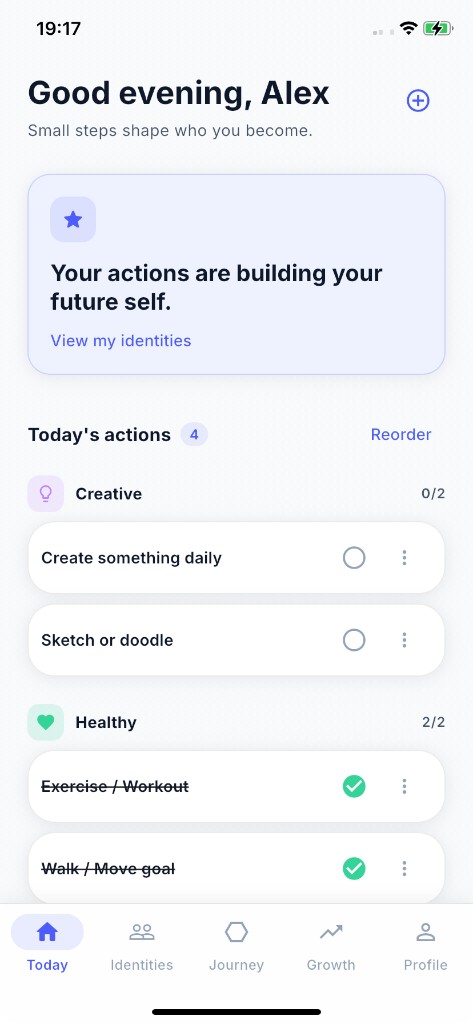
Ascend stores receipts when your inner critic would rather erase them by Monday. It cannot make you fearless. It can preserve proof the critic is selectively editing your history. After a hit, small kept promises rebuild trust faster than big swings you cannot sustain and then use as new proof you failed.
Courage habits should be slightly uncomfortable
Brave and Capable habits are sized to stretch, not shatter your week. Speak up once in a meeting if you usually stay quiet. Send the message you have been drafting for six days. Introduce yourself at an event where you know nobody. Real confidence is the quiet expectation that you will try again tomorrow, fear included, not the absence of fear.
The goal is not fearless performance that looks effortless. It is proof you can feel fear at a 6 out of 10 and still act. That proof accumulates across months, not from one dramatic leap. Recovery is rebuilding evidence slowly, not flipping a switch with a mirror affirmation your behavior does not support yet.
If everything on the list terrifies you, shrink until one item is a 3 out of 10, not a 9. Recovery is rebuilding evidence slowly. A 3 you complete beats a 9 you avoid and then punish yourself for avoiding. Capable identity work produces receipts: a sent message, a practiced skill, a noted win your critic would prefer to forget.
Ready to practice a different identity starting today?
Skill practice builds a different kind of trust
Fifteen minutes on a skill you care about is confidence fuel because you watch yourself improve in something measurable. Guitar, code, a language, a craft. Progress there transfers sideways to other areas more than generic pep talks from strangers online. Ascend stores receipts when memory becomes selective under stress, but it cannot do the scary thing for you.
Track practice on bad weeks too, especially bad weeks. Showing up when you are rusty is evidence you are someone who keeps going when results are not immediate or flattering. Brave habits should stretch you slightly, not shatter you, because shattering gives the critic new material to use against you.
Weekly confidence review asks what you did well and what you attempted. Attempts count when fear was present. Ascend does not grade your performance. It helps you see the pattern your critic minimizes. Attempts count when fear was present, even if the outcome was messy, awkward, or smaller than you hoped.
The inner critic hates documentation
Writing one thing you did well daily sounds cheesy until you read four weeks of entries during a low spell in February. The critic says those do not count because they were small. The log says otherwise in your own handwriting. Weekly review separates feeling from pattern, which matters when you feel terrible but acted three times anyway.
Identity-based review separates feeling from pattern. Maybe you feel terrible and still acted bravely three times this week. That mismatch is information about how unreliable mood is as a scorekeeper. Logging wins does not replace therapy for trauma or severe anxiety, and pretending otherwise would disrespect what you carry.
Honest limitation: logging wins does not fix deep trauma or social anxiety disorders alone. Pair habits with support when needed. Ascend is a record, not a clinician and not a shortcut around hard work. Compare this month to the month right after the hit, not to your peak year before the failure rewrote your story.
Confidence after failure or rejection
Job loss, breakups, and public mistakes punch holes in self-trust that affirmations cannot patch overnight. Recovery is not pretending the failure did not happen or that it did not hurt. It is adding new data points after it. Confidence after rejection is built in new data points after the wound, not in denial that the wound happened.
Small kept promises matter more in those seasons than big swings. You said you would walk. You walked. You said one outreach email. You sent it. The failure is one chapter. The habits write the next ones in smaller print that still counts. Fifteen minutes of practice on a bad week is evidence you are someone who keeps going when results are not flattering.
Compare your current month to the month right after the hit, not to your peak year before everything fell apart. Recovery is rebuilding evidence slowly from a new baseline, not flipping a switch back to who you were. You are not trying to feel fearless. You are trying to collect proof that fear and action can share a Tuesday.
Become someone who collects proof
Import a confidence rebuild plan with Capable and Brave identities, daily courage action, win logging, and weekly review. Tune habits to your actual life, not an inspirational poster that assumes unlimited energy and no fear. Import a plan tuned to your life, not a poster life, and remove habits that sound brave but are really setup for failure.
You are not trying to feel fearless. You are trying to become someone with evidence that fear and action can coexist in the same Tuesday afternoon. Slow proof beats loud self-talk because your nervous system trusts behavior repeated over time more than slogans.
That evidence builds slowly. It is still real confidence, the useful kind that shows up when you need to send the email anyway. Slow proof beats loud self-talk that your behavior does not support. Useful confidence is earned in ordinary weeks, not performed in one brave afternoon you cannot repeat next month.
FAQ
How long does it take to build confidence again?
Small shifts in self-trust can appear within a few weeks of consistent small actions. Deeper confidence after major setbacks often takes months of accumulated proof.
Can confidence habits help with social anxiety?
Small exposure-style actions can help some people alongside therapy. If anxiety is severe or limiting your life, work with a qualified professional rather than relying on an app alone.
Is Ascend free?
Ascend is free to download. Ascend Pro adds optional extras like unlimited identities and deeper insights via subscription.
Does my data leave my device?
Your identities, habits, and reviews are stored locally on your device by default.