
Smoke-free as identity, not just quitting
Smoke-free is who you practice being, not a day count.
Becoming smoke-free works when you build a new identity with daily rituals, not when you white-knuckle through cravings waiting to feel ready.
Quitting is not the same as becoming smoke-free
Many people quit for a week and still think of themselves as a smoker having a break. That identity loop is why relapse feels inevitable when stress hits or someone offers a cigarette at a party. You white-knuckle through cravings while secretly waiting for permission to smoke again. Becoming smoke-free means practicing Smoke-Free as who you are on ordinary days, not just counting days since your last cigarette. That is how identity grows on ordinary days when motivation is nowhere to be found.
Becoming X means casting small daily votes, not waiting to feel ready. You will not feel ready on day three when your hands still reach for the pack on autopilot. You practice smoke-free behavior anyway and let evidence accumulate. Each morning you choose differently is a vote for the person you are becoming. Small daily votes reviewed weekly beat heroic intentions that collapse by Thursday. You are building evidence, not waiting for a feeling that may never arrive first.
The shift from quitting to becoming is subtle but durable. Quitting is about stopping something. Becoming is about starting a new story with daily proof. When someone asks if you smoke, you answer from identity, not from a streak you are afraid to break. That is when smoke-free stops feeling like deprivation and starts feeling like home. The practice is the point. Results follow repetition more often than they precede it. Return speed after a miss matters more than a perfect streak you cannot maintain.
Cravings are moments, not verdicts
A craving peaks and passes whether you smoke or not. Most cravings last only a few minutes even though they feel endless in the moment. The old identity treats a craving as permission to light up. The new identity treats it as weather passing through. You do not have to enjoy the storm. You just have to not build a shelter out of cigarettes. Minimum versions on hard weeks keep the identity alive when life gets loud.
When a craving hits, log it. Breathe through it. Replace the ritual with something your hands and mouth can do instead: water, a walk, gum, texting a friend who knows you are practicing. The goal is not to eliminate cravings forever. The goal is to practice a different response until the new response feels more familiar than the old one. Honest review turns vague guilt into one adjustable change for next week.
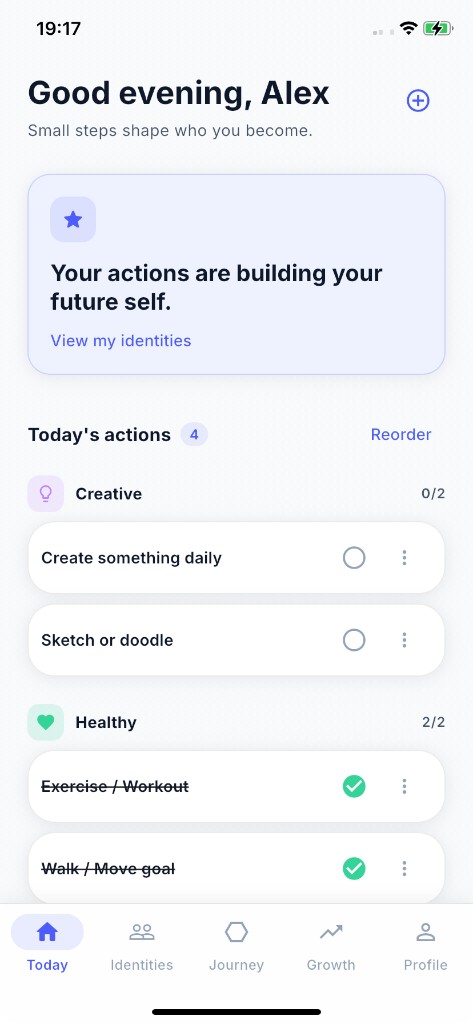
Ascend can track smoke-free days, craving logs, and replacement rituals so you see patterns instead of guessing. It cannot remove nicotine withdrawal or replace cessation medication if your clinician recommends it. Talk to a doctor if you are quitting heavy use, especially if you have tried before and struggled. The app structures daily practice alongside other support, not instead of it. This is maintenance, not a one-time fix you finish and forget about.
Replace the trigger ritual
Smoking is rarely only about nicotine. It is the after-meal moment on the porch, the work break with coworkers, the drive home when the car feels empty without smoke. Each trigger is a cue your brain has wired to a specific ritual. Identify your top three triggers and design a replacement for each. Same time, different action. You do not need to feel ready. You need to cast the next small vote anyway.
Replacement rituals fail when they are too ambitious. A five-minute walk beats a meditation course you will never open at the bus stop. Standing in the same spot with sparkling water beats trying to learn a new hobby during your three-minute break. Keep replacements small enough that you will actually do them when the trigger fires. Identity follows what you repeat on tired Tuesdays, not what you plan on motivated Sundays. The old story says wait until conditions are perfect. The new story says practice now anyway.
Practice the replacement before the craving arrives. After dinner tonight, take the walk you plan to take instead of smoking. On your next drive, keep gum in the cup holder where the lighter used to live. Rehearsal makes the swap faster when willpower is thin. You are not fighting cravings with discipline alone. You are redirecting a habit loop you already know well. One honest week of small votes teaches you more than a month of intention without tracking.
Ready to practice a different identity starting today?
Tell one person today
Secrecy protects the old identity. When nobody knows you are practicing smoke-free, slipping back is easy because there is no gentle friction. One trusted person knowing creates accountability without performing recovery for an audience. They do not need to be your coach. They just need to know the story you are trying to live. Ascend can log the practice. It cannot live the identity for you. That part is still yours. When the week feels like a blur, the record shows whether the votes still happened.
You do not need to announce on social media or tell everyone at work on day one. You need one human who will ask how you are doing without lecturing. Someone who can celebrate week two when the initial applause has faded. Someone who will not offer you a cigarette at a barbecue because they forgot or thought one would not count. Shrink the habit before you abandon the identity. That is how people last past week three.
Telling one person is also a vote for the new identity. Saying "I am practicing being smoke-free" out loud makes the story real in a way that private intention does not. If you are not ready to say it yet, write it in a note to yourself in Ascend. Externalizing the commitment, even quietly, shifts something. The old identity thrives in silence. Peers who make this look easy usually have six months of boring repetition you did not see.
Celebrate weekly milestones, not just day one
Day one gets applause. Friends text congratulations. You feel virtuous and slightly smug. Week two is lonely. Nobody asks anymore. The novelty fades and cravings still show up at the same times they always did. Weekly milestones keep the identity alive when motivation is flat. Seven days. Fourteen. Thirty. Small acknowledgments, not expensive rewards that become new cravings. You are not behind. You are early in the evidence-gathering phase most people skip.
A weekly review asks whether your actions matched smoke-free this week. Not perfection. Pattern. Did you use your replacements? Did cravings get logged or ignored until they won? Did you return quickly after a slip or disappear into shame for three days? Ten minutes on Sunday beats another hour of white-knuckling through Monday in silence. Perfection is not the standard. Pattern is the standard. Review the pattern, not the outliers. If the habit feels too heavy, the version is too large. Cut it in half and try again tomorrow.
Celebrate in ways that reinforce the identity rather than replace one dependency with another. A nice meal, a long walk somewhere new, telling your one person that you made it another week. Avoid celebrating with alcohol if drinking was a smoking trigger. The milestone is evidence you are becoming someone different, not a finish line where you can relax back into old habits. Becoming this person is negotiated in small moments, not declared in a single dramatic announcement.
If you slip, return without the old story
A slip is data, not proof you are forever a smoker. One cigarette after twelve days does not erase twelve days of practice. The old identity says you failed, so you might as well smoke through the pack and start Monday. That story is designed to keep you smoking. The new identity says return now with the next smoke-free action. That is how identity grows on ordinary days when motivation is nowhere to be found.
Return speed matters more than a perfect record. The difference between someone who becomes smoke-free and someone who quits in cycles is often measured in hours, not months. Did you smoke one and stop, or did one become a week? Ascend does not shame slips. It shows whether you returned quickly. That visibility helps you see the pattern without drowning in guilt. Small daily votes reviewed weekly beat heroic intentions that collapse by Thursday.
After a slip, name what happened without drama. What was the trigger? Were you tired, drunk, around smokers, or just bored? Adjust one thing for the coming week: a new replacement, telling a second person, avoiding that bar for a while. Slips teach you where the identity is still fragile. Use the data. Do not use it as evidence that you are not capable of change. You are building evidence, not waiting for a feeling that may never arrive first.
Honest limits
Ascend is a habit and identity app, not a medical cessation program. It will not prescribe patches, block cigarette purchases, or monitor your lungs. If you vape, use nicotine replacement therapy, or have health conditions that make quitting harder, work with a clinician. The app structures daily practice alongside other support, not as a replacement for it. The practice is the point. Results follow repetition more often than they precede it. Return speed after a miss matters more than a perfect streak you cannot maintain.
Becoming smoke-free is possible. It is also hard, especially if you have smoked for years or live with people who still smoke. Small daily votes plus professional support when needed beats willpower theater. There is no shame in using every tool available. Identity practice and medical support can work together. Minimum versions on hard weeks keep the identity alive when life gets loud. Honest review turns vague guilt into one adjustable change for next week.
Ascend cannot feel cravings for you or make social situations less awkward when you step outside without a cigarette. It helps you track whether you are living as someone smoke-free in the small moments that actually matter. That is enough for some people. Others need more. Know which camp you are in and build your support accordingly. This is maintenance, not a one-time fix you finish and forget about. You do not need to feel ready. You need to cast the next small vote anyway.
FAQ
How is becoming smoke-free different from quitting smoking?
Quitting focuses on stopping a behavior. Becoming smoke-free focuses on practicing a new identity with daily actions and replacements until smoke-free feels like your default story.
Can a habit app help me quit smoking?
It can structure identity practice, craving rituals, and weekly review. It cannot replace medical advice, cessation products, or professional support when you need them.
Is Ascend free?
Ascend is free to download. Ascend Pro adds optional extras like unlimited identities and deeper insights via subscription.
Does my data leave my device?
Your identities, habits, and reviews are stored locally on your device by default.