
Escape the cigarette loop
Quitting smoking is less about one hard day and more about who you are after lunch.
Cigarettes are tied to meals, stress, social life, and boredom. Breaking free means rebuilding those moments with a different identity, not just white-knuckling through cravings.
Why cigarettes stick
Smoking is more than nicotine. It is a pause button, a social ritual, and a predictable break in a chaotic day. The cigarette after coffee, after a meal, after a meeting: those anchors are habits with emotional weight. Quitting often fails because people treat it as a single decision on a Monday morning. By Wednesday, the old identity shows up in the parking lot with a lighter in hand.
You are not failing at discipline. You are navigating a loop that was reinforced thousands of times. The first cigarette of the day might be the only quiet moment before the house wakes up. The one after lunch might be the only break your job allows. Those contexts matter as much as nicotine.
The first cigarette after waking may be the only quiet moment before chaos. Naming that need helps you replace the cigarette with something that serves the same pause. Years of repetition mean your hands know the motion without your mind agreeing. Autopilot is the enemy, not nicotine alone. The cigarette after stress is often the strongest anchor.
A difficult call, bad news, an argument. Your body learned that fire and breath together mean calm. Unlearning that pairing takes repeated proof in the same scenes.
Becoming a non-smoker before you feel like one
Identity leads behavior more than slogans do. Non-smoker is not a title you unlock on day thirty. It is proof you collect when you walk after a meal instead of lighting up, when you move the pack out of reach, when you call someone during a craving. You are not broken for wanting relief. You are stuck practicing the person who smokes when life spikes.
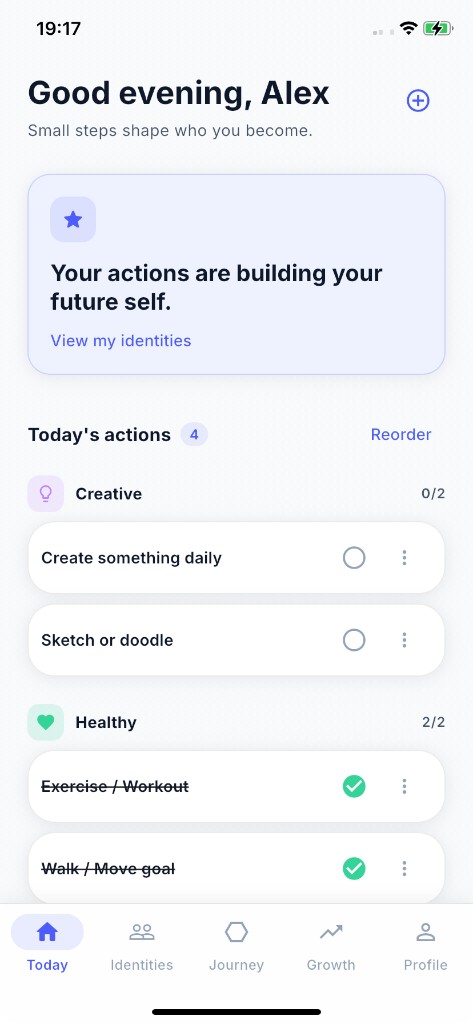
Change means casting different votes in the same moments. Ascend attaches small actions to identities like Non-Smoker and Healthy so daily proof is visible when willpower is thin. You do not have to feel like a non-smoker on day three. You only have to collect enough small wins that the old story starts to sound less true. You might feel like a fraud calling yourself a non-smoker on day five.
That is normal. Identity follows proof more often than the reverse. Tell one person you are quitting. Secrecy lets the old identity operate in the dark. Non-smoker is a role you play before you believe it.
You walk after lunch instead of smoke. You feel awkward for a week. Then the walk feels normal and the cigarette feels optional for the first time.
Why willpower is not enough
Stress, alcohol, and poor sleep demolish quit attempts. If your only tool is "do not smoke," you lose whenever life gets loud. Ascend does not block tobacco sales or deliver nicotine replacement. It structures the identity shift: track smoke-free hours, remove easy access, walk after meals, weekly reflection on health wins. Boring habits win long games.
Combine medical support if you need it. Patches, gum, and professional help are not cheating. They are tools. Friday drinks with friends who smoke is not a willpower test. It is a scene your old identity knows by heart.
Plan before you walk in, not while someone offers you a light. Alcohol and smoking are stacked for many people. If you quit smoking but keep heavy drinking, Friday night may undo the week. Plan both or plan for Friday. Ascend tracks actions, not carbon monoxide levels.
Pair it with whatever medical tools you need. Friday drinks undo many quit attempts. If alcohol is part of your smoking identity, plan Friday before Friday arrives. NA drink in hand, shorter visit, text to a friend at 9pm.
Ready to practice a different identity starting today?
Triggers worth naming out loud
List your top five smoking moments. After waking. With coffee. With alcohol. While driving. With certain friends. Anger.
Boredom on the porch. Change the environment before you change your character. Remove cigarettes from your usual spots. Keep substitutes where the pack lived. Tell the friend you always smoke with that you are quitting. The first week is about surviving familiar scenes with a new script. Scripts get easier with repetition.
Driving is a trigger for many people. Keep gum in the console, not cigarettes. Change your route for a week if the gas station pull-in is automatic. The friend you always smoke with deserves a heads up. "I am quitting, do not offer me one" is enough. Awkward for a minute, useful for months. Travel disrupts routines.
Pack gum, plan walks, know your triggers at airports and hotels before you land. The porch at night is a scene for many smokers. Change the scene or change what your hands do in it. Tea, gum, a phone call. Same chair, different script.
Small daily votes
Track smoke-free hours honestly. Partial days count as data. Log cravings even when you slip. Shame hides patterns; visibility reveals them. Short walks after meals replace one of the strongest anchors for many smokers.
Ten minutes is enough to prove you can survive the post-meal urge. Call or text support when a craving peaks. You are practicing Non-Smoker in public, which makes the identity feel real faster than private promises. Move the ashtray off the porch before you quit, not after you slip. Environmental changes are votes too.
Ten minutes after a meal is enough walk time for many people to survive the urge. You do not need a gym. You need a script. Log cravings at their peak intensity on a scale of one to ten. Most peak below seven and fade within minutes.
Cravings often last under five minutes. Set a timer when one hits. Walk until it ends. You are not proving you never want one. You are proving you can outlast the peak.
Weekly review without the relapse spiral
A slip is not proof you will smoke forever. It is proof you need a different plan for that trigger next week. Weekly review separates one bad night from a story about who you are. Ask what stacked: drinking, fighting, skipping lunch, travel. Fix one layer.
Adjust one habit in Ascend. Continue. Long-term quitters are not people who never wanted a cigarette. They are people who built enough proof that they can ride cravings without acting. If you smoked one after two weeks clean, the worst response is hiding it.
Log it, name the trigger, adjust one variable. Secrecy turns a slip into a relapse story. One cigarette after two weeks is data about a trigger, not proof you are still a smoker forever. Hide it and the story grows. Health wins matter.
Notice breathing, smell, stamina. Weekly review can include one physical win, not just abstinence. A slip hidden from your partner or your app becomes a story about who you are. A slip logged becomes a lesson about Thursday after work. Choose the lesson.
Honest limitations
Ascend is a habit structure tool, not a medical treatment. It will not cure addiction or replace clinical programs. It helps you practice smoke-free identity with daily actions and weekly honesty. If you are pregnant, managing heart disease, or struggling with severe withdrawal, work with a healthcare provider. Use the app as one layer of support.
You can quit without feeling ready on day one. Readiness often shows up after you start, not before. The app cannot remove cigarettes from your environment or manage nicotine withdrawal symptoms. It tracks the identity you are building, not the chemistry in your blood. Quit lines and doctors exist because this is hard.
Using them is not weakness. White-knuckling alone fails too often. Readiness is overrated. Many long-term quitters started on a random Tuesday without feeling prepared. Quit lines, patches, and doctors are not cheating.
They are layers. Ascend is another layer. Stack what you need without apologizing for needing help.
FAQ
How do I handle social situations where everyone smokes?
Plan before you arrive: what you will hold, where you will stand, who you will text if a craving spikes, and how long you will stay. Leaving early is allowed. Practicing non-smoker proof in hard scenes matters more than perfect attendance.
What if I slip after weeks smoke-free?
Treat it as data, not identity. Log what triggered the slip, adjust one habit, and continue the next day. Many long-term quitters slipped once. The difference is whether the slip became a story or a lesson.
Is Ascend free?
Ascend is free to download. Ascend Pro adds optional extras like unlimited identities and deeper insights via subscription.
Does my data leave my device?
Your identities, habits, and reviews are stored locally on your device by default.