
When the new you keeps losing
Old habits return because old identities are still practiced.
If you keep drifting back to the same behaviors after every fresh start, the new habits probably never became more believable than the old story about who you are.
The return feels automatic
You know the sequence. A good stretch. Pride, relief, maybe even a little hope that this time is different. Then stress arrives, or boredom, or loneliness, or success, and before you have really decided anything, you are back in the old habit.
Later you call it weakness. In the moment it often felt like comfort. That is important. Old habits are not only behaviors. They are familiar paths back to an identity your body already knows how to play.
Consistency problems are usually identity problems in disguise. You go back because the old identity still has more rehearsed evidence than the new one.
Automatic is the right word. Old habits do not ask permission nicely. They arrive with the cue and offer immediate relief. That speed is why they feel stronger than intentions that require effort.
You can slow the old loop slightly by inserting one friction step: move the app, delete the shortcut, put the snack on a higher shelf. Small delays give the new identity a fighting chance without pretending willpower alone will win every time.
Old habits are neurologically well worn
Every repeated behavior gets easier to trigger. Not because you are defective, but because repetition builds efficient pathways. A cigarette after coffee. Phone in bed. Takeaway after a hard day. The cue arrives and the old sequence starts before the conscious decision fully forms.
New habits are still rough trails by comparison. They require more effort, more attention, and more belief. In a tired moment, the well-worn path wins unless the new path has enough recent use to compete.
That is why dramatic restarts often fail. They ask you to ignore a highway in favor of a path you have walked twice.
This is also why just stop advice fails. You are not only stopping a behavior. You are rerouting a fast path your brain has used for years. New paths need repetition, not shame.
Stress reverts you to your default self
Under pressure, people do not rise to the level of their goals. They fall to the level of their practiced identity. If the practiced identity is "someone who copes with sugar, screens, or avoidance," stress will send you there fast.
This is not a moral failure. It is a routing problem. The coping habit is still mapped to the old self because that self solved problems in the past, however imperfectly.
If you want old habits to stop winning under stress, you need replacement behaviors that are equally easy to reach and clearly tied to a new identity. Not someday. In the actual moments where the old loop starts.
Plan for the stressor, not just the habit. If Thursdays are brutal at work, Thursday evening needs a planned replacement, not willpower alone. The old identity wins when the new one has no script for hard days.
Relapse plans are underrated. Decide in advance what you will do after a slip: which action, which identity, which review day. Deciding in the calm moment makes the stressed moment less likely to default to the old story.
New habits fail when they are only restrictions
A lot of change attempts are framed as stopping. Stop scrolling. Stop snacking. Stop drinking. Stopping matters, but stopping alone does not give the old identity a successor. It leaves a vacuum.
Vacuums get filled by whatever is fastest. That is usually the old habit, because it already knows how to deliver relief.
Identity-based change works better when it adds a positive practice alongside the removal. Walk first. Drink water first. Write one sentence first. Give the new identity something to do when the old cue appears.
Ask what the old habit gave you socially, emotionally, or physically. Boredom relief? Connection? Energy? A pause in responsibility? Your replacement needs to acknowledge that need or it will keep losing.
Sometimes the replacement is partly social. A walk with a friend instead of scrolling alone. A writing session at a cafe instead of isolating with the draft. The new identity may need company before it can stand on its own.
Shame after relapse strengthens the old story
The days after a relapse are dangerous. People tell themselves they always go back, which becomes permission to keep going back. "See? This is just who I am."
That sentence is the old identity defending territory. It turns one relapse into a biography.
A better response is narrower and less dramatic: I returned to an old habit under stress. What cue was there? What identity was I practicing? What is one small vote for the new one today? Relapse is an event. Identity is built from what happens next.
The fastest way back is usually smaller than people think. Not a full reboot. One aligned action. One honest review. One decision to practice the new identity again before the old one writes the whole month.
Weekly review catches the drift early
Most returns to old habits do not happen in one dramatic collapse. They drift. One skipped action. One late night. One "just this once." A week later the old pattern is fully back and feels inevitable.
Weekly review interrupts the drift while it is still small. You can see that Tuesday was the turn, or that one identity lost all its actions, or that the replacement habit was never defined clearly enough.
Early correction is easier than another full restart. The goal is not never to slip. It is to notice the slide before the old identity runs the month.
Drift is easier to fix on day three than on day thirty. Review gives you an early warning system instead of a postmortem.
How to make the new identity competitive
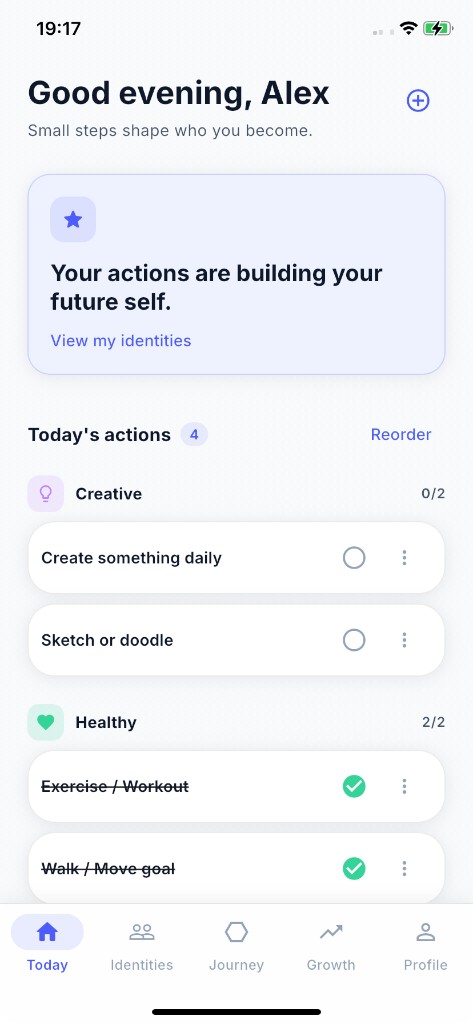
Ascend cannot erase old pathways or remove real-world triggers. It can help you practice a new identity with enough repetition that it eventually becomes the default under pressure. That means small actions, daily visibility, and honest weekly review.
The identity quiz can help if you keep returning to old habits because you are not sure what new identity you are supposed to be practicing. Without that clarity, every restart is just another round of behavior change with the same old self waiting underneath.
If you always go back, stop treating each return as proof that change is impossible. Treat it as evidence that the old identity is still better rehearsed. Rehearse the new one in smaller doses, for longer, with review. That is how the default changes.
Competitive does not mean perfect. It means the new identity gets enough daily votes that it can win on an average Tuesday, not only on your best day. That is a lower bar than people think, but it requires repetition.
Expect old habits to offer themselves at the usual cues for a while. That is not failure. It is the old identity asking for work. The win is choosing the new practice often enough that the ask gets quieter over time.
Going back is common. Staying back is optional. The identity that wins is the one you rehearse after the slip, not the one you fantasize about before the next fresh start.
Old habits may always feel familiar. The goal is not to erase that familiarity overnight. The goal is to make the new practice familiar enough that you have a real choice at the cue.
Every return to the new practice is a vote against the story that you always go back for good.
The old habit may win some days. The identity wins when those days stop defining the whole month.
FAQ
Why do I return to old habits even when I know better?
Knowing better is cognitive. Returning is practiced. Old habits are tied to familiar cues, fast relief, and a well-rehearsed identity. Until the new identity has enough recent evidence, the old loop will stay the default under stress.
How do I stop going back to old habits after a good streak?
Plan for the relapse before it happens. Define a tiny replacement action, tie it to a clear identity, and review weekly so drift gets caught early. Returning once matters less than whether you return to the new practice quickly.
Is Ascend free?
Ascend is free to download. Ascend Pro adds optional extras like unlimited identities and deeper insights via subscription.
Does my data leave my device?
Your identities, habits, and reviews are stored locally on your device by default.