
When everything slipped at once
Getting back on track is daily proof, not a Monday overhaul.
When the apartment, routine, and goals all unraveled together, you do not need a new you. You need small restorable habits that rebuild trust with yourself.
Off-track rarely happens as one choice
It accumulates in ways you barely notice until the pile is visible. The gym stopped in March, then the kitchen piled up, then sleep slid later and later, then work or school followed because there was no container left. You wake up one day feeling like a stranger in your own apartment. Off-track usually starts with one area slipping and spreads because shame makes everything feel too late to fix incrementally. Off-track usually starts with one area slipping and spreads because shame makes everything feel too late to fix incrementally.
The shame voice says you need a total reset: new diet, new schedule, new personality by Monday morning. That voice is why many people stay stuck for years. The gap between overhaul and reality is too wide to cross in one weekend, so you never start. The bed and one clear surface are signals that you still live here, not visitors in your own home waiting to be evicted by mess. The bed and one clear surface are signals that you still live here, not visitors in your own home waiting to be evicted by mess.
Recovery is rebuilding evidence slowly, not flipping a switch. You restore one layer at a time, bed made before inbox zero, walk before career overhaul. Slow proof beats another dramatic reset that collapses by Thursday. One finished task before noon changes the tone of a day that looked lost at breakfast when the list felt accusatory.
Basics are load-bearing
Make bed, tidy one surface, walk fifteen minutes. Those sound like clichés because they work as anchors when everything else feels optional. They are proof the physical world can be tended when your inner world feels chaotic and loud at 9am. Leaving the house for fifteen minutes interrupts the loop that makes every day feel identical and smaller than the last.
Grounded identity habits are not about aesthetics for Instagram or impressing visitors. They are about signaling to your brain that you still participate in your life, that you have not surrendered every room to entropy. Weekly review turns "everything is wrong" into one or two fixes you can actually attempt without a Monday overhaul.
One tidy surface beats a weekend cleaning marathon you abandon halfway when exhaustion wins. Recovery is rebuilt in repeatable basics, not in one heroic Saturday you cannot repeat next week. Heroic bursts feel like progress until Thursday proves you borrowed energy you did not have and crashed harder than before.
Morning priorities beat endless lists
When you are off track, todo lists become accusation documents with forty items and no realistic path through Tuesday. Three priorities each morning is enough to rebuild trust. Finish one small avoided task daily before you add heroes that assume a person you are not yet. Trust returns when your recent history includes proof you kept small promises to yourself, not dramatic promises you broke.
Builder identity habits focus on completion, not ambition that sounds good at midnight. Email that one person. Pay that one bill. Return that one package sitting by the door for two weeks. Each finish is evidence you still finish things. Recovery is rebuilding evidence slowly, not flipping a switch with a life reset challenge that ends in week two.
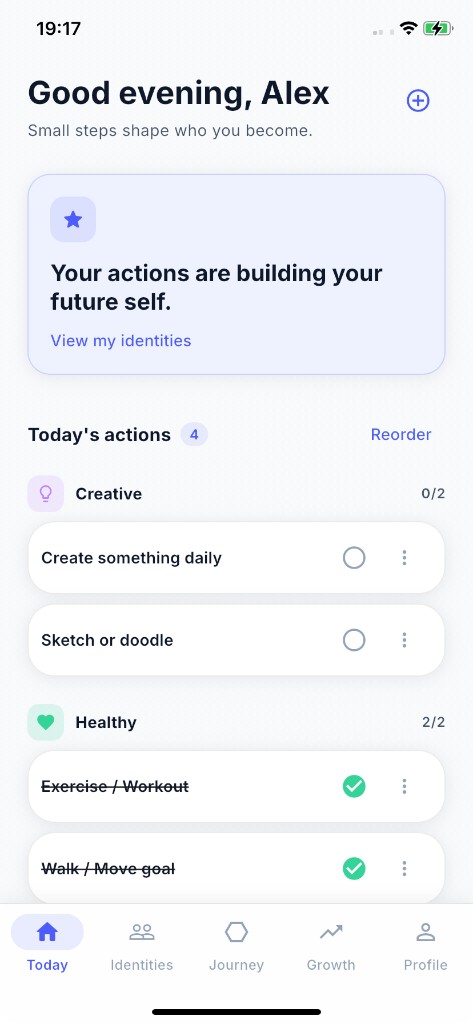
Ascend will not organize your life for you or sort the mail pile. It gives you a daily place to log those finishes so a scattered week still shows three completions your brain might otherwise erase. Grounded habits are anchors for the nervous system when inner chaos says nothing is worth tending anymore.
Ready to practice a different identity starting today?
Movement is reset for the nervous system
Fifteen minutes outside is not fitness optimization or a step-count competition. It is a state change: light, air, and forward motion interrupt the loop of bed to screen to bed that makes off-track weeks feel permanent. Builder habits focus on completion because finishing one avoided task is evidence you still finish things sometimes.
Track the walk even when it is slow, especially when it is slow and you only made it to the corner. Weekly review shows whether you left the house or stayed cocooned. Both patterns teach you something useful without moral judgment. Ascend will not clean your kitchen, but it can log finishes your brain erases when shame is running the review.
If mobility is limited, adapt the habit to what your body can repeat. The bar is movement you can do most days, not a specific step count borrowed from someone else's life.
Weekly life review instead of annual shame
A weekly life review asks simple questions that cut through the fog. What slipped? What held? What one change matters next week? It turns vague "I am a mess" into specifics you can touch and adjust without declaring total failure. Adapt the walk if you need to. Repeatable beats impressive when you are rebuilding trust from a low baseline.
Maybe laundry is fine but sleep is wrecked. Maybe work is okay but you have not seen friends in a month. Targeted fixes beat vague resolutions that assume you will become a different species by January. Targeted fixes beat vague resolutions because "get it together" is not a plan your Tuesday can execute.
Ten minutes Sunday beats another night of searching "how to get my life together" without changing Tuesday. Recovery is rebuilding evidence slowly in review notes you can read a month later and see progress. Compare weeks, not heroic hours, because sustainable recovery looks boring and boring is what actually lasts.
Do not borrow energy from next month
The temptation is to fix everything in one burst when shame peaks. You clean until 2am, plan a new workout program, and sign up for a course you will not open. By Thursday you are empty and back where you started, with more proof you cannot change. Remove week-one habits that feel like a joke. Keep the ones you can do on your worst day, not your best.
Sustainable recovery looks unimpressive from the outside. Same wake time, same walk, same one task. That repetition is the track you are getting back on, not the dramatic week your brain keeps offering as the only option. You are restoring participation in your life, not performing a new personality for people who were not helping anyway.
Compare weeks, not hours of heroic effort. A boring week with four logged basics beats a spectacular three days followed by silence. Slow evidence is still evidence. One anchor habit held for three weeks is more track than a ten-habit plan you abandoned before Wednesday.
Restore trust with yourself first
Import a life reset plan with Grounded and Builder identities, morning priorities, movement, and weekly life review. Remove anything that feels like a joke for week one, even if you think you should be able to handle more. The shame voice wants an overhaul because overhauls let you fail loudly instead of succeeding quietly and slowly.
You are not becoming a new person overnight. You are becoming someone who has recent proof they can show up for basics when motivation and confidence are both low. Everything else can build later on top of basics once basics stop feeling like a fantasy for someone else.
That proof is the track. Everything else builds on it later when you have earned the right to add complexity. Recovery is sequential, not a switch. Slow proof is still proof, and proof is the track you are trying to get back on one ordinary day at a time.
FAQ
Where should I start when everything feels broken?
Start with one anchor habit: wake time, a short walk, or one surface tidied daily. Add the next habit only when the first is mostly steady.
How is this different from a "life reset" challenge?
Challenges optimize for intensity over a short window. This approach optimizes for repeatable evidence over months, without punishing you for imperfect weeks.
Is Ascend free?
Ascend is free to download. Ascend Pro adds optional extras like unlimited identities and deeper insights via subscription.
Does my data leave my device?
Your identities, habits, and reviews are stored locally on your device by default.