
When you cannot remember why any of it matters
Motivation returns after action, not before.
Waiting to feel motivated is a trap. Recovery means tiny starts, a written why, and weekly proof that you still care, even when feeling flat.
Motivation is not the starter button
We treat motivation like electricity: flip the switch, then work begins. Most lasting effort works the other way around in real life. You move a little first, then motivation shows up late to the party, if it shows up at all, often after you have already started and stopped twice. Waiting to feel ready is how months disappear without a single honest attempt that your future self could build on.
When you say you lost motivation, you often mean the feeling that made hard things easy went away without warning. The goals might still matter when you think about them calmly. The spark did not follow you to the desk at 8am on Tuesday. Inspiration content gives you a feeling of progress without changing what you do at 7am when the task is still sitting there.
Recovery is rebuilding evidence slowly that action is still possible without the spark, not flipping a switch by reading one inspiring quote or watching a morning routine video. Your body learns from repeated starts, not from peak-state stories. Two minutes is enough to break the spell of not starting, even when you stop right after and feel foolish for counting it.
Why inspiration content stops working
Podcasts and threads sell peak-state stories where everything clicked after one decision. They rarely help at 7am when you stare at a task and feel nothing but dread and static. Consumption feels like progress because your brain got a hit of possibility. It is not practice, and practice is what rebuilds motivation. A flat why sentence is still a link between action and meaning when feeling is gone and cynicism is loud.
Purposeful identity work is quieter and less shareable. One sentence about why this matters, written daily even when it sounds repetitive or petty. Two minutes on something avoided. One small completed action before noon. Those are votes when inspiration will not vote for you. Seasonal dips look permanent when you only judge yourself by the last forty-eight hours instead of the last six months.
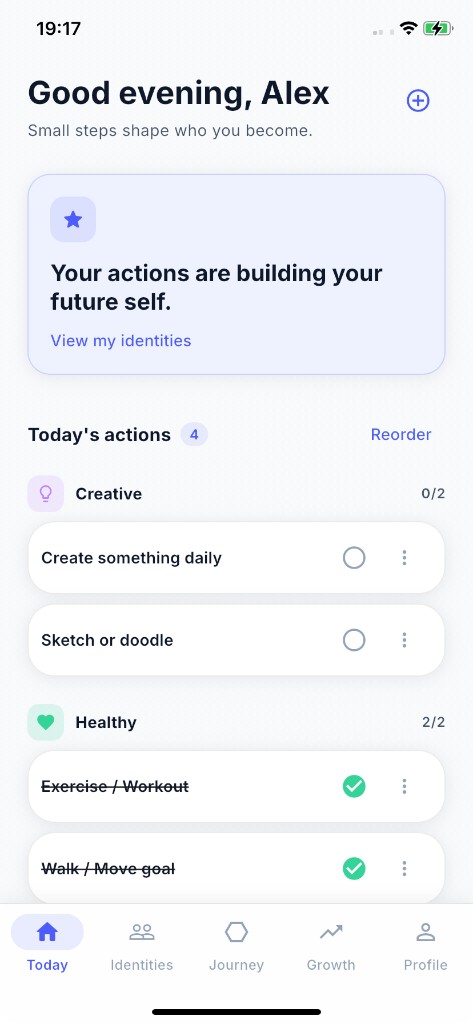
Ascend logs the votes so a flat week still shows proof you moved when your memory insists you did nothing. That log fights the distortion low motivation creates. It cannot manufacture feeling, but it can preserve evidence feeling tried to erase. Sometimes the honest answer is that the goal needs changing, not more discipline or another motivational podcast episode.
The two-minute start is not a hack, it is a bridge
Starter identity habits use the smallest entry point that still counts as beginning: open the doc, lace the shoes, write one line, load the project file. You are not committing to an hour or a finished draft. You are proving you can begin when every part of you prefers the sofa. Feeling may return later. The actions you log now still matter without it and still count as forward motion.
Often beginning unlocks more once friction drops. Sometimes it does not, and you stop after two minutes with only that to show. The win is still the begin, especially when you repeat it five days out of seven and your review can see the pattern. Recovery is rebuilding evidence slowly through small starts, not flipping a switch because one quote landed last night.
This is honest limitation worth naming. Two minutes will not finish the project or fix your career. It keeps you from vanishing entirely while motivation is gone, and vanishing makes the return harder. Purposeful identity work is quiet, repetitive, and deeply uncinematic, which is why people skip it for consumption.
Ready to practice a different identity starting today?
Reconnect to why without toxic positivity
Daily why sentences do not have to be grand or Instagram-worthy. "I want to feel proud of my work" counts. "I do not want to be in this same spot next year" counts too, if it is true and gets you to open the laptop. Ascend logs votes when inspiration refuses to vote for you, so flat weeks still show proof you moved.
The point is linking action to meaning when feeling is flat and cynical. You are training Purposeful identity, not performing gratitude for an audience or a habit app. Repetition matters more than eloquence on the bad days. Shrink habits in a dip instead of abandoning them, because abandonment makes the return harder than the dip itself.
Weekly review of wins from the past week reminds you that flat feeling lied about what you actually did. You might have shown up four times while feeling zero percent inspired. That is motivation recovery in practice, not in theory. Attempts count even when the output is tiny, especially when tiny is all you had to give that day.
Motivation dips are seasonal
Look across months, not days, when you judge whether motivation is gone forever. February might be low every year. Post-project crashes are predictable if you have seen them before. Your review data helps you see seasonality instead of declaring you are broken permanently at 10pm on a Wednesday. If flatness lasts months and nothing helps, habits may support you but cannot replace qualified help for root causes.
During dips, shrink habits instead of abandoning them entirely. One sentence and one two-minute start beats a heroic plan you will not touch because it assumes a person you are not this month. Small keeps the thread alive. Compare seasons, not afternoons, when you decide whether motivation is gone forever or just visiting less often.
Identity-based tracking survives dips better than streaks because missed days stay in the story instead of erasing it. Recovery is rebuilding evidence slowly across uneven weeks, not maintaining a perfect chain until life intervenes. The two-minute start is a bridge, not a hack, and bridges are built to be crossed repeatedly, not admired once.
When low motivation is a signal, not a mood
Sometimes flatness is burnout, depression, grief, or wrong goals wearing a motivation costume. If motivation has been gone for months and nothing helps, talk to someone qualified instead of doubling down on willpower. Habits support recovery. They do not diagnose root causes or replace treatment. Weekly win review reminds you that mood lied about what you actually did when you felt like you did nothing.
If the goal itself no longer fits your life, no amount of tracking will resurrect joy for it. Review can surface that truth early enough to pivot before you waste another year performing interest you do not feel. You are training Starter identity every time you begin without ready as a prerequisite, which is the real skill.
Respect the difference between a slump and a wrong path. One needs smaller habits and patience. The other needs honesty and change. An app can help you notice which you are in. It cannot choose for you. Motivation often shows up late, grumpy, and only after you have already started three times this week.
Collect proof until feeling catches up
Import a motivation recovery plan with Purposeful and Starter identities, daily why, two-minute starts, and weekly win review. Let the system be smaller than your ambition until ambition returns in fragments you can actually sustain.
You are not waiting to feel ready. You are becoming someone who acts without ready as a prerequisite, which is how most adults actually get things done on ordinary Tuesdays.
That is how motivation actually comes back. Slowly, with evidence you collect on days when feeling refused to show up. The feeling often follows months later, if it comes at all. The actions still matter.
FAQ
How long does it take to recover motivation?
Feeling can shift in weeks when small actions stack. Deeper loss tied to burnout or mental health may take longer and need more than habit changes alone.
What if I do not know my why anymore?
Start with the smallest honest sentence, even if it is about avoiding pain rather than chasing joy. Clarity often follows action, not the other way around.
Is Ascend free?
Ascend is free to download. Ascend Pro adds optional extras like unlimited identities and deeper insights via subscription.
Does my data leave my device?
Your identities, habits, and reviews are stored locally on your device by default.