
Discipline without self-punishment
Discipline is not force. It is a practiced identity.
Becoming disciplined works better when you stop trying to bully yourself into compliance and start collecting proof that you keep small promises.
Why willpower keeps failing you
Most discipline advice treats you like a machine that needs harder settings. Wake earlier. Try harder. No excuses. That works for a week, then life happens and you conclude you lack character. You probably do not lack character. You lack a system that survives a tired Thursday when every shortcut in your brain is lobbying for the old default. The fight you feel is often a sign the habit is too big, too vague, or attached to an identity you do not actually want yet, not proof that you lack the character to change.
Willpower is a limited resource. Identity is a story you reinforce. Disciplined people are not constantly fighting themselves. They have practiced being someone who does certain things without negotiating every time. The fight you feel is often a sign the habit is too big, too vague, or attached to an identity you do not actually want yet. If discipline has failed you repeatedly, ask what your current habits are protecting you from, because procrastination often shields fear of failure or visibility until you address the function.
If discipline has failed you repeatedly, stop asking for more grit. Ask what your current habits are protecting you from. Procrastination often shields you from fear of failure or visibility. Until you address the function, white-knuckling will keep losing to the familiar relief of the old script. Motivation is weather and practice is climate; you build climate with repetition so small it feels almost insulting at first, then normal enough that skipping feels like the exception.
Discipline as identity, not mood
Ask disciplined people what they did this morning and you will hear boring specifics: same wake time, same workout slot, same block for deep work. They are not always motivated. They are practiced. Motivation is weather. Practice is climate. You build climate with repetition so small it feels almost insulting at first. Discipline grows when keeping promises to yourself becomes part of your self-story, and reputation with yourself rebuilds slowly through promises so small that failing would be harder than completing them.
Reinvention is editing who you practice being, not erasing your past. If you have a long history of breaking promises to yourself, you do not fix that with one heroic week. You fix it with promises small enough to keep, repeated until your brain updates its expectations about who you are. Embarrassingly small is a feature: if you feel silly logging a two-minute habit, good, because silly habits survive while grand habits die in week two when reality returns.
Discipline grows when keeping promises to yourself becomes part of your self-story. "I am someone who does the thing" is not arrogance if the evidence is real and recent. Start with promises so small that failing would be harder than completing them. Reputation with yourself rebuilds slowly, then suddenly. You can always scale up after the identity has a few weeks of proof behind it, because sequence matters more than ambition when you are editing who you practice being, not erasing your past.
Make the promise embarrassingly small
The fastest way to fail a discipline plan is to size it for your best day. Thirty-minute meditation, hour-long workouts, two hours of writing. On day four you skip once, then twice, then abandon the whole identity. The size of the promise matters more than the intensity of your intention on day one. Environment beats inspiration on most days, so if you keep losing the same argument with yourself at 6pm, change the scene instead of demanding stronger character from an already tired brain.
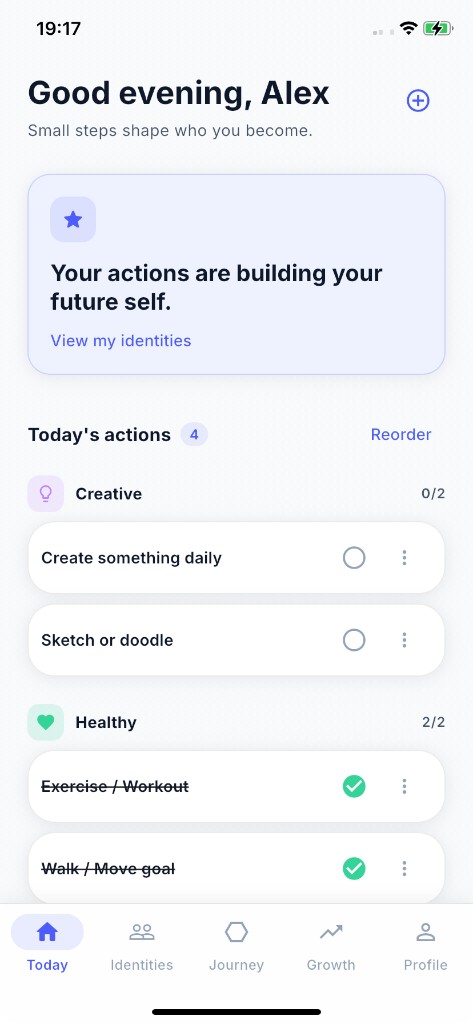
Start with a promise you could keep while sick, busy, or sad. Two minutes of stretching. One page. One inbox processed. Ascend tracks these votes under an identity like Disciplined or Accountable. The app does not shame you for missed days. It shows patterns so you can adjust. Discipline is maintenance, not a one-time setup, and a default that made sense in January may be friction by June, so edit the design before you conclude you are broken.
Embarrassingly small is a feature. If you feel silly logging a two-minute habit, good. Silly habits survive. Grand habits die in week two when reality returns. You can always scale up after the identity has a few weeks of proof behind it. Sequence matters more than ambition. Applause fades while evidence compounds quietly until your behavior feels normal instead of performative, which is why private proof beats public shame for lasting discipline.
Ready to practice a different identity starting today?
Remove negotiation from the default
Discipline often breaks at the decision point. Should I go now or after coffee? Should I write now or tonight? Every negotiation is a chance for the old identity to win. Reduce negotiations with defaults: clothes laid out, document open, phone in another room, calendar block labeled non-negotiable. Character follows design more often than the reverse, so adjust the habit before you attack your character when commitments keep slipping on the same tired weekday pattern.
Defaults are not glamorous. They are how disciplined behavior becomes automatic. You are not more virtuous. You are better designed. Environment beats inspiration on most days. If you keep losing the same argument with yourself at 6pm, change the scene instead of demanding stronger character. The best check-in sounds like "what is the smallest next vote?" not "why did you fail again?" because discipline built on humiliation collapses the first time nobody is watching.
Review your defaults weekly. Which ones still work? Which ones need updating because life changed? Discipline is maintenance, not a one-time setup. A default that made sense in January may be friction by June. Edit the design before you conclude you are broken. Forcing productivity on top of depletion is not discipline; it is denial with a planner, and sometimes the disciplined move is rest, boundaries, or asking for help before you break.
Accountability that does not humiliate you
Public shame rarely builds lasting discipline. Private evidence does. A weekly review that asks "did I honor commitments to myself?" is more useful than posting your streak for applause. Applause fades. Evidence compounds quietly until your behavior feels normal instead of performative. Editing who you practice being includes practicing someone who protects capacity, not only someone who pushes through regardless of cost, when the load itself is the real problem.
If you use Ascend, treat missed days as data. Which commitments keep slipping? Are they too big, poorly timed, or attached to an identity you do not actually care about? Adjust the habit before you attack your character. Character follows design more often than the reverse. You are rebuilding reputation with yourself slowly, one kept promise at a time, not through a single burst of intensity that collapses when life gets loud again next month.
Accountability partners can help when they focus on return, not perfection. The best check-in sounds like "what is the smallest next vote?" not "why did you fail again?" Discipline built on humiliation collapses the first time nobody is watching. Private proof lasts longer. That shift sounds minor until you notice how much self-trust returns when you can point to a month of small promises kept, even if nobody else would be impressed by the size.
What discipline cannot fix alone
Discipline will not fix a job that drains you, a schedule that is physically impossible, or burnout you have been ignoring for two years. Sometimes the disciplined move is rest, boundaries, or asking for help. Forcing productivity on top of depletion is not discipline. It is denial with a planner. One missed morning is not proof you are undisciplined forever; it is one data point, and the disciplined response is the next small vote, not a shame spiral that burns three more days.
Ascend structures habits. It does not block distractions, lock your phone, or override a life that needs structural change. Use it where practice matters. Do not use it to avoid harder conversations about workload, relationships, or health that require more than a habit log can hold. Willpower is a limited resource, so disciplined people reduce negotiations with defaults instead of winning every argument with themselves when they are already depleted from the day.
If you keep needing heroic discipline just to survive ordinary weeks, look upstream. The problem may not be your follow-through. It may be the load. Editing who you practice being includes practicing someone who protects capacity, not only someone who pushes through regardless of cost. Two minutes of stretching counts when it keeps the identity alive, and Ascend will not shame you for missed days, but it will show patterns so you can adjust before you quit entirely.
Build discipline one kept promise at a time
Pick one morning commitment. Honor it for seven days. Add a second only when the first feels normal. Discipline is reputation with yourself. You are rebuilding that reputation slowly, one kept promise at a time, not through a single burst of intensity that collapses when life gets loud again. A calendar block labeled non-negotiable is a design choice, not a virtue signal, and defaults work because they remove the decision point where the old identity usually wins.
Import a discipline plan in Ascend if you want starter habits. Rename them until they fit your real life. The goal is not perfection. The goal is becoming someone who keeps small promises more often than before. That shift sounds minor until you notice how much self-trust returns. Discipline will not fix a schedule that is physically impossible, so look upstream when heroic discipline is required just to survive ordinary weeks that should not feel like emergencies.
When you slip, return without the drama. One missed morning is not proof you are undisciplined forever. It is one data point. The disciplined response is the next small vote, not a shame spiral that burns three more days. Come back fast. That is the habit underneath the habits. Come back fast after a slip, because that is the habit underneath the habits and the one that separates practiced discipline from another dramatic week you cannot repeat.
FAQ
How long does it take to become a disciplined person?
You can feel a shift in self-trust within a few weeks of keeping small promises. Identity-level discipline usually takes several months of consistent practice and weekly adjustment.
Is discipline the same as motivation?
No. Motivation is a feeling. Discipline is practiced behavior that continues when the feeling is gone. Identity-based habits focus on action first; motivation often follows.
Is Ascend free?
Ascend is free to download. Ascend Pro adds optional extras like unlimited identities and deeper insights via subscription.
Does my data leave my device?
Your identities, habits, and reviews are stored locally on your device by default.