
Escape the porn loop
This is not a willpower contest. It is a loop that learned when and how you reach for relief.
If porn has become automatic when you are stressed, bored, or alone, you are not uniquely broken. You are stuck in a private habit that shame keeps hidden.
When porn becomes the default exit
Many people use porn when they want fast relief from stress, loneliness, boredom, or frustration. The browser opens before a conscious decision forms. The session ends with guilt, which becomes its own trigger later. Frequency varies. Impact varies.
If you want to stop or reduce use because it conflicts with your values, relationships, or energy, that is enough reason. Moral panic does not help. Honest pattern mapping does. Late night in a hotel room, after an argument, during a lonely weekend: the windows are predictable once you log them for two weeks. Incognito mode is a sign the loop includes hiding.
Hiding makes honest review harder. Travel and hotels disrupt routines and spike risk for many people. Plan before the trip, not in the room. The browser opens before the decision forms. That speed is the loop.
Logging urges slows the sequence enough for choice to appear sometimes. Hotel Wi-Fi and travel loneliness spike risk for many people. Plan a walk, a call, or a filter before you check in, not after you are bored in the room. Stress from work often peaks after hours when willpower is lowest. If 11pm is your window, intervene at 9pm with movement or connection before the urge arrives fully formed.
The identity loop
You may be practicing the person who escapes through porn in specific windows: late night, hotel travel, after arguments, when feeling rejected. Intentional and Connected are counter-identities built through filters where helpful, urge logs, replacement activities, and real conversation. You are not broken. You learned a private regulator. You can learn a different script, slowly.
The short relief is real. Shame afterward is also part of the loop, and shame often triggers the next session. Rejection and loneliness are common triggers. The loop offers certainty when people feel uncertain. Intentional living is built in ordinary minutes, not dramatic vows at midnight.
Late night alone is the highest-risk window for many people. Plan movement or connection before 11pm on hard days, not after the urge is already peaking. The loop often runs on secrecy plus shame. One logged urge you survived is proof shame tried to erase. Keep the log even when it hurts to read.
Devices in bed make the loop frictionless. Charging outside the bedroom is extreme and effective for many people. Pair it with one logged habit in Ascend so the change has proof attached.
Why shame makes the loop stronger
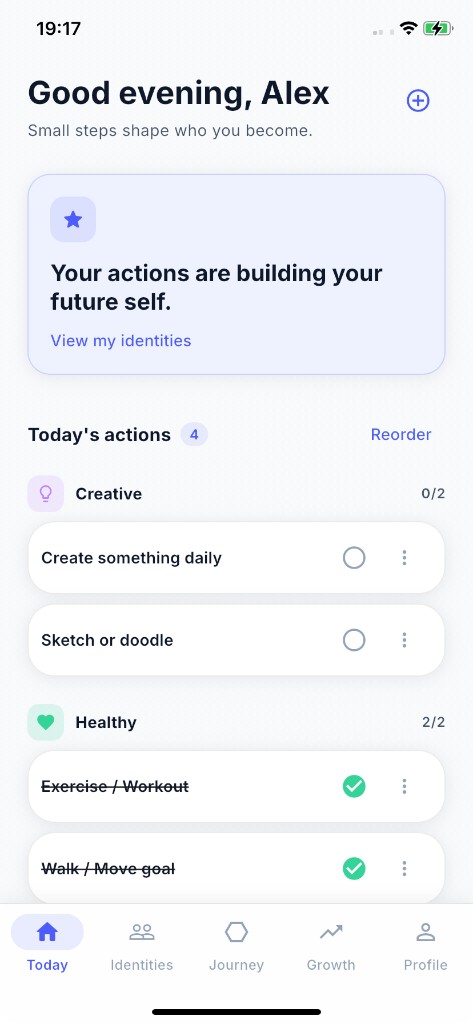
Secrecy intensifies compulsive patterns for many people. You feel bad, you want relief, porn is the fastest private option. Shame closes the circle. Ascend does not spy on your browser or send alerts to anyone. It is private local tracking for habits you choose. Structure without surveillance theater.
Therapy, support groups, or faith communities help many people. The app is one layer, not the whole answer. Calling yourself broken at midnight does not stop the next midnight. Naming the trigger and logging the urge creates distance shame cannot provide. Shame after a session often triggers the next session. Shame is part of the loop, not the exit.
Ascend stays on your device. No surveillance theater. You choose what to log. Shame after a session often feeds the next session. Shame is part of the loop, not the exit. Curiosity about triggers works better than self-attack.
Replacement at midnight does not have to be virtuous. Shower, push-ups, audiobook, text. Anything that breaks the sequence before the browser opens. Filters you disable during a strong urge were never the whole plan. Pair filters with logging and replacement so one failure does not collapse everything.
Ready to practice a different identity starting today?
Triggers and high-risk windows
Log urges with context for two weeks: time, emotion, location, device. Patterns are predictable once you see them. Install filters or remove triggers from devices if that fits your approach. Environmental friction matters because willpower is lowest at midnight. Replace habit time with movement or connection: walk, shower, text a friend, journal one sentence. The goal is to survive the peak.
Boredom on a Sunday afternoon and stress after work are common triggers. Plan one replacement for your highest-risk hour before the urge arrives. Filters help some people early. Others rely on logging and replacement. Pick friction that matches your pattern. Late night alone is the highest-risk window for many.
Plan movement or connection before 11pm on hard days. Filters help some people early. Others rely on logging and replacement. Pick friction that matches your pattern without pretending one size fits all. Filters are tools, not morality. If they help for ninety days, use them.
If you outgrow them later, decide then with clear review data. Meaningful conversation does not require a heavy talk every day. A honest check-in with a friend counts toward Connected when isolation is your trigger.
Daily proof for intentional living
Log urges even when you act. Data beats amnesia. One meaningful conversation daily builds Connected proof. Isolation feeds the loop. Weekly honest progress review without catastrophizing a slip. Adjust one habit, continue.
A five-minute walk when an urge hits is boring advice because it works. Movement interrupts the autopilot sequence before the browser opens. Log urges with emotion labels. Bored. Lonely. Stressed.
Patterns beat vague guilt. One real conversation daily reduces isolation that feeds the loop. Text counts if it is honest. Isolation feeds the loop. One honest conversation daily, even a short text, builds Connected proof that competes with private relief. Connected proof might be a five-minute call with a sibling, not a deep confession.
Small connection competes with private relief. Slips hidden in private amnesia restart the shame cycle. Log the slip, name the trigger, adjust one variable. That sequence is how identity changes over quarters, not days.
Relationships and honesty
If a partner is involved, decide what honesty looks like with professional guidance if needed. This page cannot script your relationship. Some people reduce use privately first. Others need accountability. There is no single virtuous path. Ascend tracks your chosen habits locally on your device.
What you do with that information in relationships is yours to navigate carefully. Secrecy and shame often travel together. One honest conversation with a trusted person, or a therapist, can reduce the isolation that feeds the loop. Partners complicate honesty. Professional guidance helps navigate disclosure without destroying trust. Private reduction is valid.
Public accountability is valid. There is no single moral path. Partners and disclosure are complicated. Professional guidance beats internet rules. Ascend stays on your device; relationships need their own careful choices. Weekly review without catastrophizing a slip means adjusting one habit, not declaring yourself hopeless.
Hopelessness is part of the old identity. Values conflict is valid reason to change. You do not need a diagnosis to want a different relationship with porn. Your reasons are enough to start building proof.
What Ascend will not do
Ascend is not sex therapy, addiction treatment, or a content blocker. If use feels compulsive beyond your control, seek qualified professional support. The app will not monitor porn sites or report behavior. It offers identity structure and weekly review for people building intentional habits. Change is possible without hating yourself into it.
Proof beats punishment. The app provides structure, not willpower at 11pm when you are alone and stressed. It cannot block content or remove the urge. It helps you see whether you are practicing who you mean to be. Compulsive use beyond control needs professional help, not only an app.
Proof accumulates in logged urges you survived, not in perfect streaks you hide the moment you slip. Compulsive use beyond your control needs qualified help. The app offers structure for intentional change, not therapy or blocking software. Professional support for compulsive patterns is not failure. It is matching the tool to the problem.
Ascend holds daily structure while you get help if you need it. Ascend will not monitor your browser or report to anyone. Structure is voluntary. If you need blocking or therapy, add those layers without waiting for the app to become something it is not.
Note: Ascend is a habit and identity tracking app, not medical or clinical treatment. If you are in crisis or need professional support, please contact a qualified healthcare provider or local helpline.
FAQ
Is watching porn an addiction?
Some people experience compulsive patterns that meet clinical definitions; others do not. If you feel unable to stop despite serious consequences, talk to a qualified professional. Ascend offers habit structure, not diagnosis.
Do I need to install blocking software?
Many people benefit from friction on devices, especially early on. Others rely on logging and replacement habits. Filters are a tool, not a moral requirement. Choose what reduces autopilot in your high-risk windows.
Is Ascend free?
Ascend is free to download. Ascend Pro adds optional extras like unlimited identities and deeper insights via subscription.
Does my data leave my device?
Your identities, habits, and reviews are stored locally on your device by default.