
When getting through the day is the whole job
Depression recovery is one small proof at a time.
If brushing your teeth feels like a marathon, you do not need a life overhaul. You need tiny actions that count as wins, tracked gently, without pretending an app replaces real support.
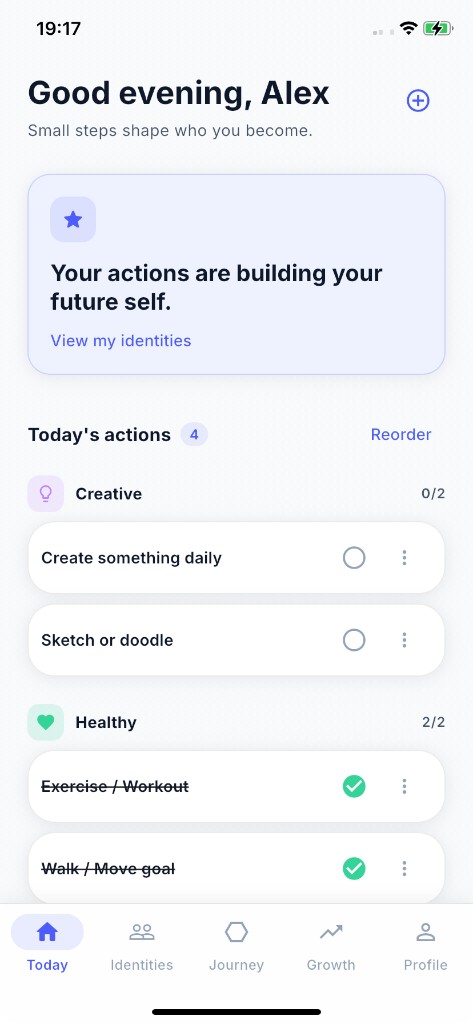
Depression shrinks what counts as a win
Normal habit advice assumes you have a baseline of energy and hope to spend each morning. Depression often removes both without warning or fair explanation. Telling someone in that state to "just go for a run" or "journal your gratitude" can land as proof they are failing at recovery too, which makes the hole deeper. On heavy days, the bar should be low enough that success is possible before noon without requiring a personality transplant.
The useful frame is smaller and more honest. Open curtains at 10am. Wash your face. Send one text that says you are alive. Those are not pathetic goals for a bad day. On a heavy day they are the whole game, and completing one is legitimate evidence that action is still possible. Missing a habit is data about the day, not a verdict on your worth as a person or your future chances.
Recovery is rebuilding evidence slowly, not flipping a switch to wellness. You are collecting proof that movement exists even when feeling better does not. That proof might look invisible to other people. It still counts when you log it on the days your brain says nothing counts. Future-you may not feel grateful today, but they might have enough energy to try again because you left breadcrumbs.
Why shame makes the spiral worse
Depression loves comparison and never fights fair. You see other people's highlight reels and your own unmade bed at 2pm. You miss three days of habits and decide you are hopeless, which becomes another reason not to try tomorrow. That story is a symptom, not a fact about your future.
Gentle tracking avoids streak punishment that turns recovery into another way to fail. The question is not "did I keep a perfect chain." It is "did I do one small thing on more than zero days this week." Five days with one win beats one heroic day followed by silence and shame. Review is not about productivity. It is about noticing what kept you tethered when everything else felt optional.
Ascend is a structure tool, not therapy, medication, or crisis support. If you are in danger or cannot function, contact a qualified provider or local helpline first. Habits can support treatment. They should not delay care you need because an app felt easier to open than a phone call. No app can sit with you in the dark or prescribe what your brain chemistry needs when symptoms are severe.
Tiny actions are legitimate recovery work
A depression recovery plan might include getting out of bed and opening curtains, one task that counts as a win, and basic hygiene you can manage standing up. Those sound minimal because they are meant to be doable on the worst days, not impressive to someone who has never been inside this fog. Start so small that your brain cannot reasonably call it a setup for failure or another way to disappoint yourself.
Each completed action is a vote for the Gentle identity: someone who can still move, a millimeter at a time. You are not performing wellness for an audience or a therapist who might judge you. You are leaving breadcrumbs for a future day that might have slightly more air in it. Gentle tracking means asking what happened, not grading yourself against a version of you that was not depressed.
If all you did today was shower, that goes in the win column. Period. If all you did was drink water and reply to one message, that counts too. Recovery is rebuilt from those crumbs, not from waiting until you feel ready for a full routine. If showering is the win, log the shower. Your memory on bad weeks is not a reliable judge of effort.
Ready to practice a different identity starting today?
Connection habits when everything feels heavy
Isolation is both a symptom and a fuel for depression. Reaching out feels impossible until it is one text to one person once a week saying you are struggling without needing to explain everything. Supported identity habits start there, not with forced socializing or performing cheerfulness you do not have. Connection habits can be one text, not a dinner party, and still break the isolation that makes depression heavier.
You do not owe anyone a polished update or a grateful tone. "I am having a hard week" is enough to maintain a thread. The habit is initiating contact, not performing recovery for someone else's comfort. Small contact still counts when you cannot manage a phone call.
Your weekly review might show connection slipped for ten days. That information helps you adjust, not evidence you do not deserve help. Lower the bar, try one text, note what made outreach harder. Patterns teach you more than self-attack does. Recovery is rebuilding evidence slowly that action remains possible, even when feeling better is not on the table yet.
Weekly review without the productivity lens
Standard productivity reviews ask what you shipped and what is blocked. Depression recovery review asks what kept you tethered to life. Did you eat once a day most days? Did you get outside twice? Did you answer one message? Those answers are data, not a performance review. Five days with one small win beats one heroic day followed by silence and the story that you are hopeless.
Patterns matter when you cannot trust your mood to tell the truth. Maybe Tuesdays are always worse after a draining Monday. Maybe sleep collapse on Thursday precedes a bad weekend. You are gathering data about your depression, not grading your character on a curve nobody agreed to.
Ten minutes of honest review beats another hour searching for motivation quotes that do not land. Ascend gives you a place to record what actually happened when your memory distorts the week into "I did nothing." That distortion is common. Documentation fights it gently.
What an app can and cannot do
Ascend can remind you of small actions, log wins when your brain will not remember them, and show that a slow week still had moments of effort. It cannot change brain chemistry, fix your circumstances, replace a clinician, or sit with you at 3am when everything feels pointless.
If you are already in treatment, daily habits can complement it when your provider agrees. If you are not and symptoms persist or worsen, please seek professional evaluation. Structure supports recovery. It does not define it or substitute for care when symptoms are severe.
Honest limitation is part of respect for what you are carrying. An app that pretends otherwise would be cruel. Use Ascend as a gentle log and rhythm, not as proof you should not need more help when you do.
Start with the smallest proof you can believe
Import a gentle recovery plan with habits sized for low-energy days. Remove anything that feels like a joke right now, even if it looked reasonable last month. Add one thing back when you are ready, not when guilt says you should be ready already.
You are not trying to become an optimized person with a morning routine worth posting. You are trying to become someone who has evidence that tomorrow can be approached one small step at a time. That evidence might be opening curtains three days this week. It still moves.
That evidence accumulates slowly. Slow is still forward. A month of tiny logged wins is more recovery than one burst of effort you cannot repeat. Let the pace be real. Your nervous system learns from repetition, not from shame.
Note: Ascend is a habit and identity tracking app, not medical or clinical treatment. If you are in crisis or need professional support, please contact a qualified healthcare provider or local helpline.
FAQ
Should I use a habit app if I am depressed?
It can help some people log small wins when everything feels foggy. It is not treatment. Use it alongside professional support if symptoms are significant or persistent.
What if I cannot complete any habits?
Lower the bar until one action feels possible, or pause tracking and focus on getting clinical support. The app should meet you where you are, not add another way to fail.
Is Ascend free?
Ascend is free to download. Ascend Pro adds optional extras like unlimited identities and deeper insights via subscription.
Does my data leave my device?
Your identities, habits, and reviews are stored locally on your device by default.